
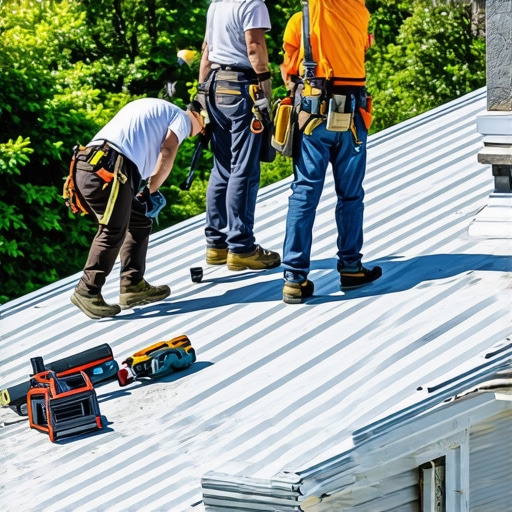
The Myth of the ‘Forever’ Metal Shield
You’ve seen the glossy brochures. They promise a roof that will outlast your mortgage, your car, and maybe even your interest in the property. But as someone who has spent two and a half decades peeling back failed systems, I can tell you that a metal roof is only as permanent as the hands that install it. In the humid, wind-battered stretches of the Southeast, a metal roof isn’t just a choice—it’s a high-stakes engineering project. Most roofing companies will tell you it’s a ‘lifetime’ product, but they rarely define whose lifetime they are talking about. My old foreman used to say, ‘Water is patient. It will wait for you to make a mistake.’ If you’re looking at local roofers for a 2026 metal install, you need to be the one conducting the interrogation. If you don’t, you’ll be the one staring at a water stain on your ceiling ten years from now, wondering how a ‘bulletproof’ roof failed.
The Physics of the Fastener: Question One
The first question you have to ask is about the fasteners. Most homeowners look at the panels, but the panels aren’t where the failure starts. It starts at the hole. Every time a roofer drives a screw into your deck, they are creating a potential leak. On an exposed fastener system, you’re looking at thousands of these penetrations. The EPDM rubber washers on those screws are the weakest link. In our 100-degree summers, those washers bake. They lose their elasticity, crack, and eventually shrink. This is where Mechanism Zooming matters. When the sun hits that metal, it expands. When the sun goes down, it contracts. This constant ‘thermal tug-of-war’ puts immense shear stress on the fastener. If the roofer leaves a shiner—a screw that missed the wood or hit it at an angle—that hole becomes a direct pipeline for moisture. You need to ask: ‘Are you using 304 stainless steel fasteners with high-grade silicone gaskets, or the cheap galvanized ones that will rust out in five years?’ If they stutter, walk away.
“A roof is only as good as its flashing.” – Old Roofer’s Adage
If you’re opting for a standing seam roof, you’re avoiding the exposed fastener problem, but you’re introducing the complexity of clips and ‘oil canning.’ Oil canning is that wavy, distorted look that happens when the metal is under too much stress. It’s not just an aesthetic issue; it’s a sign that the metal wasn’t allowed to move. High-quality roofing companies know that metal needs to breathe. If they pin the panels too tight, the metal will groan and buckle under thermal expansion.
The Invisible Barrier: Question Two
The second question is about what’s happening underneath the metal. This is where the forensics get ugly. In tropical climates, condensation is a silent killer. When the warm, moist air from your house hits the underside of a cool metal panel, it turns into liquid water. If your roofer used a cheap felt paper instead of a high-performance synthetic, you’re in trouble. I’ve seen decks that looked like oatmeal because the underlayment couldn’t handle the ‘sweat’ from the metal. You need to ask about their vapor barrier strategy. If you notice local roofers 3 signs of 2026 underlayment tears during the install, the whole system is compromised. Metal roofs are notorious for ‘capillary action.’ Water can literally climb uphill between two overlapping pieces of metal if the surface tension isn’t broken. Without a secondary water resistance layer, that moisture sits on your plywood, feeding mold that you won’t smell until it’s too late.
The Geometry of Survival: Question Three
Finally, you have to ask how they handle the transitions. A roof is rarely a flat plane. It has chimneys, valleys, and dormers. This is where the ‘trunk slammers’ fail. They rely on tubes of caulk to bridge gaps. In the roofing trade, we say ‘caulk is for the things we forgot.’ A real pro uses mechanical flashing. They bend the metal to divert the water away from the structure. If you have a chimney, you need a cricket—a small peaked structure behind the chimney that prevents water from pooling. Without it, you’re just waiting for a leak. I’ve seen how 2026 roofing companies solve 2026 chimney leaks, and it usually involves a complete tear-off of the surrounding area because the original roofer didn’t understand hydrostatic pressure. Water doesn’t just fall; it flows, it sprays, and in a hurricane, it gets pushed upward. If your eave details aren’t locked down, you’ll see local roofers 5 signs of 2026 eave drip failure within the first major storm season.
“The primary purpose of a roof is to shed water; however, the secondary purpose is to protect the structure from the elements of wind and thermal transfer.” – NRCA Manual
In our region, you also have to consider the ‘uplift rating.’ A metal panel is essentially a giant wing. If the wind gets under the edge, it can peel your roof back like a sardine can. This is why the perimeter of the roof is the most critical. You should ask about their fastening pattern at the edges and how they handle how 2026 roofing companies handle 2026 high winds. If they aren’t using a reinforced drip edge and extra fasteners at the gables, they aren’t building for the climate. They’re just laying metal. They might even be ignoring the how 2026 roofing companies fix 2026 valley-leaks-2 protocols that keep the highest-volume water areas of your roof from rotting out. Don’t let a salesman’s ‘lifetime warranty’ cloud your judgment. A warranty is just a piece of paper; a properly flashed valley is what actually keeps you dry.