
The Anatomy of a Failing Trough: Why Your Valley is Gurgling
Walking on that roof felt like walking on a sponge. I knew exactly what I’d find underneath. It was a late October morning in a neighborhood where the trees drop more than just leaves—they drop needles that clog every drainage point on a roof. The homeowner was complaining about a brownish-yellow ring on their cathedral ceiling, right where the two main roof planes collide. Most local roofers would just slap some plastic cement on it and call it a day, but that’s like putting a band-aid on a gunshot wound. In 2026, a real roofing professional understands that a valley is not just a joint; it is a high-velocity drainage channel that handles thousands of gallons of water in a single storm.
The Physics of the ‘V’: Why Gravity is Your Worst Enemy
When two roof planes meet, they create a convergence point. If each plane is five squares of material, you have five hundred square feet of surface area dumping water into a space only a few inches wide. This creates hydrostatic pressure. As the water volume increases, the depth of the flow increases. Surface tension and capillary action then take over, pulling that water sideways, uphill, and under the edges of your shingles. If your roofing companies didn’t use a proper bleed-back cut on the shingles, you are essentially inviting that water into your attic. This is where signs of underlayment rot start to manifest, as the moisture sits on the plywood long after the rain stops, slowly turning your structural deck into something resembling wet cardboard.
“A roof is only as good as its flashing, and the valley is the most vulnerable flashing of all.” – Old Roofer’s Adage
The 2026 Forensic Approach: No More Guesswork
The days of ‘looking for the wet spot’ are over. Modern roofing companies now use sophisticated tools to diagnose the path of failure. Before we even tear off a single shingle, we are deploying technology. I’ve seen guys find leaks using laser levels to detect the minute sagging that indicates structural compromise. If the valley has been leaking for a year, the rafters might have shifted by just an eighth of an inch—enough to change the pitch and create a pooling area that shouldn’t exist. We also see high-end contractors utilizing lidar gear to map the entire roof surface, creating a 3D model that identifies where the water is slowing down and penetrating the system.
The Surgery: Tearing Out the ‘Cancer’
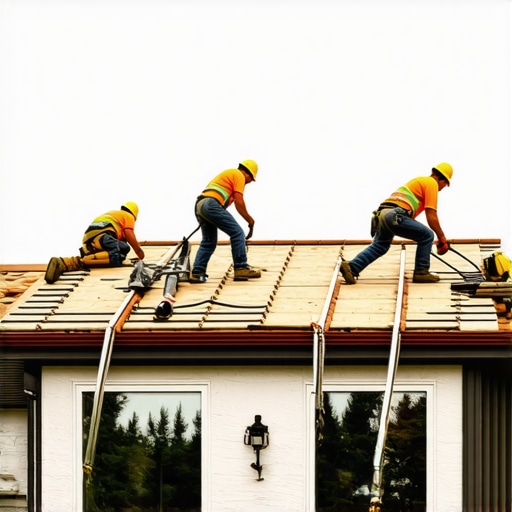
To fix a valley correctly, you have to go back to the bones. We start by stripping the area at least three feet back on either side. This reveals the true extent of the damage. Often, we find a ‘shiner’—a nail driven too close to the center of the valley. That nail acts like a lightning rod for water. Every drop that hits the valley metal finds that nail head, follows the shank through the metal, and drips onto the OSB. In cold climates, this is exacerbated by ice dams, where melting snow backs up under the shingles and stays there for weeks. In 2026, the gold standard is no longer just felt paper; it’s a multi-layered defense. We are seeing bio-mats used as a secondary water barrier because they handle thermal expansion better than old-school asphalt-based products.
“All valley flashings shall be installed in accordance with the manufacturer’s installation instructions and the requirements of this section.” – International Residential Code (IRC) R905
Modern Materials vs. The ‘Trunk Slammer’ Special
I can tell a quality job by looking at the valley metal. If it’s a flat piece of aluminum with a few nails in it, you’ve got a problem. A 2026 professional installation uses W-shaped valley metal. That middle ‘W’ rib acts as a splash guard, preventing water from rushing across the valley and jumping over the shingles on the opposite side. We also use PVC sealants that remain flexible at -20°F. If the sealant cracks when the roof contracts in the winter, the whole system fails. This is especially true on complex roofs where a cricket is needed to divert water around a chimney that sits in the path of a valley. Without that diverter, you’re just building a dam and waiting for the flood.
The Cost of the Quick Fix
Homeowners always ask why the quote for a valley repair is so high. It’s because I’m not just replacing shingles; I’m re-engineering a drainage system. If you ignore the signs, you’ll eventually see fascia board decay and structural rot that requires a full tear-off. How 2026 roofing companies solve valley leaks today involves a holistic view of the roof’s physics. We look at the underlayment, the fastening pattern, and the thermal bridges. Don’t let a ‘cheap’ roofer tell you they can fix it with a bucket of tar. That tar will dry out, crack in the sun, and leave you right back where you started—watching water drip onto your dining room table while the roofer’s phone goes straight to voicemail.