
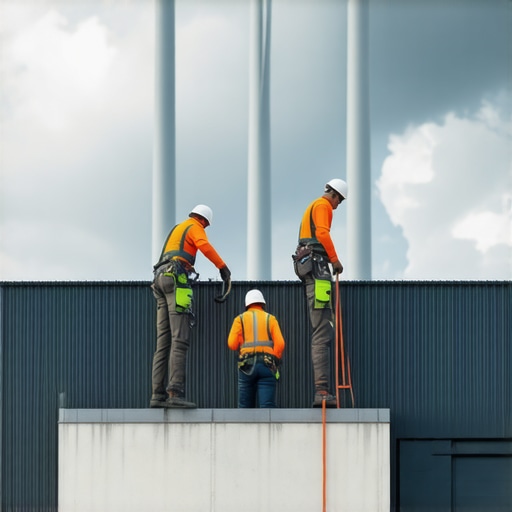
The Marketing Myth of the ‘Wind-Proof’ Roof
Every time a tropical depression spins up or a line of severe thunderstorms rolls through the coast, my phone starts buzzing with the same frantic energy. Homeowners are staring at a pile of asphalt shingles in their front yard, wondering how a roof with a ‘130 mph wind rating’ failed when the local airport only clocked 75 mph gusts. I’ve spent twenty-five years crawling over these structures, and I’ll tell you the truth that the glossy brochures won’t: a shingle’s wind rating is only as good as the guy holding the nail gun. My old foreman used to say, ‘Water is patient. It will wait for you to make a mistake.’ But wind? Wind is a thief. It doesn’t wait. It looks for the one loose flap, the one missed ‘shiner’ in the valley, and it rips the heart out of your house before you can finish your coffee.
The Physics of Failure: Why Roofs Actually Peel
To understand how 2026 roofing companies handle 2026 high wind risk, we have to look at the physics of uplift. When wind hits your gable end, it doesn’t just push against the house; it accelerates over the ridge, creating a low-pressure vacuum on the leeward side. This is Bernoulli’s principle in action on your bank account. If your local roofers didn’t install a proper starter strip—a heavy-duty, adhesive-backed shingle that locks the first row down—the wind gets a fingernail under that bottom edge. Once the first shingle lifts, the hydraulic pressure of the wind-driven rain forces itself underneath, turning the entire slope into a sail. This isn’t just a leak; it’s a structural divorce between your shingles and your deck.
“Roofing systems shall be designed and installed to resist the wind loads as specified in this code.” – International Residential Code (IRC) R905.1
The problem is that most ‘trunk slammers’ are still nailing roofs like it’s 1995. In 2026, the best roofing companies are moving away from guess-work. We’re seeing a massive shift toward using lidar gear to map the exact pitch and plane of a roof before a single nail is driven. This allows us to identify high-pressure zones where extra fasteners are required. If you aren’t seeing your contractor using some form of digital mapping, they’re probably just eyeballing it, and eyeball-engineering doesn’t stand up to a Category 3 gust.
The Anatomy of a High-Wind Installation
When I’m performing a forensic audit after a storm, the first thing I check is the fastener pattern. In high-wind zones, four nails per square (that’s 100 square feet in trade talk) is a recipe for disaster. We use a six-nail pattern, specifically aimed at the ‘common bond’—the strip where two layers of the shingle overlap. If the roofer is moving too fast and misses that mark, you get a ‘shiner.’ That’s a nail that missed the wood or is sitting too high. That high nail acts like a pivot point; when the wind catches the shingle, it just tears right through the asphalt like paper. That’s why why 2026 roofing companies use 2026 smart fasteners—these are ring-shank nails that have double the pull-out resistance of smooth-shank nails. If your roofer is using smooth nails, they’re building you a temporary roof.
The Secondary Water Resistance (SWR) Layer
Even if the shingles hold, wind-driven rain is a different beast. It doesn’t fall down; it moves sideways and upward. This is where many local roofers fail. They rely on cheap felt paper that tears as soon as it gets wet. In 2026, high-performance roofing requires a self-adhering polymer underlayment, often called ‘Ice and Water Shield’ in the north, but down here, we call it our last line of defense. If the shingles blow off, this ‘sticky’ layer stays bonded to the plywood, keeping the house dry. If you don’t have this, one missing shingle can lead to underlayment tears, and suddenly you have two inches of water in your living room.
Gables and Edges: The Front Lines of the War
The edges of your roof are the most vulnerable. It’s where the wind is most turbulent. Most failures start at the gable. If you look at how 2026 roofing companies secure 2026 gable edges, you’ll see heavy-gauge D-style drip edge metal secured with staggered fasteners every 4 inches. I’ve seen cheap contractors use light-duty aluminum that just folds like a soda can when the wind gets over 60 mph. Once that metal bends, the entire edge of the roof is exposed. You’ll start seeing eave damage that looks like a giant took a bite out of the corner of your house.
“A roof is only as good as its flashing.” – Old Roofer’s Adage
We’re also seeing an increase in the use of air seal tech. By sealing the gaps where the roof deck meets the fascia, we prevent internal pressure from building up in the attic. If wind gets inside the attic, it pushes *up* on the roof deck while the wind outside is pulling *up* on the shingles. That ‘push-pull’ effect is what causes entire roof sections to blow off at once. It’s not a mystery; it’s just poor air management.
How to Pick a Contractor Who Isn’t a ‘Storm Chaser’
After a big blow, you’ll see trucks with out-of-state plates crawling through your neighborhood. These are the ‘storm chasers.’ They’ll slap a roof on in a day, take the insurance check, and be three states away by the time the next storm hits. When you’re looking for a roofing company, ask them about their uplift ratings. Ask them if they use ring-shank nails. If they look at you like you have two heads, show them the door. A real pro will talk your ear off about ‘nailing zones’ and ‘fastener pull-through resistance.’ They won’t just sell you a color; they’ll sell you a system. Don’t let a slick salesperson distract you with a ‘lifetime warranty’—most of those are riddled with exclusions for ‘Acts of God.’ If the wind was over 60 mph, most manufacturer warranties are void. The only warranty that matters is the one the installer stands behind with their own reputation.