
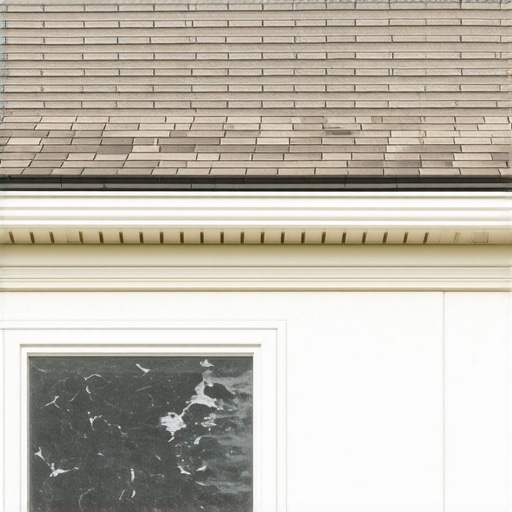
The Forensic Autopsy of a Failing Eave
The air in the attic was thick—sweet, cloying, and smelling of fifty-year-old pine that had finally given up the ghost. I was crouching in a crawlspace in a suburb where the wind-chill hits like a sledgehammer, looking at a sheet of plywood that had the consistency of wet oatmeal. The homeowner was downstairs, probably wondering why the local roofers he hired three years ago weren’t answering his calls. He had a water stain the size of a dinner plate on his dining room ceiling, right under the eave. Most guys would just tell him he needs a new roof. I’m here to tell him why his current one died so young.
My old foreman used to pull me aside when I was still green enough to think a hammer made me a carpenter. He’d say, ‘Water is patient, kid. It doesn’t need a hole; it just needs an invitation. It will wait for you to make one mistake, and then it’ll spend the next ten years invited itself in.’ That’s exactly what happens at the eave. The eave is the front line of your home’s defense, and by 2026, we are seeing a massive spike in failures from the ‘fast and cheap’ era of 2020 installations. If you aren’t looking at the physics of how water moves, you’re just guessing.
“A roof is only as good as its flashing.” – Old Roofer’s Adage
The Physics of the Slow Kill: Capillary Action
When you look at your roof, you see shingles. When I look at it, I see a series of hydro-static pressure points. In cold climates, eave damage isn’t just about a hole in the roof; it’s about capillary action. This is the phenomenon where liquid flows into narrow spaces without the assistance of, and often in opposition to, external forces like gravity. Water hits your drip edge, wraps around the metal through surface tension, and wicks upward into the sub-fascia. If your roofing companies didn’t install a proper starter strip or if they cheated the overhang, that water is getting sucked into your house like a straw. By the time you see the stain on the ceiling, the rafter tails are already soft enough to push a screwdriver through.
Sign 1: The ‘Drip Trail’ on the Fascia
Go outside and look at your fascia boards—the vertical trim behind your gutters. If you see vertical streaks or ‘tears’ of dark staining, your drip edge is failing. In our climate, the thermal bridging between the warm attic air and the freezing eave creates a micro-cycle of melt and freeze. A square of shingles might look fine from the street, but if the metal flashing wasn’t lapped correctly, the melt-water is running behind the gutter instead of into it. This saturates the wood, leading to delamination that no amount of paint can hide. This is the first sign that the ‘surgical’ repair window is closing.
Sign 2: The ‘Shiner’ and Internal Frost
Inside your attic, look for ‘shiners.’ A shiner is a nail that missed the rafter—it’s just sticking through the plywood into the cold air. In the winter, these nails become magnets for moisture. Warm air leaks from your living space (an attic bypass), hits the freezing cold nail, and turns into frost. When the sun hits the roof, that frost melts, dripping onto your insulation. If you see rusted nail heads or black rings around the fasteners near the eaves, your ventilation is failing. You don’t just have a roofing problem; you have an air-sealing crisis that is rotting your deck from the inside out.
Sign 3: Granule Loss in the Gutter ‘Valley’
By 2026, many of the 30-year shingles installed during the recent housing boom are showing premature ‘baldness.’ If you clean your gutters and find a half-inch of asphalt granules, your shingles are losing their UV protection. Without those granules, the asphalt mat heats up to 160°F, dries out, and cracks. At the eave, where the shingles have to handle the weight of ice and the force of moving water, this cracking leads to immediate leaks. Local roofers often overlook this as ‘normal wear,’ but it’s a death rattle for the eave’s structural integrity.
Sign 4: Peeling Paint on the Soffit
The soffit is the underside of your eave. If the paint is bubbling or the wood is warped, you have a hydrostatic pressure problem. Water is getting trapped between the shingles and the underlayment, and it’s looking for the path of least resistance—which is often straight down into the soffit vents. I’ve seen roofing companies install brand new shingles over rotten eaves, only for the homeowner to find the soffits falling out two years later. You can’t build a house on a swamp, and you can’t put a roof on rotten eaves.
Sign 5: The ‘Shadow Line’ of Ice Dams
If you see a dark shadow or a persistent ‘wet look’ at the bottom two feet of your roof even on a sunny day, you have an ice dam problem in the making. This is where the Ice & Water Shield earns its keep. Per building code, this membrane should extend from the eave edge to a point at least 24 inches inside the exterior wall line. Many ‘trunk slammers’ only run one width (36 inches), which often falls short of the code. If that membrane isn’t there, the water backed up by ice will find its way into your wall cavity, ruining your R-value and feeding mold.
“Drip edges shall be provided… and shall extend 2 inches onto the roof deck.” – IRC Building Code R905.2.8.5
The Band-Aid vs. The Surgery
If you catch these signs early, we can talk about ‘The Band-Aid’—cleaning out the gutters, installing a kick-out cricket at the chimney, or adding better intake ventilation. But if the plywood is already ‘oatmeal,’ you need ‘The Surgery.’ This involves tearing off the bottom two rows of shingles, replacing the rotten decking, and installing a high-temp ice and water shield that actually meets the 2026 climate standards. Don’t let a salesman tell you a bit of caulk will fix a shiner or a rotten rafter tail. Water is patient, and it doesn’t care about your budget. It only cares about the laws of physics. Picking the right local roofers means finding someone who understands that a roof isn’t just a lid—it’s a system of air, heat, and moisture management.