
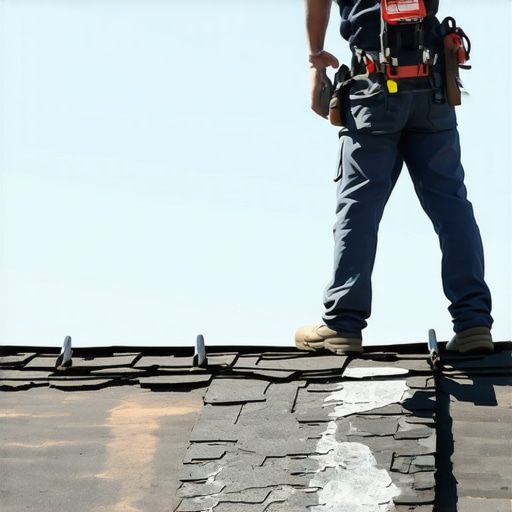
The Forensic Autopsy: Why Your Ceiling is Bleeding
The humidity in the Gulf Coast doesn’t just sit on you; it heavy-presses against your chest like a wet wool blanket. I was standing on a steep-pitch roof in Sarasota last Tuesday, the sun baking the granules at a blistering 155°F. Walking on that roof felt like walking on a sponge. I didn’t even need to pull my pry bar to know the story. I could feel the deck give way beneath my boots—a sickening, rhythmic squelch that tells a veteran roofer exactly what’s happening three layers deep. Beneath those shingles, the secondary water barrier wasn’t just failing; it was shredded. Local roofers often overlook the silent struggle of the underlayment, but in 2026, as climate patterns shift toward more aggressive wind-driven rain, those hidden tears are becoming the number one cause of catastrophic deck rot.
The Physics of the Tear: Why Water Doesn’t Fall Straight
Most homeowners think gravity is the only force at play. They’re wrong. Water is opportunistic and incredibly patient. It utilizes capillary action—the ability of a liquid to flow in narrow spaces without the assistance of, or even in opposition to, external forces like gravity. When your underlayment has a microscopic tear, wind pressure creates a vacuum effect. This ‘pumping action’ literally sucks moisture upward from the drip edge and pulls it through the tear. Once it hits the plywood, the game is over. The wood fibers swell, the adhesive bonds in the OSB dissolve, and you’re left with what we call ‘oatmeal decking.’
“A roof is only as good as its flashing and its secondary barrier.” – Old Roofer’s Adage
Sign 1: The ‘Ghost’ Drip and the Shiner Effect
The first sign of an underlayment tear isn’t a flood; it’s a ghost. You’ll see a damp spot on your bedroom ceiling after a heavy storm, but by the time a contractor arrives, it’s dry. This happens because the tear is located near a shiner—a nail that missed the rafter and is sticking through the deck. As the temperature in the attic fluctuates, that metal nail acts as a conduit for condensation. If the underlayment is torn around that fastener, the moisture doesn’t just evaporate; it tracks down the shank of the nail and drips onto your insulation. This is often misdiagnosed as a ventilation issue, but experienced roofing companies know to look for the nail pop leaks that signal a compromised barrier. When the underlayment loses its ‘self-sealing’ property around these fasteners, the integrity of the entire square is compromised.
Sign 2: The ‘Fishmouth’ Distortion in the Shingle Line
Get a ladder and look across the plane of your roof during the ‘golden hour’ when the sun is low. If you see slight humps or ridges that look like the mouth of a fish gasping for air, you’re looking at underlayment failure. In our region, thermal expansion and contraction are brutal. If a low-quality synthetic underlayment was used, or if the felt was left exposed to the sun for too long during the ‘dry-in’ phase, it becomes brittle. As the house shifts, the underlayment snaps. Those jagged edges then push upward against the shingles. This isn’t just a cosmetic issue; it creates a gap that allows wind-driven rain to bypass the shingle’s primary defense. If you ignore this, you’ll eventually deal with underlayment rot, which turns a simple patch job into a full-scale replacement.
Sign 3: Granule Accumulation in the Valley Shadows
When underlayment tears, it changes the way the roof sheds heat. The thermal bridge between the attic and the shingles becomes uneven. This causes the shingles directly over the tear to overheat, leading to premature granule loss. If you find piles of granules in your gutters specifically near a valley or a cricket, it’s a red flag. The underlayment in these high-flow areas is under the most stress. If the installer didn’t use a heavy-duty ice and water shield or a high-performance synthetic, the friction of the shingles moving against the deck during high winds will saw right through the barrier. This is why many fix valley leaks by tearing everything back to the wood; you cannot simply ‘goop’ a tear in the secondary barrier.
“Secondary water resistance is the final line of defense against catastrophic interior loss.” – IRC Building Code Axiom
The Anatomy of the Fix: Surgery vs. Band-Aids
Most ‘trunk slammers’ will tell you they can fix a tear with a bit of flashing cement and a prayer. Don’t believe them. Fixing an underlayment tear requires surgical precision. You have to remove the shingles in a pyramid pattern around the affected area, inspect the deck for fungal growth, and then ‘picture frame’ a new piece of high-temp underlayment over the wound. This new layer must be tucked under the uphill course and over the downhill course to maintain the shedding effect. If your local roofers aren’t talking about ‘lapping’ and ‘mil-thickness,’ they aren’t fixing the problem; they’re hiding it. Waiting even six months to address these underlayment tears can double your repair costs as the mold migrates into your trusses. Don’t let a $500 maintenance item turn into a $20,000 structural nightmare. In this climate, the roof doesn’t forgive mistakes, and it certainly doesn’t forget them.
Reading this post really opened my eyes to how many hidden issues can develop with our roofs, especially in humid climates like the Gulf Coast. I’ve had a few clients notice those ‘fishmouth’ distortions, but they dismissed them as minor or cosmetic. After understanding more about how underlayment tears can cause severe damage over time, I realize it’s crucial to have regular inspections, especially after storms. I’ve often wondered, though, how effective advanced moisture detection tools are in diagnosing these microscopic tears without invasive procedures. Has anyone here used such technology and seen a significant difference in early detection? I think incorporating more high-tech assessments could be a game-changer for homeowners and contractors aiming to prevent costly repairs down the road.