
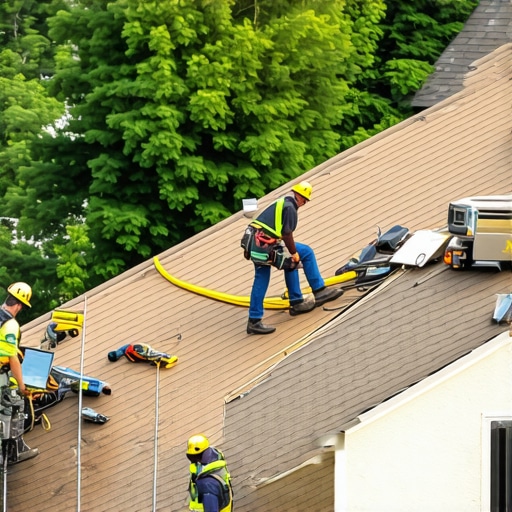
The Autopsy of a Failure: Why 2026 Valley Leaks Are Not What They Seem
It usually starts with a localized stain on the drywall, right where the living room ceiling meets the wall. You think it is just a small drip, maybe a loose shingle. But to a forensic roofer, that stain is the equivalent of a chalk outline at a crime scene. Most local roofers will climb up there, smear a gallon of plastic cement over the area, and tell you it is fixed. They are lying to you—or they just do not know any better. By the time that water manifests in your living room, the structural integrity of your roof deck is already in a state of advanced decomposition.
Walking on that specific roof in the dead of a Minneapolis winter felt like walking on a giant, waterlogged sponge. Every step I took resulted in a sickening squelch as the saturated OSB groaned under my boots. I knew exactly what I would find underneath before I even pulled my hammer out. The valley—the intersection where two roof planes meet to form a trough—is the most heavily taxed part of your entire exterior envelope. In cold climates, it is ground zero for the war between physics and your mortgage.
The Physics of Failure: Capillary Action and Hydrostatic Pressure
In 2026, roofing companies are dealing with more intense freeze-thaw cycles than ever. When snow accumulates in a valley, it does not just sit there. The heat escaping from your poorly insulated attic melts the bottom layer of that snow, creating a pool of water trapped under a heavy blanket of slush. This is where hydrostatic pressure takes over. Water is heavy, and it is patient. It finds the tiniest gap in your valley flashing and, through capillary action, literally climbs upward under the shingles. If your roofing companies did not install a heavyweight Ice & Water Shield at least 36 inches wide, that water is going straight into your plywood.
“Valleys shall be lined with metal, mineral-surfaced roll roofing, or a minimum of two layers of underlayment as prescribed in the code to ensure long-term hydraulic integrity.” — International Residential Code (IRC) R905.1.1
The problem is that the “code” is the bare minimum. If you are building to code, you are building the cheapest house legally allowed. We are seeing a massive increase in attic condensation issues because of these valley failures. When the valley leaks, it does not just rot the wood; it spikes the humidity in your attic, leading to mold blooms that can colonize a 2,500-square-foot home in less than a month. It is a cascading failure of the entire system.
The Band-Aid vs. The Surgery: How 2026 Pros Actually Fix It
When I see a roofer pull out a caulk gun to fix a valley, I know I am looking at a “trunk slammer.” Caulk is a temporary sealant that will crack and peel within two seasons of thermal expansion and contraction. Proper 2026 valley repair requires a surgical approach. We are no longer just laying down felt and hoping for the best. Modern roofing standards demand a multi-layered defense. First, we strip the valley down to the deck. We look for “shiners”—nails that missed the joist and are now acting as rusted conduits for water. If we find buckling shingles near the trough, we know the structural decking has already expanded due to moisture absorption.
[IMAGE_PLACEHOLDER]
The gold standard for 2026 is a W-Valley metal liner. Unlike a flat valley, the “W” has a center rib that prevents water from rushing across the valley and forcing its way under the shingles on the opposite side. We then sandwich this between layers of high-temp polymer-modified bitumen. This stuff smells like a freshly paved highway in July, but it is the only thing that will stand up to the 140°F attic temperatures and -20°F wind chills. We are even seeing some elite firms using lidar gear to map the exact pitch and flow of these valleys to ensure the drainage isn’t obstructed by oversized chimneys or poorly placed dormers.
“A roof is only as good as its flashing; the shingles are merely the aesthetics that hide the engineering.” — Old Roofer’s Adage
The “California Cut” Trap
Many local roofers still use the “California Cut” or “Closed Cut” valley because it is faster to install. They run one layer of shingles across the valley and then cut the second layer in a straight line down the middle. It looks clean for about six months. Then, debris—pine needles, oak leaves, granules—gets trapped in that cut. This debris acts like a dam, holding water against the shingle edges. Eventually, the water finds a way in. A true forensic repair involves an “Open Metal Valley.” It is louder when it rains, and it shows more metal, but it sheds water and debris with 100% efficiency. In a climate where ice dams are a constant threat, you want the water off the roof as fast as possible, not lingering in a shingle trap.
The Cost of the ‘Cheap’ Contractor
I have seen homeowners try to save three thousand dollars by hiring the guy with the magnetic sign on his truck. Fast forward two years, and they are spending fifteen thousand dollars on mold remediation and a total roof replacement because the valley was never flashed correctly. You need to ask your contractor about their “starter strip” alignment and how they handle valley gaps. If they cannot explain the difference between surface tension and hydrostatic pressure, they should not be on your roof. Don’t let them sell you on a “lifetime warranty” that only covers the material; if the installation is botched, the manufacturer will laugh at your claim. You are paying for the labor, the expertise, and the peace of mind that your dining room table won’t become a catch-basin for the next thunderstorm.
Final Inspection: What to Look For
If you are inspecting a finished repair, look at the bottom of the valley where it meets the eave. There should be a heavy-duty “kick-out” flashing to divert water into the gutter. If the valley just ends abruptly, that water is going behind your siding and rotting your rim joist. Roofing is a game of inches and angles. Water is patient, and it will wait for you to make a mistake. Ensure your 2026 roofing partner is using the latest tech and the oldest, most proven physics to keep your home dry.