
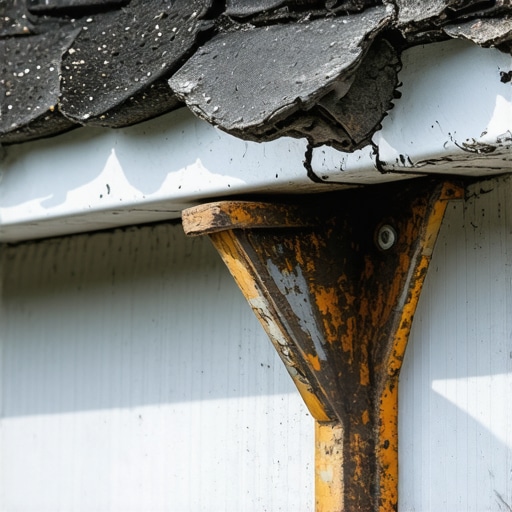
The Anatomy of a Quiet Disaster: Why Your Gutters Are About to Quit
You’re sitting in your living room, listening to the steady rhythm of a Nor’easter hammering your roof, and then you hear it—a heavy, wet thud against the foundation. It’s not the wind. It’s the sound of twenty feet of aluminum trough surrendering to gravity. As a veteran who has spent two decades performing autopsies on failed residential envelopes, I can tell you that most roofing companies treat gutters as an afterthought. They slap them on with a few spikes and move to the next job. But water? Water is patient. My old foreman used to say, ‘Water is patient. It will wait for you to make a mistake.’ In the cold, unforgiving climates of the North, that mistake is usually a misunderstood gutter hanger. When snow loads pile up and ice dams begin their slow crawl, the physics of your perimeter drainage changes instantly. We aren’t just talking about a leak; we are talking about a mechanical failure of the fasteners holding your home’s first line of defense.
“Gutters and downspouts shall be sloped to prevent standing water, and fasteners shall be compatible with the gutter and fascia material to prevent galvanic corrosion.” – International Residential Code (IRC) Standards
1. The ‘Gap-Tooth’ Fastener Withdrawal
If you look up at your eaves and see the heads of nails or screws peeking out from the gutter face, you’re looking at a shiner in the making. In the 2026 roofing landscape, many local roofers are still using smooth-shank spikes that rely on friction alone. In regions where thermal expansion and contraction are extreme, the wood in your fascia expands during humid summers and shrinks in the dry winter. This movement slowly ‘jacks’ the fastener out of the hole. Once that spike moves even an eighth of an inch, the seal is broken. Capillary action takes over, pulling water into the pilot hole where it begins to soften the wood fibers. If you don’t address this, you’ll eventually see sagging lines that no amount of tightening can fix because the ‘meat’ of the wood is gone.
2. The Ghost Stains on the Fascia
Walk your perimeter and look at the boards behind the gutters. Are there dark streaks or green algae blooms? This is the signature of a failed hanger pitch or a bracket that has lost its tension. When a hanger fails, the gutter tilts forward, or ‘toes out.’ Instead of the water hitting the trough and heading for the downspout, it splashes against the top edge and wicks backward. This is the physics of surface tension at work; water would rather cling to your house than fall into a misaligned bucket. This leads directly to fascia board decay, which is a structural nightmare. I’ve seen roofing systems where the gutters were technically ‘on,’ but the fascia was so pulpy you could stick a screwdriver through it with two fingers.
3. The Drip Edge Bypass
A gutter hanger’s job isn’t just to hold weight; it’s to maintain the critical relationship between the shingle and the trough. If your hangers are spaced too far apart—a classic move by ‘trunk slammers’ trying to save five bucks—the gutter will bow in the center. This creates a gap where the eave drip failure becomes inevitable. During a heavy downpour, water overshoots the gutter entirely or, worse, rolls behind it. This moisture finds the raw edge of your roof decking. I once tore off a roof where the bottom six inches of plywood felt like wet cardboard because the hangers had sagged just enough to let water crawl up under the felt paper. In our trade, we call this the ‘hidden rot’ because from the ground, everything looks fine until the day your local roofers find your rafters have turned to mulch.
“The most common cause of roof-related wall failure is the mismanagement of perimeter water through improper gutter integration.” – NRCA Manual Excerpt
4. The Ferrous Bleed (Galvanic Corrosion)
In 2026, we are seeing more ‘hybrid’ material use, and that’s where the forensic fun begins. If a contractor uses steel hangers on an aluminum gutter without a coating, or vice versa, you get a battery. Literally. The moisture acts as an electrolyte, and the metals start trading electrons. The result is fastener failure that looks like white powder or rust streaks. The hanger doesn’t just pull out; it dissolves. You’ll notice this when one section of your gutter looks like it’s ‘floating’ or vibrating in the wind. That vibration is the sound of your roof’s warranty dying. You need heavy-duty, screw-integrated hangers that are chemically compatible with the alloy of your troughs.
5. Bracket Deformation and the ‘Ice Lever’
For those of us in the North, ice is the ultimate tester of roofing companies‘ work. When water freezes in a gutter with a poor gutter pitch failure, it creates a solid block of ice that can weigh hundreds of pounds. This weight acts as a lever arm. A standard hanger is designed for vertical tension, but ice creates outward torque. If you see your gutter brackets bent downward, the ‘hook’ that grabs the inner hem of the gutter has likely straightened out. Once that metal is fatigued, it will never hold the same weight again. This is the prelude to a total collapse, which usually takes the drip edge and the first course of shingles with it, leading to massive roof decking decay.
The Surgery: How We Fix the Hack Jobs
Replacing a hanger isn’t just about driving a new nail. We perform ‘the surgery.’ First, we inspect the rafter tails. If the wood is soft, we have to sister in new lumber or replace the fascia entirely. We ditch the 10-penny spikes and move to heavy-duty #12 screws with a self-sealing neoprene washer. We space these hangers every 18 inches—not the industry standard 24—because I’ve never seen a gutter fail because it was ‘too secure.’ We ensure the hanger sits under the drip edge, creating a seamless transition that forces water to obey the laws of gravity, not the whims of surface tension. Don’t wait for the ‘thud’ in the night. If your gutters look like they’re tired, they probably are. And a tired gutter is just a waterfall waiting to happen against your foundation.