
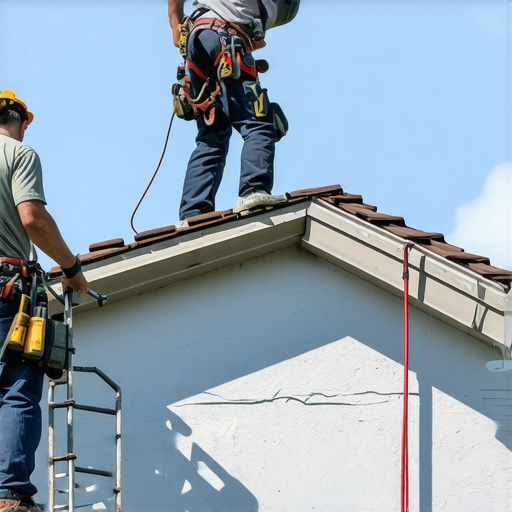
Walking on that roof felt like walking on a trampoline made of wet cardboard. Every step sent a shudder through the soles of my boots, and I knew exactly what I’d find underneath: a structural disaster hiding behind a fresh layer of shingles. You see it from the curb first—that subtle dip in the ridge, a ‘swayback’ look that makes a house look like it’s exhausted. Local roofers call it the ‘death smile.’ It’s not just an aesthetic fluke; it’s a physics problem involving gravity, moisture, and often, a heavy dose of contractor negligence. When a roof starts to sag, it’s the house’s way of screaming that the skeleton can no longer support the skin. In the cold, damp climates of the North, this isn’t just about shingles; it’s about the very integrity of the rafter system under the weight of a decade’s worth of snow and ice dams.
The Anatomy of the Dip: Why Roofs Lose Their Edge
Before we talk about the fix, we have to talk about the failure. A roof doesn’t just decide to bend one afternoon. It happens through a process called creep. This is where long-term stress—like the weight of three layers of old asphalt shingles—causes the wood fibers in the rafters to permanently deform. In my twenty-five years of forensic teardoffs, I’ve seen 2×6 rafters spanning distances they were never meant to cover, eventually giving up the ghost. But the real killer in our northern climate is the attic bypass. Warm, moist air from your bathroom or kitchen leaks into the attic, hits the cold underside of the roof deck, and turns into liquid water. This moisture feeds the fungi that eat the lignin in your plywood. Suddenly, that 5/8-inch CDX plywood has the structural integrity of a Saltine cracker left in a bowl of soup. When you see local roofers identifying signs of decking rot, the sag is usually the final symptom before a total collapse.
“Rafters shall be framed to ridge board or to each other with a gusset plate as a tie. Ridge boards shall be at least 1 inch nominal thickness and not less in depth than the cut end of the rafter.” – International Residential Code (IRC) R802.3
1. Lidar Diagnostics and Precision Mapping
In 2026, the best roofing companies aren’t just eyeballing it from the ladder. We use high-accuracy Lidar gear to create a 3D point cloud of the roof surface. This allows us to measure the deflection—the actual distance the roof has dropped from its original plane—down to the millimeter. By understanding the exact topography of the sag, we can determine if the issue is localized (one bad rafter) or systemic (the whole ridge is spreading). Using modern Lidar gear ensures that we aren’t just putting a Band-Aid on a broken bone; we are diagnosing the structural geometry of the entire home.
2. Sistering Rafters: The Structural Reinforcement
The most common surgical fix for a sagging line is ‘sistering.’ This involves taking a new, straight piece of lumber and bolting it directly to the side of the existing, curved rafter. But here’s where the ‘trunk slammers’ mess up: you can’t just slap a board up there. You have to jack the old rafter back to its original position first. We use heavy-duty hydraulic jacks and a temporary ‘strongback’ to slowly—very slowly—push the roof back into alignment. If you go too fast, you’ll crack the drywall in the ceilings below. Once it’s straight, we through-bolt the new lumber, creating a composite beam that is twice as strong as the original. This is how roofing companies secure roof joists and rafters to ensure the ‘smile’ doesn’t return after the next blizzard.
3. Correcting Rafter Spread with Collar Ties
Sometimes the roof isn’t sagging because the wood is weak; it’s sagging because the walls are pushing out. This is called rafter spread. Without proper ceiling joists or collar ties to keep the ‘A-frame’ together, the weight of the roof pushes the tops of the exterior walls outward. As the walls move out, the ridge moves down. It’s basic geometry. To fix this, we install new collar ties in the upper third of the attic and use tension cables to pull the walls back into plumb. It’s a delicate dance of force and resistance that requires a deep understanding of load paths. Without this, you’re just wasting money on new shingles that will be wavy within two years.
4. Replacing De-laminated Decking
If the sag is between the rafters, the culprit is the decking. In the 90s, a lot of builders used thin 7/16-inch OSB that just couldn’t handle the humidity. When we find ‘mushy’ spots, we perform a full-scale tear-off. We look for signs of structural shifting that might have compromised the H-clips between the sheets of plywood. Modern companies are now moving toward reinforced radiant barrier sheathing that reflects heat while providing a much higher shear strength. This prevents that ‘waffle’ look where you can see every single rafter through the shingles.
5. Installing Purlin Braces and ‘Kicker’ Struts
For long spans where sistering isn’t enough, we install purlins. Think of a purlin as a horizontal beam that runs perpendicular to the rafters, supported by ‘kicker’ struts that transfer the weight down to a load-bearing interior wall. It’s essentially building a skeleton inside the skeleton. This is common in older homes where the original craftsmen used ‘old growth’ lumber that was strong but over-spanned. By adding these support points, we reduce the effective span of the rafter, making the entire system rigid enough to handle modern building codes.
6. Advanced Moisture Management and Airflow
You can fix the wood, but if you don’t fix the air, the rot will return. A sagging roof is often a symptom of poor ventilation. If the attic is 140°F in the summer or trapping damp air in the winter, the wood will eventually fail. We use forensic tools to check attic airflow and ensure the intake at the soffits isn’t blocked by insulation. Without proper ‘breathability,’ the new wood you just paid for will start the ‘creep’ process all over again. We often install smart vents that adjust to the humidity levels, keeping the wood dry and the structural fibers stiff.
“A roof is only as good as its flashing and the air moving beneath it.” – Old Roofer’s Adage
7. The Multi-Layer Tear-Off
The simplest way to fix a sag? Stop overloading the damn thing. I’ve walked onto jobs where there were three layers of asphalt shingles and a layer of old cedar shakes underneath. That’s thousands of pounds of unnecessary weight. One ‘square’ (100 square feet) of shingles can weigh 250 pounds. On a 30-square roof, that’s 7,500 pounds per layer. If you have three layers, you’re parking a mid-sized school bus on your rafters. A 2026 professional will insist on a total tear-off to the deck to inspect the bones and reduce the dead load. It’s the only way to ensure the structural integrity of the home for the next thirty years.
The Cost of the Quick Fix
I’ve seen guys try to level a sagging roof by just nailing ‘shims’ (tapered strips of wood) on top of the old, bowed rafters to make the new shingles look flat. That’s a ‘shiner’ of a mistake. It doesn’t fix the structural weakness; it just hides it while adding even more weight to a failing system. It’s like putting makeup on a broken leg. Eventually, the leg gives out. When you hire companies using smart audits, they will tell you the hard truth: you need surgery, not a cosmetic touch-up. Fixing a sag properly involves jacking, bracing, and ventilating. It’s not cheap, but neither is having your roof end up in your living room after a heavy snowstorm. In this trade, water is patient, and gravity never sleeps. If you ignore the dip in your ridge, you’re just waiting for a disaster to introduce itself to your checkbook.