
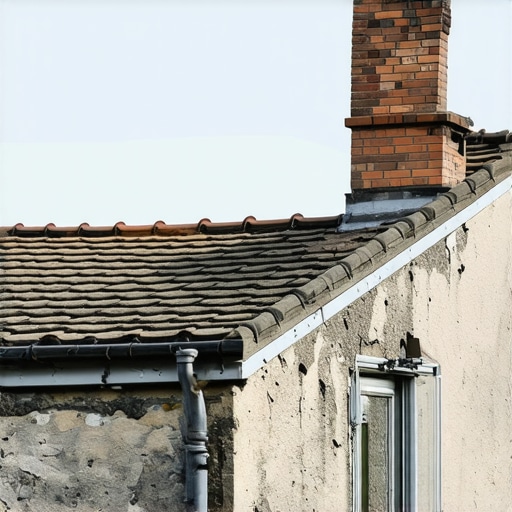
The 2 AM Groan: Why Your Roof is Moving Beneath You
You’re lying in bed on a Tuesday night in February, the wind is whipping off the Great Lakes, and you hear it—a sharp, metallic crack followed by a long, low groan from the attic. Most homeowners roll over and blame it on the house ‘settling.’ After twenty-five years of pulling up rotted cedar and scraping ice dams in this climate, I can tell you that sound isn’t just settling; it’s the sound of your roof deck fighting a losing battle against physics. In 2026, we are seeing a spike in structural shifting that would make a civil engineer sweat. It isn’t just about old wood; it’s about the extreme thermal swings and the way modern roofing companies are sometimes ignoring the ‘skeleton’ of the home to chase a quick paycheck.
My old foreman used to say, ‘Water is patient. It will wait for you to make a mistake.’ He was right, but I’d add that gravity is even more patient. When your foundation shifts even a fraction of an inch due to the clay-heavy soil expanding and contracting, that movement is amplified by the time it reaches your ridge. A sixteenth of an inch at the basement floor can manifest as a two-inch gap at the peak. That is where the real damage starts, and if you don’t know what to look for, you’ll be paying for a new set of rafters instead of just a few bundles of shingles.
“A roof is only as good as its flashing, and flashing is only as good as the substrate it is nailed to.” – Old Roofer’s Adage
Sign 1: The ‘Wavy’ Ridge Line and Purlin Fatigue
When I walk a roof, the first thing I do is sight the ridge. If it looks like a mountain range instead of a straight line, we have a problem. In the North, we deal with massive snow loads. If the internal bracing—the purlins and struts—starts to shift, the ridge board will dip. This isn’t just an eyesore. When the ridge dips, it puts immense tension on the shingles at the peak. Asphalt shingles are designed to lay flat; when you force them into a curve they weren’t manufactured for, the granules start to slough off, exposing the mat. Once that mat is bare, UV rays bake it into a crisp in a single season. Local roofers often try to hide this with extra-thick ridge caps, but that’s like putting a Band-Aid on a broken leg. You’re seeing the early stages of ridge decay, and it’s a structural warning shot.
Sign 2: The ‘Shiner’ Epidemic and Thermal Expansion
Let’s talk about ‘shiners.’ In the trade, a shiner is a nail that missed the rafter and is sticking through the plywood into the attic space. On a stable house, a shiner is a minor annoyance that might cause a tiny bit of frost. But when a house undergoes structural shifting, those nails become daggers. As the wood expands and contracts—thermal bridging at its finest—the movement pulls the plywood away from the rafters. You’ll start to see nail pop disruption across your roof. This is the ‘Forensic Scene’ I see too often: a homeowner thinks they have a leak, but when I get in the attic, I see a hundred rusted nails that have been ‘pumped’ out of the wood by the house shifting. It’s not a hole in the shingle; it’s the house literally spitting out its own fasteners.
Sign 3: The Cricket Failure and Chimney Separation
If you have a chimney wider than 30 inches, you should have a ‘cricket’—that small peaked structure behind the chimney designed to divert water. When a house shifts, the heavy masonry of the chimney often moves at a different rate than the wooden roof frame. I’ve seen gaps open up in the flashing that you could fit a sandwich through. This is where capillary action turns a minor shift into a disaster. Water hits that gap and doesn’t just fall in; it ‘wicks’ sideways, traveling along the underside of the flashing and soaking the roof deck five feet away from the actual leak. If you see your chimney flashing pulling away or look for eave damage that seems disconnected from the rest of the roof, you’re looking at structural divergence.
“Roofing assemblies shall be designed and installed in accordance with this code and the approved manufacturer’s instructions.” – International Residential Code (IRC) R903.1
Sign 4: Fascia Gaps and the ‘Smiling’ Gutter
The most subtle sign of 2026 structural shifting is at the very edge of your roof. Go outside and look at your fascia boards. Are they tight against the rafter tails, or is there a sliver of darkness between the wood and the metal drip edge? When a roof deck ‘creeps’—a slow, downward movement caused by years of heavy ice—it pushes the fascia board outward. This creates a trap for moisture. During the spring thaw, water runs behind the gutter, rots the rafter tails, and invites every pest in the neighborhood. Often, this shifting is exacerbated by attic condensation which softens the wood, making it easier for the fasteners to pull through. If your gutters look like they are ‘smiling’ (sagging in the middle), don’t just tighten the brackets. Check to see if the wood they are attached to is actually still attached to the house.
The Physics of the Fix: Surgery vs. Band-Aids
When local roofers see shifting, the ‘trunk slammers’ will tell you to just throw more caulk at it. That is a lie. If the skeleton is moving, the skin will tear. To fix structural shifting, you have to address the ‘load path.’ This might mean adding collar ties in the attic to stop the walls from spreading, or it might mean sistering rafters that have checked or split under the strain. In the North, we have to be especially careful with Ice & Water Shield. If the roof shifts and the underlayment isn’t high-quality, it will tear at the seams, allowing the meltwater from ice dams to bypass your defenses entirely. You need a contractor who understands the difference between a cosmetic shingle issue and a structural geometry failure. If you ignore the groaning rafters and the wavy ridge, you aren’t just delaying a repair—you’re waiting for the day the physics of gravity finally catches up with the chemistry of your shingles.