
The Sound of a 140-Decibel Mistake
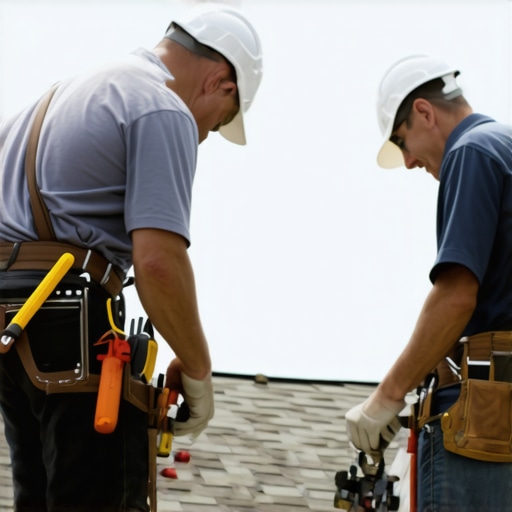
The rain wasn’t even that heavy. It was a rhythmic, lazy afternoon drizzle in the Southeast, the kind that usually just washes the salt air off the siding. But for the homeowner standing in his hallway, it sounded like a drum solo on his drywall. When I climbed up there, I didn’t need a magnifying glass. Walking on that roof felt like walking on a sponge. I knew exactly what I’d find underneath. Every time I shifted my weight, I could hear a faint, metallic ‘tink’—the sound of rusted-out fastener heads snapping off under the pressure of my boots. Underneath those shingles, the deck was a graveyard of cheap steel and poor decisions. This wasn’t a material failure; it was a mechanical execution failure. Local roofers are seeing more of this in 2026 than ever before, and it comes down to physics, not luck.
“Fasteners shall be driven flush with the shingle surface and shall not be over-driven or under-driven.” – International Residential Code (IRC), Section R905.2.5
When we talk about roofing, homeowners get obsessed with the shingles. They want the pretty colors, the architectural shadows, the ‘curb appeal.’ They forget that the only thing keeping that three-thousand-pound ‘blanket’ of asphalt from sliding into their hydrangea bushes is a handful of 1.25-inch nails. In coastal environments, where the humidity sits at 90% and the salt air eats through car engines, the fastener is the most vulnerable point of the entire system. If a roofing company cuts corners on the ‘jewelry’—the nails—the whole system is a ticking clock. Let’s look at the forensic breakdown of why these systems are failing prematurely.
1. The Chemistry of Corrosion: Galvanic Sabotage
In our tropical climate, we deal with a phenomenon called galvanic corrosion. It’s a slow-motion chemical war. When a standard electro-galvanized nail—which has a zinc coating thinner than a human hair—comes into contact with moisture and salt, the zinc sacrifices itself. Once that microscopic layer of protection is gone, the raw steel underneath begins to oxidize. As steel rusts, it expands. This expansion creates a jagged, abrasive surface that slowly saws through the fiberglass mat of the shingle every time the wind vibrates the roof. By the time you notice nail pop disruption in your attic, the fastener has often lost 40% of its structural integrity. This is why many high-end why 2026 roofing companies use smart fasteners that are either stainless steel or double-dipped hot-galvanized to resist the brine in the air.
2. The ‘Shiner’ Epidemic: Capillary Action and Missed Joists
In the trade, we call them ‘shiners.’ These are nails that missed the rafter or the structural decking and are just sticking through the underside of the plywood into the attic. They look like little silver stars when you’re standing in the dark with a flashlight. But a shiner is more than a mistake; it’s a straw. Through a process called capillary action, water doesn’t just fall into your house; it’s pulled. When moisture gets under the shingle—and it always does, through wind-driven rain or condensation—it clings to the nail. The water travels down the shank of the nail, bypassing the shingle, the underlayment, and the wood, dripping directly onto your insulation. This leads to nail pop leaks that can rot out a ceiling for months before a single drop hits the floor. I’ve seen ‘shiners’ turn a perfectly good roof deck into something resembling wet oatmeal because the installer was moving too fast to find the wood.
“A roof is only as good as its flashing and the integrity of its attachment points.” – Old Roofer’s Adage
3. Pneumatic Over-Drive: The Guillotine Effect
Most roofing is done with pneumatic nail guns. If the compressor is set too high—usually by a ‘trunk slammer’ trying to finish three squares an hour—the nail head doesn’t just sit flush; it blows right through the shingle’s reinforcement mat. This is the ‘Guillotine Effect.’ You now have a hole in your roof that is only being ‘sealed’ by the pressure of the shingle above it. There is no mechanical bond. When the summer heat hits and the shingles expand, they pull away from these over-driven nails. During a high-wind event, the shingles simply unzip. The wind gets underneath, finds a shingle that isn’t truly anchored, and creates a chain reaction. If your contractor isn’t constantly checking their air pressure, they aren’t roofing; they’re just punching holes in your investment.
4. Thermal Pumping and the ‘Pull-Out’ Failure
Our roofs go through a brutal cycle. In the afternoon, the surface temperature can hit 160°F. At night, it might drop to 70°F. This constant expansion and contraction is called thermal pumping. If the fastener wasn’t driven into sound wood—perhaps because the local roofers ignored decking rot during the tear-off—the nail begins to ‘walk.’ The wood fibers around the nail loosen, and the nail slowly rises. Once the head of the nail is pushed up, it creates a tent in the shingle above it. That tent becomes a wear point. Foot traffic, hail, or even just heavy rain will eventually puncture that ‘tent,’ leading to a leak that is nearly impossible to find because the entry point is three feet away from where the water actually enters the attic. Professionals will check the substrate for every square to ensure the fasteners actually have something to bite into.
The Anatomy of the Fix: Surgery vs. Band-Aids
If you have fastener failure, a tube of caulk is a death sentence for your roof. Smearing sealant over a backing-out nail is a six-month fix that guarantees a six-thousand-dollar repair later. The only real solution is ‘surgery.’ This means pulling the affected shingles, replacing the rusted or improper fasteners with the correct gauge and material, and often replacing the underlayment that has been compromised. If the failure is widespread, you aren’t looking at a repair; you’re looking at a replacement. It’s a bitter pill to swallow, but it’s cheaper than replacing the rafters because you let a ‘shiner’ rot out the structural bones of your home. When choosing between roofing companies, ask about their fastener specs. If they don’t mention wind-uplift ratings or stainless steel for coastal zones, show them the door. Your roof is a shield, but a shield is useless if the bolts holding it together are made of salt and ego.