
The Forensic Scene: Walking on a Sponge
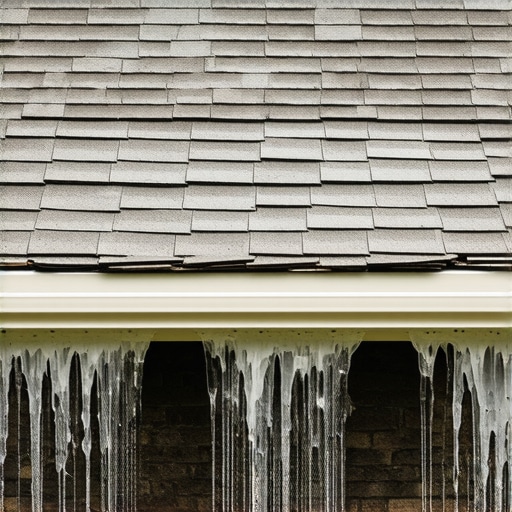
Walking on that roof felt like walking on a sponge. I knew exactly what I’d find underneath the moment my boot sank three inches into a spot that should have been as rigid as a concrete slab. I wasn’t there for the shingles; the homeowner thought they had a ‘shingle leak.’ But as a veteran with 25 years of forensic roofing, I don’t look at where the water is—I look at where it came from. The air was thick with the scent of damp, fermented cedar and the metallic tang of oxidized aluminum. Down at the eave, the gutters were pulled away just a fraction of an inch, but that gap was a gateway. When I finally peeled back the starter course, the plywood didn’t just break; it crumbled like wet oatmeal. This wasn’t a material failure; it was a physics failure. The gutter pitch was dead wrong, and in our freezing Northeast climate, that’s a death sentence for a roof deck. Many local roofers and roofing companies focus on the ‘square’—that 100 square feet of shingles—but they ignore the 1/4 inch of slope that keeps your house from rotting from the bottom up.
The Physics of Failure: Why Pitch is Not Optional
Gravity is the only contractor that never takes a day off. In a perfect world, a gutter is sloped at a rate of 1/4 inch for every 10 feet of run toward the downspout. In 2026, we are seeing more failures than ever because ‘trunk slammers’ are trying to make gutters look ‘level’ for aesthetic reasons. They think a level gutter looks better against the roofline. They’re wrong. Water doesn’t care about your curb appeal. When a gutter lacks the proper pitch, the water doesn’t just sit there; it gains hydrostatic pressure. As it pools, the weight of the water—roughly 8 pounds per gallon—starts to bow the aluminum. In the winter, that pool turns into an ice block, expanding and pushing upward. This creates a back-flow mechanism where water is forced under the drip edge and into the sub-fascia. You start seeing local roofers identifying fascia wear as a symptom, but the root cause is the pitch. If the water can’t move horizontally toward the downspout, it will move vertically into your rafters.
“Gutters and downspouts must be installed to prevent water from entering the building envelope.” – International Residential Code (IRC)
Sign 1: The Mosquito Lagoon (Standing Water)
If you climb a ladder and see two inches of stagnant water in a gutter that hasn’t seen rain in three days, you have a pitch failure. This isn’t just a cleaning issue; it’s a structural one. Standing water is a sign that the ‘low point’ of your gutter is in the middle of the run rather than at the downspout. Mechanism zooming: Look at the surface tension. Water will naturally ‘climb’ the sides of the gutter trough through capillary action if it’s not moving. This moisture stays in constant contact with the bottom of your roof’s starter strip. Over time, this constant humidity weakens the adhesive bond of the shingles. I’ve seen countless signs of underlayment rot caused solely by the humidity rising out of a poorly pitched gutter. It turns your attic into a humidor, and not the good kind. The wood swells, the nails (some of them ‘shiners’ that missed the rafters) start to rust and pop, and suddenly you have a leak in the middle of your bedroom ceiling.
Sign 2: Tiger Striping and the ‘Lick Back’
Have you ever noticed those dark, vertical streaks on the outside of your gutters? The trade term is ‘Tiger Striping.’ While some of it is just pollutants, heavy striping is often a sign of ‘over-topping.’ When a gutter isn’t pitched correctly, water fills the trough too quickly during a heavy downpour because it’s not draining fast enough. The water then ‘licks back’ over the rear edge of the gutter. Zoom in on the physics: as water crests the back of the gutter, it uses the fascia board as a slide. It creeps behind the aluminum and saturates the wood. This leads to eave damage that is often invisible until the gutter literally falls off the house. I once saw a job where a ‘cricket’ (a small water diverter) was installed behind a chimney, but the gutters were so poorly pitched that the water just backed up and bypassed the cricket entirely. It was a $20,000 mistake for a $200 adjustment.
Sign 3: The Foundation Trench
If you walk around your house and see a literal trench dug into your mulch or soil directly beneath the gutters, your pitch is failing. This happens when the gutter is pitched *away* from the downspout, causing the water to overflow at the far end. This isn’t just a landscaping problem. In cold climates, that water saturates the soil near your foundation, freezes, and then exerts ‘frost heave’ pressure against your basement walls. Professional roofing companies know that a roof is a system that ends at the ground. If you don’t fix the drains and the pitch, you’re just moving the problem from the roof to the basement. I’ve seen foundations crack because a 40-foot gutter was pitched just half an inch the wrong way, dumping 500 gallons of water into one corner of the house during a spring thaw.
“A roof is only as good as its flashing and its ability to shed water efficiently.” – Old Roofer’s Adage
The Fix: Surgery vs. Band-Aids
Don’t let a contractor tell you that more brackets will fix a sagging gutter. That’s a Band-Aid. If the pitch is wrong, the entire run needs to be ‘snapped’ again. We use a chalk line to establish the high point and the low point, ensuring a consistent slope. We check for ‘shiners’—those missed nails from the original install that create a path for water to enter the attic. If you’re hiring local roofers, ask them how they calculate pitch on a 50-foot run. If they don’t mention a level or a string line, show them the door. Proper gutter maintenance and cleaning won’t save a gutter that was hung wrong from day one. In 2026, with the increased intensity of ‘micro-burst’ storms, your drainage system needs to be forensic-grade. Anything less, and you’re just waiting for the rot to set in.