
The Dining Room Drip That Isn’t Raining
You’re sitting at your kitchen table in the dead of winter, and a single, rhythmic plink-plink-plink hits your coffee mug. You look up. There’s a brown ring forming on the drywall. The first thing you do is call three local roofers. The first guy shows up with a ladder and a pair of binoculars. The second guy pokes a screwdriver into your fascia and shrugs. But the third guy? He pulls out a device that looks like a rugged smartphone and starts scanning your ceiling and your roofline. He’s looking for the ghost of a leak that hasn’t even fully manifested yet. This is the new reality of roofing in 2026. If your contractor isn’t using thermal imaging, they are basically trying to perform surgery in a dark room with a candle. My old foreman used to say, ‘Water is patient. It will wait for you to make a mistake.’ And he was right. Water doesn’t just fall; it travels, it wicks, and it hides in the thermal shadows of your attic. By the time you see a stain, the crime has been in progress for months.
The Physics of the Infrared ‘Glow’
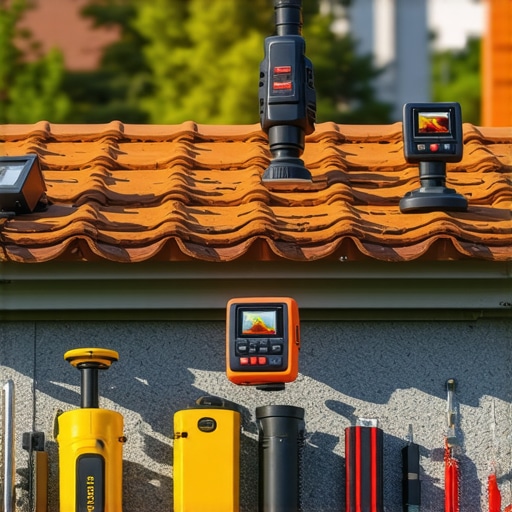
To understand why roofing companies are pivoting to FLIR (Forward Looking Infrared) technology for 2026 quotes, you have to understand the physics of ‘thermal mass.’ Imagine it’s a crisp October evening. The sun has gone down, and the air is cooling rapidly. A dry piece of plywood loses its heat quickly. But a piece of plywood that has been soaked by a slow leak behind a chimney? That wet wood holds onto heat much longer. When we point a thermal camera at your roof during the ‘golden hour’ after sunset, the dry areas appear dark (cold), while the moisture-compromised areas glow like a neon sign. This isn’t magic; it’s differential heat capacitance. We are looking for the anomalies where the roofing system is retaining energy it shouldn’t. If you ignore these signatures, you’re just waiting for the day you need local roofers’ 3 fixes for rotted roof decking because the structural integrity of your home has been quietly eaten away by rot.
“A roof is only as good as its flashing, and flashing is only as good as the person who installed it during a snowstorm at 4 PM on a Friday.” – Old Roofer’s Adage
Mechanism Zooming: The Capillary Action Trap
Why do we need this tech now? Because modern shingles are actually too good at hiding surface damage. You can have a perfectly intact-looking asphalt shingle while water is performing a ‘sideways dance’ underneath it. This is called capillary action. When two surfaces are pressed close together—like a shingle over an improperly installed starter strip—water can actually be pulled upward or sideways against gravity. It finds a shiner (that’s trade talk for a nail that missed the rafter and is just hanging out in the attic space). That metal nail becomes a cold-sink. In the winter, warm, moist air from your house hits that cold nail, condenses into a droplet, and drips onto your insulation. Over time, that insulation mats down, loses its R-value, and creates a ‘thermal bridge’ that we can see instantly on a scan. Without the camera, a roofer might tell you that you need a whole new roof, when in reality, you just have a few misplaced nails and an attic joint seal issue. This is why local roofers who care about their reputation are moving away from ‘eyeballing it’ and toward data-driven diagnostics.
The 2026 Quote: Why It’s Getting More Expensive (and Honest)
You might notice that roofing companies are quoting 20% higher for projects lately. Part of that is the tech stack. Buying a high-resolution thermal imager that can distinguish between a 0.5-degree temperature variance isn’t cheap. But the real cost is the honesty it forces. In the old days, a ‘trunk slammer’ would give you a lowball quote, tear off the shingles, and then hit you with a ‘surprise’ $4,000 change order because the decking was ‘unexpectedly’ rotted. With a thermal scan performed during the bidding phase, we know exactly how many squares of plywood need to be replaced before we even touch a shingle. It eliminates the ‘hidden’ costs and protects the homeowner from sneaky ways local roofers cut corners. If a contractor hands you a quote that is just a handwritten number on a napkin, run. If they hand you a multi-page report with infrared overlays showing the ‘heat bleed’ from your gables, you’ve found a professional.
The Forensic Autopsy of an Ice Dam
In cold climates, the thermal scan is the only way to truly diagnose an ice dam before the ice actually forms. Most people think ice dams are a ‘roof problem.’ They aren’t. They are a ‘ventilation and insulation’ problem. When I scan a roof from the outside, I’m looking for ‘hot spots’ near the eaves. These are areas where heat is escaping from the living space—often through an ‘attic bypass’ like a recessed light fixture or a poorly sealed valley. That heat melts the bottom layer of snow on the roof. The water runs down to the cold overhang (where there is no heat) and freezes. Boom. You have an ice dam. The water then backs up under the shingles, looking for a way in. A thermal camera catches that heat loss in November, so you aren’t calling for emergency roof services in February when the ceiling starts falling in. It’s about being proactive rather than reactive. We aren’t just looking for liquid water; we are looking for the conditions that invite water to move in and stay a while.
“The building envelope must be continuous. Any break in the thermal or moisture barrier is a failure in waiting.” – International Residential Code (IRC) Commentary
The Myth of the ‘Visual Inspection’
I’ve been on 2,000 roofs in my career. I can spot a curled shingle or a cracked cricket from the driveway. But I can’t see through five inches of polyisocyanurate foam or R-38 fiberglass batts. No one can. When roofing companies rely solely on visual inspections, they are missing about 40% of the story. I once tore off a roof where the shingles looked brand new—maybe five years old. The homeowner was complaining of a musty smell. The thermal scan showed a massive blue (cold) plume under the ridge vent. When we pulled the cap, we found the previous crew had never actually cut the slit in the roof deck for the ridge vent to breathe. The roof was literally suffocating, trapping moisture-laden air that turned the plywood into something resembling wet cardboard. This is a prime example of why you need to check for signs your 2026 roof inspection was incomplete. If they didn’t look at the ‘unseen’ thermal data, they didn’t inspect the roof; they just looked at it.
Selecting Your 2026 Contractor
When you are vetting local roofers, don’t just ask about their price per square. Ask about their diagnostic tools. Do they use moisture meters? Do they use infrared? Do they provide a digital ‘health report’ of the deck? You want a forensic investigator, not a salesman. A real pro will show you the ‘shiners’ in your attic that are causing localized frost. They will show you where the flashing against the brick chimney has pulled away just enough to let wind-driven rain in, a gap invisible to the naked eye but obvious on a thermal map. This level of detail is what separates a 30-year roof from a 10-year headache. Don’t let a ‘cheap’ quote fool you; the most expensive roof is the one you have to pay for twice. Demand the scan, see the data, and make sure your 2026 project is built on a foundation of physics, not guesswork.