
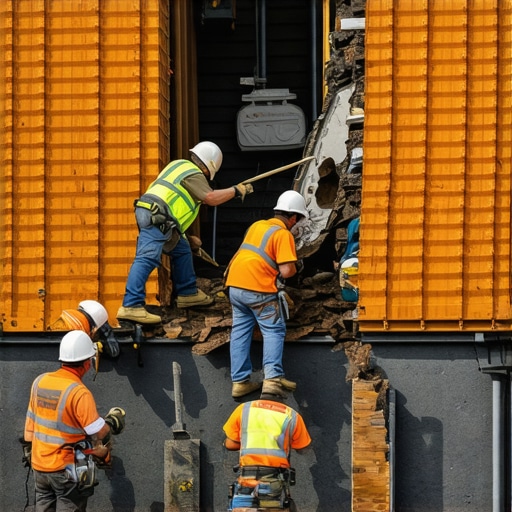
The Forensic Scene: Walking on a Sponge
Walking on that roof felt like walking on a sponge. I knew exactly what I’d find underneath before I even pulled my pry bar out. It was a 115-degree afternoon in Scottsdale, the kind of heat that makes the air shimmer off the parapet walls, and this ‘new’ roof—barely three years old—was already failing. The homeowner was baffled. They had the paperwork, the ‘lifetime’ warranty, and the shiny brochure from a company that had since vanished into the desert haze. As I peeled back a section of the valley, the smell hit me: the cloying, damp stench of rotting OSB in a climate that should be bone-dry. This wasn’t a material failure; it was a forensic trail of professional negligence. In my 25 years on the deck, I’ve seen every trick in the book, but as we head into 2026, local roofers are getting bolder with their shortcuts, banking on the fact that you won’t climb a ladder to check their work.
The Southwest Reality: When Heat Becomes a Hammer
In the Southwest, we don’t fight snow loads; we fight the sun. UV radiation here is a relentless physical force that degrades bitumen on a molecular level. When the temperature hits 110°F, your attic is likely screaming at 160°F. This creates a massive thermal gradient. Most roofing companies talk about ‘curb appeal,’ but they ignore the physics of thermal expansion. In this desert corridor, materials expand and contract violently between the blistering afternoon and the 50-degree desert night. If a roofer doesn’t account for this movement, the roof literally tears itself apart from the inside out. We are seeing a surge in roofing failures because ‘trunk slammers’ are applying East Coast logic to a Desert climate, using materials that turn brittle before the first anniversary of the install.
“The roof shall be designed and constructed to resist the environmental loads.” – International Building Code (IBC) Section 1501.1
1. The Underlayment ‘Bait and Switch’
The biggest scam in 2026 is happening where you can’t see it: the underlayment. In a high-heat zone, the underlayment is your secondary water barrier and your primary thermal shield. I’ve caught crews quoting high-performance, self-adhering synthetic membranes but actually laying down cheap #15 felt. In the desert, organic felt is a death sentence. The oils in the felt dry out within 48 months, leaving behind a paper-thin layer that cracks like a dried-out tortilla. When rain finally does hit, water moves via capillary action—sideways under the shingles—and finds those cracks. A pro knows that polymer shingle underlay is the only way to survive the thermal shock of the Southwest. If your roofer is using staples instead of plastic caps on that underlayment, they are inviting ‘shiners’—nails that miss the rafter and create a direct conduit for moisture to drip into your insulation.
2. Fastener Fraud and the ‘Shiner’ Epidemic
Let’s talk about ‘Squares.’ One square is a 10-foot by 10-foot area. A standard architectural shingle requires four to six nails depending on the slope and wind rating. To save thirty minutes a day, lazy crews will ‘four-nail’ a high-slope roof that requires six. But the real crime is the ‘high-nailing.’ If the nail isn’t placed exactly in the nail line, it doesn’t catch the top of the shingle below it. In our desert wind storms, those shingles will flap like a loose deck of cards. I’ve seen entire slopes of shingle lifting because the installer was trying to beat the afternoon heat and stopped caring about precision. When you see a ‘shiner’—a nail head gleaming in the attic—it’s a sign that the crew was firing blind. Each shiner is a thermal bridge, pulling heat directly from the roof deck into your attic space, and eventually, a source of a ‘mystery leak’ that only appears during a monsoon.
3. Reusing ‘Ghost’ Flashing in Valleys
The valley is the most vulnerable part of your roof. It’s where the physics of hydrostatic pressure comes to a head. During a heavy downpour, hundreds of gallons of water are funneled into these channels. Local roofers looking to shave $500 off a quote will often leave the old metal flashing in place, ‘re-lining’ it with a bit of ice and water shield and slapping new shingles over it. It’s a surgical mistake. Old flashing has existing nail holes and unseen corrosion. By the time you notice poor roof flashing, your decking is already turning to oatmeal. I’ve seen roofing companies skip the cricket—that small peaked structure behind a chimney—entirely. Without a cricket, water ponds behind the chimney, creating a stagnant pool that eats through sealants through sheer persistence. Water doesn’t need a hole; it only needs a microscopic path and time.
“A roof is only as good as its flashing; the shingle is merely the aesthetic skin.” – Old Roofer’s Adage
4. Ventilation Sabotage: Cooking the Shingle
The most sophisticated way local roofers cut corners is by ignoring the ‘Stack Effect.’ In Phoenix or Vegas, ventilation isn’t just about comfort; it’s about material survival. If a roofer installs a ridge vent but fails to ensure the soffit intakes are clear of insulation, they’ve created a vacuum that pulls air from the house, not the outside. Even worse is the ‘mixed system’—installing a powered fan near a ridge vent. This short-circuits the airflow, leaving the bottom of the roof deck to bake. This leads to shingle blistering, where the volatile gases in the asphalt expand, creating tiny bubbles that pop and shed granules. Once those granules are gone, the UV destroys the shingle in months. It’s a slow-motion car crash that starts because someone was too lazy to crawl into the eaves and baffles the intake vents.
The ‘Lifetime’ Warranty Trap
In 2026, don’t be fooled by the word ‘Lifetime.’ Most of these are manufacturer warranties that only cover material defects, not ‘labor’ or ‘consequential damage.’ If the roofer used the wrong nails or botched the ventilation, the manufacturer will laugh you off the phone. You need to understand the hidden costs that come with a ‘cheap’ quote. Often, the lowest bid is low because they aren’t carrying proper workers’ comp or they’re planning to skip the permit. If you want to survive the 2026 season, you have to compare warranties based on the ‘exclusions’ list, not the ‘benefits’ list. Look for a contractor who talks about the ‘decking integrity’ and ‘vapor drive,’ not just someone who shows you a color palette. A real roofer knows that the best roof is the one you never have to think about again.