
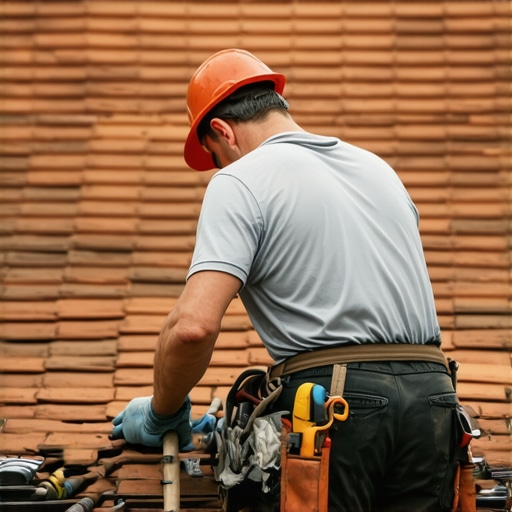
The Forensic Scene: Walking the Sponge
Walking on that roof felt like walking on a sponge. I knew exactly what I’d find underneath before the first shingle was even pried up. It was a humid Tuesday in a coastal zip code, and the homeowner was bragging about the ‘steal’ of a quote he got from one of those fly-by-night roofing companies. But as my boots sank into the soft spots near the valley, the smell hit me—that unmistakable, cloying scent of wet, fermenting OSB. Most local roofers in 2026 are still quoting like it is 2015, overlooking the biological and structural realities of modern building envelopes. They see a roof replacement as a cosmetic skin graft; I see it as a forensic surgery. When a contractor misses these details, you aren’t saving money; you’re just financing a disaster that will mature in three to five years.
1. The Decking Delusion: Beyond the Surface Plywood
The first hidden cost is the assumption that the ‘bones’ are solid. In high-humidity zones, moisture doesn’t just sit on top; it migrates. Through a process called capillary action, water tension pulls moisture upward through the laps of the shingles, especially if the pitch is shallow or the starter strip was installed by someone who was more interested in their lunch break than their craft. By the time you see a brown spot on your ceiling, the structural integrity of your decking is likely compromised. Many quotes you’ll receive from roofing companies only account for ‘two sheets of plywood,’ a standard placeholder that rarely reflects the reality of hidden plywood delamination. When that plywood gets wet and dries repeatedly, the glues fail. The wood doesn’t just rot; it separates into thin, useless wafers that won’t hold a nail. If your roofer isn’t checking for ‘shiners’—those missed nails that indicate a soft deck—they are quoting you a failure. They’ll nail new shingles into ‘oatmeal,’ and the next high-wind event will peel your ‘new’ roof off like an orange skin because there was no withdrawal resistance in the fasteners.
“A roof is only as good as its flashing.” – Old Roofer’s Adage
If you find yourself in a situation where the structural layer has failed, you need to understand the fixes for rotted roof decking before the new shingles go down. A real quote in 2026 must include a per-sheet price for replacement that accounts for the current market volatility of lumber, not just a low-ball estimate designed to get a signature.
2. The Flashing Physics: Galvanic Corrosion and Wall Junctions
The second cost is the ‘Flashing Gamble.’ Most local roofers will try to reuse old flashing to keep the quote competitive. This is architectural malpractice. In coastal or high-rain environments, we deal with the chemistry of the air just as much as the physics of the water. When you mix different metals—say, a copper valley with galvanized nails—you trigger galvanic corrosion. The less noble metal literally dissolves over time. Furthermore, the way water moves at a wall junction is a masterclass in persistence. Hydrostatic pressure pushes water into the tiniest gaps in your step flashing. If the roofer doesn’t understand how to stop water entry at walls, they are leaving a ticking time bomb behind your siding. They skip the ‘cricket’—that small peaked structure behind a chimney designed to divert water—because it takes an extra hour to build. Without it, water ponds, the temperature cycles cause the metal to expand and contract (thermal shock), and eventually, the seal breaks. You’ll be calling for repairs before the first year is out, and that ‘cheap’ roofer will be nowhere to be found.
3. Underlayment and the 2026 Code Evolution
The third hidden cost is the ‘Paper Trap.’ For decades, 15lb or 30lb felt paper was the standard. It’s cheap, it’s familiar, and it’s garbage. In 2026, building codes are shifting toward secondary water resistance. If a roofer quotes you standard felt instead of high-performance polymer shingle underlayment, they are ignoring the physics of wind-driven rain. Synthetic underlayments don’t just provide a barrier; they ‘self-seal’ around the shank of the nail. In a hurricane-prone or high-wind zone, if your shingles blow off, that underlayment is the only thing standing between your living room and a total loss. Cheap quotes skip the high-end synthetics because they cost three times as much per square. But when you consider that a ‘square’ is 100 square feet, the price difference is negligible compared to the cost of an insurance deductible after a flood.
“The building envelope must be viewed as a single, continuous system, not a collection of disparate parts.” – Architecture Axiom
You also have to look at the warranty. Most ‘Lifetime Warranties’ are marketing fluff designed to protect the manufacturer, not the homeowner. If you don’t use the entire ‘system’—the specific starter, the specific ridge vent, and the specific underlayment—the manufacturer will deny your claim the moment a leak happens. You must learn how to compare 2026 warranties safely to ensure that the quote you are signing actually provides the protection you think you’re buying. A quote that doesn’t specify the ‘System’ brand is a quote that is designed to fail.
Summary: The True Cost of a Quality Roof
Don’t be seduced by a low number on a piece of carbonless paper. A roof in 2026 is an engineered system designed to handle thermal expansion, UV radiation, and extreme hydrostatic pressure. When you are vetting roofing companies, ask them about the ‘crickets’ in the valleys and the ‘R-value’ of the air sealing they are doing at the deck level. If they look at you like you have two heads, show them the door. Your home is too expensive to be a training ground for a contractor who doesn’t understand the forensic reality of why roofs fail. It is always cheaper to do it right once than to do it twice because you chased a ‘bargain’ that turned into a basement full of moldy drywall and rotted rafters.