
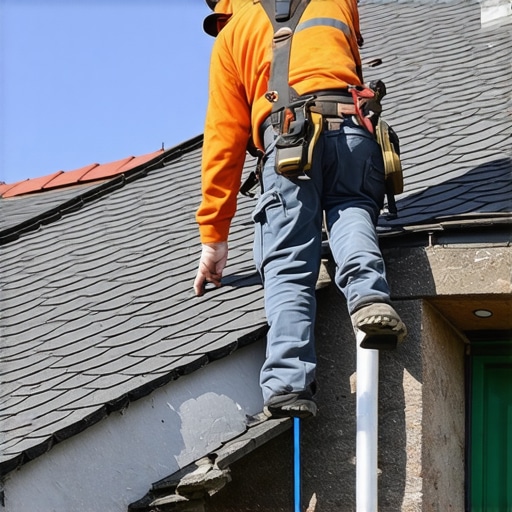
The Forensic Autopsy of a Wet Wall
You see that brown, crusty ring on your ceiling right where the drywall meets the vertical wall? It’s not just a stain; it’s a crime scene. Most local roofers will tell you it’s a ‘shingle issue’ and try to sell you a whole new square, but I’ve spent 25 years peeling back layers of rotted plywood that smelled like a swamp in mid-July. Walking on that roof felt like walking on a sponge. I knew exactly what I’d find underneath: a total failure of the wall-to-roof transition. In cold climates like Boston or Chicago, this isn’t just a leak; it’s a structural death sentence. When the snow piles up against those walls and the heat from your poorly insulated attic creates an attic bypass, that snow melts from the bottom up. This water doesn’t run off; it sits, pressurized, looking for any gap in the flashing. This is where hydrostatic pressure and capillary action turn your home into a sponge.
“Flashings shall be installed at wall and roof intersections, at gutters and wherever there is a change in roof slope or direction.” – International Residential Code (IRC) R903.2
1. The Kick-Out Flashing: The Unsung Hero
The biggest mistake roofing companies make is omitting the kick-out flashing. Without it, water running down a roof-wall intersection doesn’t just go into the gutter; it follows the siding down, slips behind it, and starts eating your sheathing. I’ve seen rotted roof decking so bad you could poke a finger through it because a $10 piece of metal was missing. The physics are simple: water has surface tension. It wants to cling to the wall. A kick-out diverter breaks that tension and forces the stream away from the siding and into the trough. If your contractor isn’t installing these, they aren’t a roofer; they’re a trunk-slammer. You need to ensure they are integrated with the house wrap, not just tucked under a single shingle. If you notice soft spots, you might need to check out these fixes for rotted roof decking before the mold takes over.
2. Step Flashing vs. The ‘Lazy’ Continuous Channel
Water is patient. It will wait for a single missed nail—a shiner—to find its way into your rafters. I’ve seen local roofers try to save time by using a single long strip of L-flashing along a wall. That is a recipe for disaster. Proper roofing requires step flashing: individual pieces of metal bent at 90 degrees, woven into every single course of shingles. This creates a shingle-fashion drainage system. When water tries to move sideways under a shingle via capillary action—where the narrow gap between materials actually pulls the liquid upward and inward—the step flashing acts as a barrier, directing it back out onto the surface of the next shingle down. If you see a long, unbroken silver line of metal along your wall, you’re looking at signs of poor roof flashing that will eventually fail.
3. The Ice & Water Shield ‘Upturn’
In our climate, a standard felt underlayment is about as useful as a screen door on a submarine when ice dams hit. You need a self-adhering polymer modified bitumen membrane. But here’s the trade secret: it has to go 12 inches up the vertical wall. Most crews stop at the crease. When the ice builds up in the gutter and creates a pool of standing water, that water backs up. If that vertical seam isn’t sealed, the water goes behind the step flashing and straight into your wall cavity. This is where you see the drywall tape peeling in your bedroom. Using a high-quality polymer shingle underlay is a start, but the execution at the wall junction is where the battle is won or lost. I’ve seen plywood turned to oatmeal because someone was too lazy to pull the siding and run the membrane up the wall correctly.
4. Counter-Flashing and the Mortar Joint
If you have a brick wall or a chimney, you can’t just caulk the metal to the brick. Caulk is a Band-Aid, not surgery. Sunlight and thermal expansion will shred that bead of silicone in two seasons. The right way—the forensic way—is to grind a reglet (a groove) into the mortar joint, tuck the top of the metal flashing into that groove, and then use a specialized masonry sealant. This creates a mechanical lock. Water running down the brick hits the metal tucked into the brick itself, leaving no path to get behind the flashing. If you’re seeing moisture around a stone veneer or brick transition, you’re likely dealing with loose roof valley or seam flashing issues that require more than just a tube of goop.
“A roof is only as good as its flashing.” – Old Roofer’s Adage
5. Integration with the Weather Resistive Barrier (WRB)
The final layer of defense is the house wrap. It has to overlap the vertical leg of your flashing. If the flashing is on top of the house wrap, any water that gets behind your siding (and water always gets behind siding) will run down the wrap and straight behind your flashing. It’s basic gravity, yet I see it wrong on every third job I inspect. You have to think like a raindrop. You want a clear, unobstructed path to the ground. When we do a forensic tear-off, we’re looking for where the sequence was broken. If you have an active leak during a storm, you might need DIY fixes for heavy rain just to survive the night, but the permanent fix always involves correcting the ‘shingle-fashion’ layering of the wall transitions. Don’t let a ‘cheap’ quote from a non-specialist tempt you; the cost of repairing the structural rot behind the wall will be ten times what you ‘saved’ on the roof. Dealing with wall leaks is surgery, and you want a surgeon, not a guy with a ladder and a dream. Ensure your roofing companies provide a detailed plan for these transitions before you sign anything.