
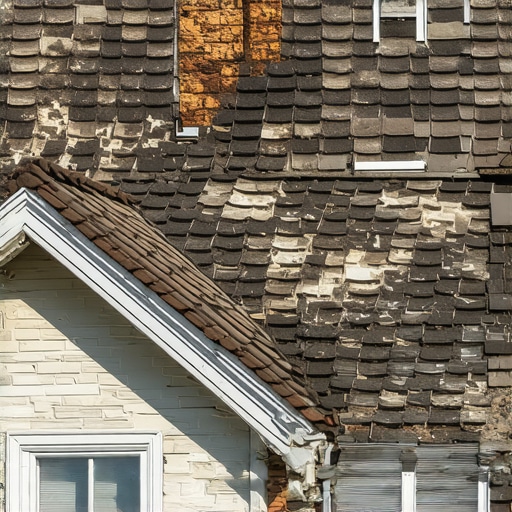
You step out onto a roof in the middle of July in Phoenix or Las Vegas and you can feel the heat radiating through your boots. It is 140 degrees up there, easily. As a forensic roofer, I am not looking at the view; I am looking at the texture of the shingles. Most homeowners think their roof is fine until the ceiling starts dripping, but by then, the autopsy is already over. One of the most misunderstood killers of an asphalt roof is blistering. It is often misdiagnosed as hail damage by storm-chasing roofing companies, but the physics are entirely different. Blistering is a slow-motion explosion happening at the molecular level, and if you do not catch it, you are looking at a premature tear-off of every square on your house.
My old foreman, a man who spent forty years smelling like hot tar and regret, used to tell me, ‘Water is patient, but the sun is a bully. If you leave even a drop of sweat inside that shingle, the sun will turn it into a bomb.’ He was right. Shingle blistering happens when moisture is trapped within the shingle’s asphalt layer during manufacturing or when improper ventilation allows the attic to reach temperatures that cause the asphalt to off-gas. When that gas or water vapor expands, it has nowhere to go but up, creating a pimple on the surface of your roof. Once that pimple pops, the granules are gone, and your UV protection is history.
“Ventilation shall be provided in accordance with the International Residential Code (IRC) to prevent the accumulation of moisture and heat that can lead to accelerated material degradation.” – International Residential Code (IRC), Section R806
The first way to spot blistering is the ‘Pimple’ Effect. You have to get low, almost putting your nose to the shingles. You will see small, raised protrusions that look like acne on the shingle surface. Unlike hail, which leaves a dent (a ‘bruise’ in the fiberglass mat), a blister is an outward expansion. If the blister hasn’t popped yet, it is a pressurized pocket of gas. You can actually feel the tension if you press it. Local roofers often miss these because they are looking for the big, obvious holes, but these small bumps are the early warning signs of a thermal shock problem. If you ignore these, you might eventually notice signs of hidden plywood delamination because the heat that caused the blisters is also cooking your roof deck from the inside out.
The second sign is Concentric Granule Loss. When a blister pops, it leaves a very specific circular pit. This isn’t just a random bald spot. Because the asphalt was pushed upward and then cracked, the granules fall away in a nearly perfect circle, exposing the black bitumen underneath. In the desert Southwest, those exposed black spots act like heat magnets, absorbing even more UV radiation and accelerating the decay of the surrounding material. This is where mechanism zooming matters: the heat doesn’t just stay on the surface; it conducts through the mat, drying out the oils that make the shingle flexible. Once those oils are gone, the shingle becomes as brittle as a potato chip.
Third, you need to listen for the ‘Crunch’ Factor. When walking a roof—carefully, and never when it is at its hottest to avoid scuffing—a blistered roof will have a distinct sound. It feels crunchy underfoot. This is because the surface tension of the shingles has been compromised by thousands of tiny micro-fissures. If you are hearing that crunch, you are likely dealing with an attic that isn’t breathing. You should check if the installers used the best ways to seal attic vents to ensure that air is actually flowing from the soffit to the ridge, rather than just swirling in dead pockets.
“A roof is only as good as its flashing and its ability to shed heat as efficiently as it sheds water.” – Old Roofer’s Adage
The fourth sign is Shadow Patterning. During the early morning or late evening, when the sun is at an angle, the blisters will cast tiny shadows that make the roof look ‘fuzzy’ or dirty. From the ground, it might just look like the shingles are old, but under a forensic lens, those shadows reveal a surface that is no longer flat. This unevenness disrupts the way water moves over the roof. Instead of a smooth flow, the water gets caught in the ‘valleys’ between the blisters. This can lead to capillary action, where water is actually pulled sideways under the shingle laps, eventually hitting a ‘shiner’—a nail that missed the joist—and following it down into your attic.
Finally, look for Premature Aging in Targeted Zones. Blistering rarely happens uniformly. It hits the south-facing slopes first and hardest. If your north-facing roof looks brand new but the south side is covered in ‘pitted’ shingles, you aren’t looking at storm damage; you are looking at a ventilation failure. To fix this, you don’t just patch the holes; you have to address the thermal expansion issues. Many roofing companies will try to sell you a full replacement without fixing the intake air, which means your new roof will start blistering in five years too. You need to look into ways to extend shingle life, which always starts with balanced airflow.
The bottom line is that a blistered roof is a ticking clock. Once those granules are gone, the sun eats the asphalt, the asphalt cracks, and the water finds its way to the wood. You might think you are saving money by ignoring those little bumps, but you are actually just waiting for the day I have to come out and tell you that your rafters are rotting. Get a local roofer who knows the difference between a hail hit and a heat blister, or you will be paying for the same roof twice.