
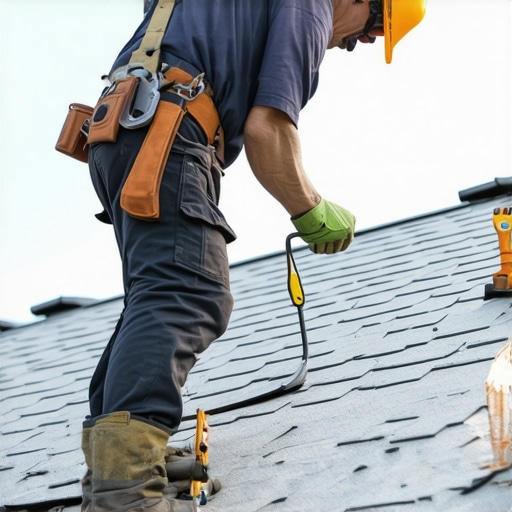
The Invisible Backbone: Why Your Fasteners Matter More Than Your Shingles
I’ve spent three decades on steep-slope decks, smelling the distinct aroma of salt air and overheated asphalt, and if there is one thing I’ve learned, it is that a roof is only as good as the metal holding it down. You can buy the most expensive designer shingles on the market, but if the roofing companies you hire are using cheap nails or firing their guns with the wrong pressure, that roof is just a giant sail waiting for the next tropical depression to rip it into the neighbor’s yard. Most homeowners look at the color of the shingle; I look at the shank of the nail. In 2026, the tech has changed, but the physics of wind uplift remains a brutal, unforgiving reality.
The Physics of the ‘Shiner’ and Why Water is Patient
My old foreman used to pull me aside when I was just a grunt and say, ‘Water is patient. It will wait for years just for you to make one mistake.’ He was right. One of the most common failures I see during a forensic tear-off is the ‘shiner.’ That is a nail that missed the rafter or the structural meat of the deck entirely. It sits there, exposed in the attic space. When the temperature drops and the humidity rises, that cold metal nail becomes a condensation magnet. Drip. Drip. Drip. Before you know it, you are looking at decking rot that looks like wet cardboard. It isn’t a leak from the outside; it’s a self-inflicted wound from poor fastening.
“Fasteners shall be driven flush with the shingle surface and shall not be overdriven or underdriven.” – International Residential Code (IRC) R905.2.5
When local roofers get lazy, they don’t adjust their compressors. If the pressure is too high, the nail head shears right through the shingle’s reinforcement mat. Now, instead of a fastener, you have a hole. In high-wind zones, that shingle has zero uplift resistance. It’ll stay there for a sunny day, but the first 60-mph gust will peel it back like a banana skin. This is exactly how roofing companies handle high winds—or fail to—at the most basic mechanical level.
1. The Visual Pattern Audit: Beyond the ‘Six-Nail’ Rule
The first way to check your 2026 fastening is a simple pattern audit. In the old days, four nails per square was the standard. Today, in high-wind regions, we are looking for a six-nail or even an eight-nail pattern, specifically driven into the common bond—that narrow strip where two layers of the shingle overlap. If your contractor is ‘high-nailing’ (placing nails above the sealant strip), they are essentially voiding the manufacturer’s wind warranty on day one. I’ve walked roofs where you could slide a putty knife right under the course because the fasteners were two inches too high. You need to verify the placement. If you see nails scattered like buckshot, you have a problem. Proper fastener failure often starts with simple human error on the roof ridge.
2. The ‘Pull-Out’ Resistance Check and Substrate Integrity
Fasteners need something to bite into. I recently did an inspection where the local roofers nailed right into old, delaminated plywood that felt like a sponge under my boots. You can use the best stainless-steel ring-shank nail in the world, but if the wood is soft, it won’t hold. We use a pull-out test to ensure the deck can provide the necessary resistance. If the nail doesn’t meet the pound-force requirements, the whole system is a failure. Many roofing companies use smart fasteners now that provide feedback on torque and depth, which is a massive leap forward from the ‘guess-and-check’ method of the 90s.
3. Material Compatibility: The Silent Killer of Galvanic Corrosion
In the Southeast, salt air is a predator. If you use standard electro-galvanized nails near the coast, they will be rusted through in seven years. I’ve seen 20-year shingles fall off a house because the nails literally turned to dust. You want to see hot-dipped galvanized or, better yet, 304 stainless steel. When you mix different metals—say, a copper valley flashing with aluminum-coated nails—you get galvanic corrosion. The weaker metal sacrifices itself, and suddenly your flashing is flapping in the wind. This is why spotting nail pop leaks is often about looking for the rust stains bleeding down the shingle face.
“A roof system’s longevity is dictated by the weakest component in the assembly.” – NRCA Manual
4. Thermal Imaging and Fastener Seating
The fourth way to check fastening in 2026 is through technology. Using infrared cameras, we can actually see ‘hot spots’ where fasteners have backed out or where moisture is accumulating around a ‘shiner.’ An under-driven nail—one that sticks up just a fraction of an inch—will eventually wear a hole through the shingle above it as the roof expands and contracts with the sun. This is known as ‘nail back-out.’ It’s a slow-motion disaster. If your roofer isn’t using heat cameras to verify the thermal seal after an installation, they are living in the stone age.
The Myth of the Lifetime Warranty
Don’t get me started on the ‘Lifetime Warranty’ sales pitch. Those warranties cover the material, not the labor or the fastening errors. If the shingle blows off because it was high-nailed, the manufacturer will laugh you off the phone. They’ll tell you it was an ‘installation error,’ and they are right. You aren’t paying for shingles; you are paying for the 10,000 nails and the skill of the hand holding the gun. When you talk to roofing companies, ask them about their ‘blow-off’ history and their fastening specs. If they can’t tell you the difference between a smooth-shank and a ring-shank nail, show them the driveway.
Final Thoughts from the Ridge
At the end of the day, your roof is a shield. Every nail is a potential hole in that shield. If you want a roof that actually lasts until 2050, stop obsessing over the color and start obsessing over the metal. Check the depth, check the pattern, and for heaven’s sake, check the material. A cheap roof is the most expensive thing you will ever buy. If you ignore the fastening, you’ll eventually deal with fascia board decay and structural issues that make the initial price tag look like pocket change.