
The Phantom Leak and the Cold Hard Truth
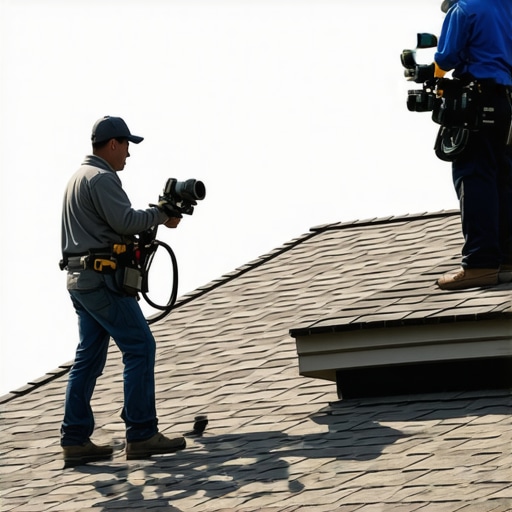
Walking on that roof in Buffalo last November felt like walking on a wet sponge. The homeowner was convinced he had a chimney flashing leak because he saw a drip near his fireplace, but I knew exactly what I’d find underneath before I even pulled a shingle. I didn’t reach for my pry bar first; I reached for the thermal camera. Modern roofing companies are tired of the ‘guess and check’ method that has plagued this trade for decades. Most local roofers will just slap some caulk on a chimney and call it a day, but that’s how you end up with decking rot that eats your house from the inside out. In 2026, if your contractor isn’t looking at the infrared spectrum, they are flying blind through a storm.
“Effective thermal insulation is necessary for the energy-efficient operation of buildings and for the comfort of the occupants.” – NRCA (National Roofing Contractors Association)
The Physics of Failure: Why Your Roof is Bleeding Heat
In the North, the enemy isn’t just the rain; it’s the internal heat of your home. When we talk about local roofers using heat cameras, we aren’t just looking for water. We are looking for the signature of energy. You see, water has a high specific heat capacity. This means wet insulation holds onto the sun’s heat long after the shingles have cooled down at night. On a 30-degree evening, a dry roof will show up as a deep blue or purple on the camera. But a patch of wet fiberglass insulation? It glows like a neon sign. That’s how we find the ‘phantom leak’—the one that hasn’t even stained your ceiling yet but is already busy turning your plywood into oatmeal.
Then there’s the issue of the attic bypass. Most roofing companies ignore what’s happening in the attic, but that’s where the real damage starts. In cold climates, warm air escapes through light fixtures and plumbing stacks. This air hits the cold underside of the roof deck, condenses, and creates what looks like a leak. Using high-resolution heat cameras allows us to spot attic heat loss before it fuels the massive ice dams that tear gutters off their hangers. It’s about understanding the building envelope, not just nailing down squares of asphalt.
The Forensic Autopsy of a Shingle Failure
When I zoom in with a thermal imager, I’m looking for more than just wet spots. I’m looking for thermal bridging. Every single nail that was driven improperly—a ‘shiner’ that missed the joist and hangs in the open air of the attic—acts as a tiny frozen straw. It pulls heat out of your house and invites frost to grow on its tip. When that frost melts, you get a drip. A heat camera reveals these patterns instantly. We also look for underlayment tears that allow air to swirl beneath the shingles, causing thermal lift that eventually leads to shingle blow-offs during a high-wind event. Most contractors don’t care about these details because they won’t show up until the check has cleared and the company has changed its name again.
“A roof is only as good as its flashing and the air seal beneath it.” – Old Roofer’s Adage
The Fix: From Band-Aids to Surgery
If your roofer finds a hot spot, the answer isn’t a bucket of tar. In 2026, the best roofing companies are moving toward comprehensive solutions. This involves air seal tech to stop the convective loops that rot out ridge vents. If the camera shows a cold bridge at the eaves, we don’t just add more insulation; we check the baffles. If your soffit vents are clogged with thirty years of bird nests and dust, your roof can’t breathe. We use the thermal data to ensure we increase roof airflow in exactly the spots where the heat is stagnating. This isn’t just a repair; it’s an engineering correction. We are solving the hydrostatic pressure issues that force water uphill under your shingles during a freeze-thaw cycle.
The Final Walk-Through: The Cost of Cheap Labor
Don’t fall for the ‘trunk slammer’ who gives you a quote on a napkin and ignores the thermal signature of your home. A roof is a system of layers: the deck, the ice and water shield, the underlayment, and the shingles. If one layer is failing, the camera will find it. In heavy-weather zones, you need to know that your high wind risk is mitigated by proper fastening and a solid thermal seal. Waiting until you see a brown circle on your ceiling is waiting too long. By that point, the mold has already taken up residence in your rafters. Use the technology available in 2026 to catch the failure while it’s still invisible to the naked eye. Your wallet, and your plywood, will thank you.