
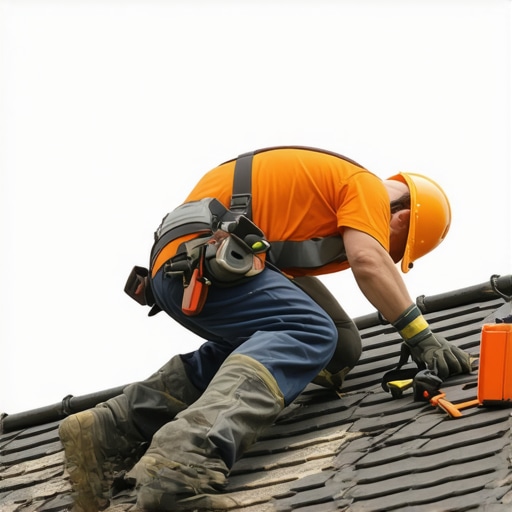
The Forensic Autopsy of a Failing Valley
The rhythmic thwack-thwack of water hitting your living room floor isn’t just a nuisance; it’s a death knell for your home’s structural integrity. Most homeowners and subpar local roofers look at a stain on the ceiling and think ‘shingle.’ I look at the roof and see a hydraulic failure. When I get up on a deck after a Southeast storm, I don’t just see a leak; I see the physics of failure at work. My old foreman used to say, ‘Water is patient. It will wait for you to make a mistake.’ And nowhere is that mistake more evident than in the valley—the interstate highway of your roof drainage system.
A roof valley is where two slopes meet, creating a natural trough. In heavy rain zones, this area handles thousands of gallons of water per hour. If the metal flashing is loose, buckled, or improperly hemmed, that water doesn’t stay in the trough. It uses capillary action—the ability of a liquid to flow in narrow spaces without the assistance of, or even in opposition to, external forces like gravity—to move sideways. It crawls under your shingles, finds a ‘shiner’ (a nail that missed the rafter), and follows it straight into your attic insulation.
The Physics of Valley Failure: Why It Happens
Before we talk about the fix, you have to understand why roofing companies often fail here. It’s usually ‘thermal shock.’ In hot climates, metal flashing can reach 160°F during the day and drop to 70°F at night. This constant expansion and contraction puts immense stress on the fasteners. If the original installer didn’t use a ‘W’ profile metal or didn’t allow for movement, the metal will eventually pull its own nails out, leaving a gap for wind-driven rain to enter.
“A roof is only as good as its flashing.” – Old Roofer’s Adage
Fix 1: Clearing the ‘Dam’ and Re-Sealing the Flange
The most common reason for loose valley flashing isn’t the metal itself, but the debris sitting on top of it. Pine needles and oak leaves accumulate in the valley, creating a literal dam. Water backs up, stays in contact with the flashing edge longer than intended, and eventually rots the sealant. Step one is a total purge of the trough. Once clear, we often find the primary sealant has cracked. We don’t just ‘caulk’ it—that’s a band-aid. We use high-grade tri-polymer sealants that remain flexible even after years of UV exposure. If you find the wood underneath is soft, you’re likely looking at hidden decking plywood decay, which requires more than just a surface fix.
Fix 2: Eliminating ‘Shiners’ and Re-Fastening
In the trade, a ‘shiner’ is a nail that missed its mark. When roofing crews move too fast, they drive nails too close to the center of the valley metal. These nails eventually back out due to the thermal expansion mentioned earlier. A loose nail creates a ‘straw’ for water to follow. The fix involves removing these rogue fasteners and replacing them with gasketed screws or repositioning the clips. You must never nail through the center of a valley. Instead, the metal should be held in place by ‘cleats’ or clips at the edges, allowing the ‘square’ of metal to move without tearing itself apart. If you’ve already seen water in the attic, you might need an emergency leak storm patch to buy time before the full repair.
Fix 3: Hemming and Pressure Relief
I once saw a valley in Houston where the metal was perfectly flat. Every time it rained, the water would splash over the sides and under the shingles. This is a design flaw. A proper fix involves creating a ‘hem’—folding the edge of the metal back on itself to create a physical barrier. For loose seams, we often install a ‘W’ diverter. This is a ridge in the middle of the valley metal that breaks the velocity of the water coming off the slopes, preventing it from ‘rushing’ up the opposite side and getting behind the shingles. Without this, you’ll see early shingle curling at the valley edges due to constant moisture saturation.
Fix 4: Underlayment Reinjection (The Secondary Barrier)
If the flashing is loose, the secondary water resistance (SWR) underneath is likely compromised. In high-wind zones, we don’t just rely on the metal. We use a peel-and-stick membrane. If the metal has lifted, we inspect the membrane for punctures. If it’s intact, we re-secure the metal; if it’s torn, we have to perform ‘surgery’—removing the surrounding shingles and installing a new layer of synthetic shingle felt pads or ice and water shield. This ensures that even if the metal expands and creates a gap, the house remains dry.
Fix 5: Installing a ‘Cricket’ or Diverter for Dead Valleys
Sometimes the valley isn’t ‘loose’ so much as it is overwhelmed. ‘Dead valleys’—where a valley terminates into a wall—are notorious for collecting water. The fix here is often the installation of a ‘cricket.’ This is a small, peaked structure built behind a chimney or at a wall intersection to divert water away from the seam. Most roofing companies skip this because it takes carpentry skills, not just shingle-hammering. But if you ignore it, the hydrostatic pressure of standing water will find its way through even the tightest seam.
“All roof systems shall be designed and installed in accordance with this code and the manufacturer’s installation instructions.” – International Residential Code (IRC) R903.1
The Reality Check: Repair or Replace?
You can keep paying for ‘patches,’ but if your valley metal is galvanized steel and it’s starting to show rust pits, you’re fighting a losing battle. The zinc coating is gone, and the iron is oxidizing. At that point, the ‘loose’ seam is just a symptom of a dead material. When choosing between local roofers, ask them how they handle valley transitions. If they say ‘mastic and mesh,’ keep walking. You want someone who understands the proper fixes for loose roof valley seam flashing, which usually involves metalwork and mechanical fasteners, not just ‘goo’ in a tube. A real pro will look for hidden shingle lifting near the valley, which is a telltale sign that wind has already begun to exploit the loose flashing. Don’t wait until the rot reaches the rafters; address the valley physics today.