
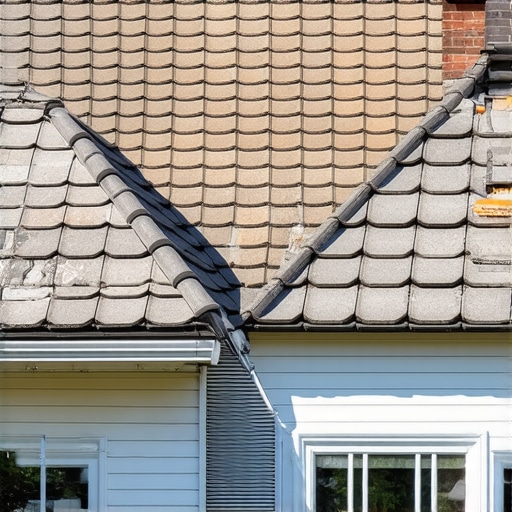
The Forensic Scene: When Shingles Snap Like Crackers
Walking on that roof felt like walking on a potato chip. I knew exactly what I’d find underneath—the sound of 30-year shingles snapping like crackers under my boots at only year seven. Most local roofers will tell you it is just ‘the heat,’ but in the high-desert sun of the Southwest, where the attic temperature regularly hits 160°F, heat is only the catalyst for a much more sinister chemical failure. When I see shingles curling—edges pulling up like a dried-out leaf—I am looking at a forensic crime scene. This isn’t just cosmetic; it is the death rattle of a roofing system that was either choked to death by poor airflow or sabotaged during the install. As a veteran who has spent 25 years on the deck, I can tell you that a shingle doesn’t just decide to curl. It is forced into that position by physics that most roofing companies ignore because they are too busy trying to get to the next job site. We are going to look at why this happens and what is actually going on at the molecular level of your asphalt.
“The primary purpose of attic ventilation is to maintain a cool roof temperature to prevent shingle deterioration and moisture accumulation.” – NRCA (National Roofing Contractors Association) Manual
1. The Solar Oven Effect: Internal Thermal Dissociation
The first and most common reason for early curling is what I call the Solar Oven Effect. In our climate zone, your attic is a pressure cooker. If your roofing companies didn’t calculate the Net Free Venting Area (NFVA) correctly, that heat has nowhere to go. It sits against the underside of the plywood deck, baking the shingles from both sides. This causes the bitumen—the sticky asphalt stuff—to undergo a process called exudative bleeding. The oils that keep the shingle flexible are literally cooked out. Once those oils are gone, the fiberglass mat begins to shrink. Because the mat is constrained by the nails, the only way it can move is to pull the corners up. This is why residential roofing 5-tips-for-roof-deck-ventilation is the difference between a 20-year roof and a 7-year headache. Without proper intake at the soffits and exhaust at the ridge, you are essentially slow-cooking your investment. I’ve seen 40-year architectural shingles curled into tubes because the local roofers forgot that air needs to move. When the asphalt dries out, it loses its grip on the granules. If you look in your gutters and see a pile of ceramic rocks, your shingles are already losing their UV protection, accelerating the curling process in a vicious feedback loop.
2. The ‘Shiner’ and the High-Nail Sabotage
The second reason is pure human error. In the trade, we talk about ‘shiners’—those missed nails that stay exposed or don’t hit the rafter. But the real killer for curling is ‘high-nailing.’ Shingles have a very specific ‘nail line’ where the two layers of the laminate shingle overlap. When roofing companies get lazy and nail two inches too high, the nail only grips the top layer. This creates a pivot point. As the sun hits the shingle and the material expands, the bottom of the shingle isn’t actually secured to the roof. It starts to ‘chatter’ in the wind. This movement, combined with thermal expansion, causes the shingle to lift and eventually curl. You might also see roof-inspection-3-signs-of-hidden-shingle-lifting-fast-early-fast-early-fast-early-fast because the seal strip—that line of tar that is supposed to bond the shingles together—can’t engage if the shingle is distorted by poor nailing. If that seal strip fails early because of dust or poor installation, the wind gets under there and the shingle begins to ‘memory set’ in a curled position. Once the asphalt sets in that shape, no amount of sun is going to flatten it back down. You are looking at a permanent structural deformity.
“Ventilation of the space over the insulation and under the roof sheathing shall be provided by an approved method.” – IRC (International Residential Code) Section R806.1
3. Hydrostatic Pressure and Decking Moisture
The third reason is the one most local roofers miss: moisture from the inside out. If you have a leak in your bathroom vent or a humid crawlspace, that moisture rises into the attic. If the attic isn’t vented, that water vapor is absorbed into the underside of the plywood decking. Wood expands when it gets wet. As the plywood swells, it pushes against the shingles. More importantly, that moisture tries to evaporate through the roof. Since asphalt is waterproof, the moisture gets trapped between the underlayment and the shingle. This creates hydrostatic pressure that ‘cups’ the shingle from the center or curls it at the edges. I once tore off a roof where the plywood was so saturated it felt like wet cardboard, even though it hadn’t rained in weeks. The shingles were curled because they were being pushed off the deck by steam. This is why checking for roof-inspection-5-signs-of-hidden-plywood-rot is a standard part of a forensic teardown. If your decking is moving, your shingles are curling. You can’t put a stable roof on an unstable foundation. When you hire local roofers 3-reasons-to-hire-a-specialist, you are paying for someone who understands that the roof is a breathing system, not just a lid on a box. If you ignore the ‘cricket’ at the chimney or the flashing in the valley, moisture will find its way into that deck, and your shingles will be the first to tell the story by pulling away from the heat. In my 25 years, I’ve seen enough ‘trunk slammers’ leave homeowners with a curled mess just because they didn’t want to crawl into a hot attic to check the baffles. Don’t let your roof become a potato chip—check your ventilation before the next summer heatwave hits.