
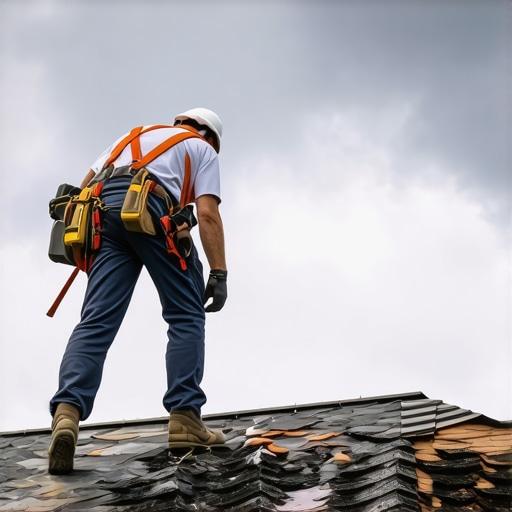
The Forensic Reality of Storm Damage
Walking on that roof felt like walking on a giant, waterlogged sponge. I knew exactly what I’d find underneath before I even pulled my hammer. Most people see a damp spot on their ceiling and think they have a ‘leak.’ In my 25 years of forensic roofing, I’ve seen that ‘leak’ turn out to be a full-scale structural failure because some local roofers forgot that water doesn’t just fall—it attacks. When a Gulf Coast cell slams into your siding at 70 miles per hour, physics takes over. Gravity is no longer the primary driver; hydrostatic pressure and wind-driven rain start pushing moisture into every microscopic gap in your building envelope.
The Physics of Why Your Roof Failed
In the humid, wind-heavy Southeast, your roof isn’t just a lid; it’s a dynamic pressure shield. When a storm hits, the wind creates a vacuum on the leeward side of your home, literally sucking air—and water—out of your attic. If your roofing companies didn’t install a proper starter strip or if they used zinc nails that have already started to corrode in the salt air, those shingles are going to lift. Once that happens, you’re dealing with capillary action. This is where water literally climbs uphill under the shingle, finding its way to a shiner—one of those missed nails that’s sticking through the decking like a conductive needle, dripping water directly onto your insulation. If you don’t act fast, that moisture will trigger hidden plywood rot faster than you can find a bucket.
“A roof is only as good as its flashing.” – Old Roofer’s Adage
Step 1: The Triage – Safety and External Assessment
I’ve seen too many DIY heroes try to climb a ladder while the wind is still howling. Don’t do it. The first step in emergency roof services is purely observational from the ground. Use binoculars. You are looking for ‘chatter’—the sound of shingles flapping. If you see daylight where the ridge cap should be, or if you spot a shingle lifting at the edge, you have a breach. At this stage, your goal isn’t a permanent fix; it’s stopping the internal volume of water. If the rain is still falling, your only real option is an interior containment system—buckets and plastic sheeting—to prevent the water from migrating into your wall cavities.
Step 2: Identifying the Point of Entry
Water is a deceptive traveler. Where it drips from the ceiling is rarely where it enters the roof. It hits the decking, runs down a rafter, and finds the lowest point to drop. You need to get into the attic. Look for the glint of water on nails. If you see a wet rafter, trace it upward. Often, the culprit is a loose roof valley or a failed boot around a plumbing stack. In tropical climates, the high heat causes the rubber on those boots to crack in as little as five years, leaving a wide-open door for storm rain.
“All steep-slope roof systems (slope 2:12 or greater) shall be designed and installed in accordance with the NRCA’s recommendations to ensure moisture shedding and wind resistance.” – National Roofing Contractors Association (NRCA) Standards
Step 3: The Temporary Patch (The Band-Aid)
Once the wind dies down and the surface is dry enough to be safe, you need a temporary storm patch. This is where I see most ‘trunk slammers’ make a mess. They throw a bucket of plastic cement over the leak and call it a day. That stuff dries out, cracks, and makes the real repair ten times harder because it won’t bond to anything else later. Instead, use a heavy-duty tarp. The key is to tuck the top of the tarp *under* the shingles above the damage and over the ridge if possible. This ensures water flows over the tarp, not under it. Secure it with 1×4 furring strips and avoid driving more nails into the ‘good’ part of the roof than absolutely necessary.
Step 4: Vetting Professional Roofing Companies
The storm is over, the tarp is on, and now your phone is ringing with ‘storm chasers.’ These guys move from state to state following hail and wind. You need local roofers who have a physical address and a reputation to protect in your specific climate. Ask them about their uplift ratings. If you’re in a hurricane zone, they should be talking about secondary water resistance (SWR) and stainless steel fasteners to prevent galvanic corrosion. A real pro will perform a forensic tear-back of the damaged area to check the structural integrity of the rafters before just slapping new shingles down. If they don’t mention the decking condition, they aren’t fixing the problem; they’re just covering it up.
The Long-Term Cost of Cheap Repairs
If you leave that emergency patch on for more than a few weeks, the UV radiation will eat through the tarp and the underlying problem will return with a vengeance. In this heat, a compromised roof deck can develop mold in less than 48 hours. Don’t wait for the next storm to see if your patch holds. Get a full inspection and ensure your roof is built to handle the specific physics of your region. It’s the difference between a dry home and a house that smells like a wet basement for the next decade.