
The Smell of a Failing Investment
You walk into your upstairs hallway in the spring of 2026 and there it is—that faint, unmistakable scent of an old basement. It is wet, earthy, and it shouldn’t be in a bedroom. As a forensic roofer with twenty-five years of grime under my fingernails, I can tell you that by the time you smell it, the battle is already half-lost. Most homeowners think a roof failure is a dramatic event involving a bucket and a rhythmic drip-drip-drip during a thunderstorm. It is rarely that simple. The real killers are the slow leaks, the ones that use capillary action to pull moisture upward against gravity, feeding a silent colony of mold in your attic while you sleep. I am tired of seeing good people get fleeced by local roofers who just slap a new square of shingles over rot. My old foreman used to say, ‘Water is patient. It will wait for you to make a mistake.’ That mistake usually happens in the dark, where the insulation meets the roof deck.
The Anatomy of an Attic Autopsy
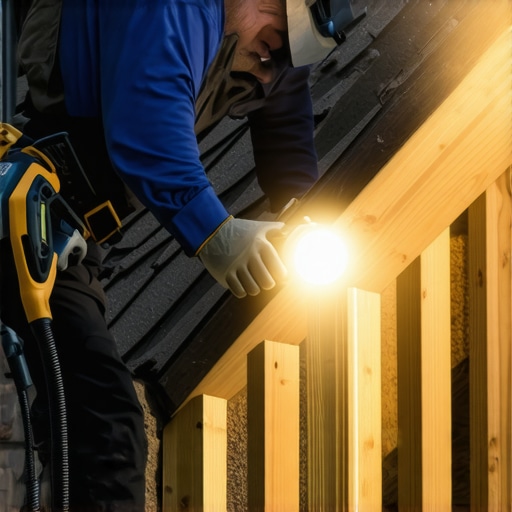
When I climb into a crawlspace for a roof inspection, I am not just looking for holes; I am looking for the story of the house. In the cold, damp climate of the Northeast, mold is not just a cosmetic issue; it is a structural threat. In 2026, building codes have made houses so airtight that they have forgotten how to breathe. When your attic cannot vent, it becomes a literal petri dish. We see this often in Boston or Maine, where the temperature differential between a 70°F living space and a 10°F exterior creates a dew point inside your rafters. That is where the physics of failure begins.
“Attic ventilation is a critical component of the roofing system; without it, heat and moisture will eventually destroy the roof deck and insulation.” – National Roofing Contractors Association (NRCA)
1. The Tell-Tale ‘Shiner’ and Rust Streaks
The first sign of hidden mold I always hunt for is the ‘shiner.’ In trade speak, a shiner is a nail that missed the rafter during installation. Instead of being buried in wood, it hangs exposed in the attic. During a cold snap, that metal nail becomes a cold-sink. Warm, moist air from your bathroom or kitchen travels upward through an attic bypass—a gap in your ceiling light fixtures or plumbing stacks—and hits that cold nail. The air reaches its dew point instantly, turning into a drop of water. Over a winter, thousands of these drops fall into your insulation. If you see rust streaks on nails or orange-colored stains on the plywood, you are looking at the precursor to a mold infestation. This is a primary reason why you must spot structural damage early before the rot takes hold. If your roofing companies didn’t use stainless or high-quality galvanized nails, the corrosion happens even faster, weakening the grip of the entire square.
2. The ‘Spongy’ Decking and Plywood Delamination
Walk across your roof. Does it feel like a firm floor, or does it feel like you are walking on a stack of damp cardboard? If there is ‘give’ under your boots, you have a deck problem. Mold feeds on the organic glues that hold plywood and OSB (Oriented Strand Board) together. When mold takes root, it triggers delamination. I have seen 7/16-inch plywood swell to nearly an inch thick before finally rotting through. This hidden decay is often masked by the shingles on top, making it invisible to the untrained eye or even to high-tech gadgets. Many companies are moving toward automated surveys, but there are things drones can’t see, and the physical resistance of a roof deck is one of them. If the wood is soft, you are likely looking at decking plywood decay that has been brewing for three to five years. By the time the shingles start to sag, the mold has likely already compromised the air quality of the entire home.
3. Ghosting and Soffit Clogging
The third sign is what we call ‘ghosting.’ Look at your ceiling joists or the underside of the roof deck. Do you see dark, fuzzy lines that follow the wood grain? That is mold spore accumulation. It often starts because your intake ventilation—the soffit vents—are clogged with blown-in insulation. Local roofers who are in a hurry often forget to install baffles. Without baffles, the air cannot flow from the eaves to the ridge. The air stagnates. When air sits still, moisture accumulates. This is why roof deck ventilation is not just a recommendation; it is a survival requirement for your home. If you see black stains around your gable vents, it is a sign that the air is trying to exit but the moisture is sticking to the wood. You need to ensure you seal attic gable ridge vents properly to maintain a balanced airflow that whisks that moisture away before it can feed the spores.
The Physics of the ‘Slow Leak’
Why does this happen? It comes down to hydrostatic pressure and capillary action. Water doesn’t just fall down; it moves sideways. If a shingle is slightly lifted—perhaps due to a ‘shiner’ or poor nailing—water can be sucked underneath the material. Once it gets past the shingle, it hits the underlayment. If your contractor used cheap felt instead of a high-quality synthetic, that felt will absorb the water like a sponge. This creates a damp environment directly against the wood deck. In the heat of the day, that water turns to vapor, and in the cool of the night, it condenses. This cycle repeats daily. It is a slow-motion car crash for your house. Most homeowners think they need a new roof when they see a leak, but sometimes the roof is fine and the attic is the problem. A true forensic inspection looks at the whole system.
“The building envelope must be viewed as a single, integrated system where the roof, walls, and foundation work in concert to manage moisture.” – International Residential Code (IRC)
The Surgery vs. The Band-Aid
When I find hidden mold, I give the homeowner two options. The ‘Band-Aid’ is what the ‘trunk slammers’ offer: spray some bleach, slap on some new shingles, and hope for the best. That is a waste of money. Mold is a fungus; its roots (hyphae) go deep into the wood fibers. The ‘Surgery’ is the only real fix. This involves tearing off the affected squares, replacing the rotted decking, and most importantly, fixing the ventilation. If you don’t fix why the mold grew, it will be back in 2027. This is why choosing between reliable roofing companies and the cheapest bid is a matter of your family’s health. You want a crew that understands the ‘cricket’—that small peaked structure behind a chimney that diverts water—and the importance of a clean valley. If your valley is full of debris, water backs up, and that is a prime breeding ground for the rot that leads to mold. Don’t let a contractor talk you out of a full tear-off if your decking is soft. Covering up rot is like putting a clean shirt over a broken rib; it looks okay for a minute, but the problem is still there.
Final Verdict: Don’t Wait for the Drip
By the time 2026 rolls around, your roof has likely endured years of thermal shock—the rapid expansion and contraction of materials during the winter-to-spring transition. This stress opens up microscopic gaps in your flashing. If you haven’t had an inspection in three years, you are gambling. Look for the signs: the rusty shiner, the spongy walk, the faint smell. Call a professional who knows how to look past the surface. A roof is more than just shingles; it is a shield. If that shield is rotting from the inside out, it won’t matter how ‘impact-rated’ your shingles are. Take care of the wood, and the wood will take care of you. Stop looking for the cheapest price and start looking for the most thorough investigation. Your attic—and your lungs—will thank you.