
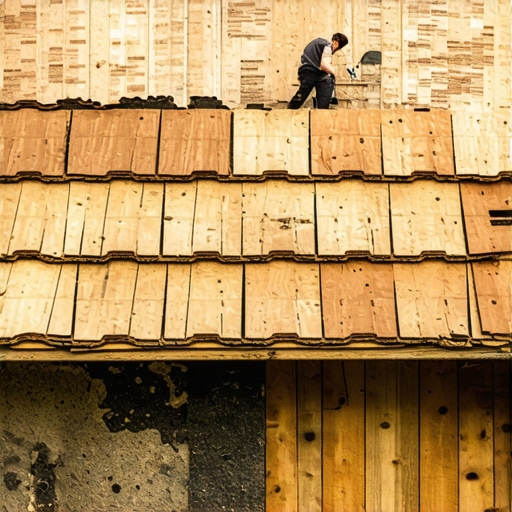
The Spongy Walk: A Forensic Look at Roof Deck Failure
I remember a specific forensic inspection in a humid coastal town where the homeowner complained of a ‘musty smell’ in the guest room. On the surface, the shingles looked decent—maybe ten years old, no obvious missing tabs. But the second my boots hit the eaves, the roof felt like a wet sponge. I didn’t even need my moisture meter to tell me the plywood underneath had turned to the consistency of wet cardboard. It’s a sickening feeling for a professional; you know the structure is compromised, and the only ‘fix’ is a total tear-off. This isn’t just about a leak; it’s about the structural integrity of your home’s first line of defense. In high-humidity zones, moisture is a patient killer. It doesn’t always come from a hole in the roof; often, it’s the slow, silent accumulation of water vapor from the attic combined with capillary action pulling wind-driven rain under the laps of your shingles. When local roofers talk about ‘decking,’ they are referring to the 15/32 or 5/8-inch CDX plywood or OSB sheets that provide the foundation. If that foundation rots, those 10,000 nails holding your shingles have nothing to bite into. This is the ‘Physics of Failure’ that most roofing companies won’t explain until they’ve already cashed your check.
“Structural roof decks should provide a smooth, dry, and clean surface for the application of roof coverings. Any deck material that has become soft, wet, or structurally unsound must be replaced to ensure the longevity of the roof system.” – National Roofing Contractors Association (NRCA)
Sign 1: The ‘Soft Step’ and Sub-Surface Compression
The most immediate sign of hidden decay is what we call ‘deflection.’ When I walk a roof, I’m feeling for the way the plywood responds to my weight. A healthy deck is rigid; it transfers the load to the rafters. A decaying deck, however, has suffered from delamination. This happens when the glue holding the layers of the plywood together fails due to chronic moisture exposure. In hot, humid climates, this process is accelerated by the ‘pressure cooker effect.’ During the day, the sun heats the shingles to 160°F. If there is moisture trapped in the plywood, it turns to vapor, increasing the pressure and forcing the wood fibers apart. If you notice a ‘bounce’ when walking on certain areas—specifically near the valleys or chimneys—you are likely looking at structural damage that needs early detection. This is a primary indicator that the lignin in the wood—the ‘glue’ that keeps wood fibers together—is being consumed by fungal spores.
Sign 2: The Tell-Tale ‘Shiner’ and Rusty Fasteners
If you suspect decay, the first place you should go is your attic with a high-lumen flashlight. Look up at the underside of the decking. You’re looking for ‘shiners.’ A shiner is a nail that missed the rafter during installation. In a healthy roof, a shiner is just a silver point of steel. In a decaying roof, that nail acts as a thermal bridge. Moisture in the attic air condenses on that cold nail and drips onto the plywood. Over time, this creates a black, circular stain around the nail. If you see rusted nails or dark, water-stained circles on the wood, the decay has already begun. Eventually, the wood becomes so soft that the shingles will actually begin to ‘un-knit.’ The nails lose their ‘withdrawal resistance,’ and the shingles can be lifted off by a stiff breeze. This is why many roofing professionals insist on a full deck inspection before providing a final estimate. Ignoring these black stains is how you end up needing emergency services for sagging rafters down the road.
“The roof deck shall be of sufficient strength and rigidity to support the design loads. Decks that exhibit signs of rot, decay, or significant fungal growth do not meet the minimum requirements of the International Residential Code (IRC).” – IRC Section R905
Sign 3: Shingle Deflection and Wavy Patterns
Sometimes you don’t even have to get on the roof to see the decay. If you stand across the street and look at the roofline during the ‘golden hour’ when the sun is low, look for ripples. We call this ‘picture framing’ or ‘telescoping.’ As plywood absorbs moisture and rots, it swells at the edges first. This creates a hump at every 4×8 foot interval where the sheets meet. This isn’t just an aesthetic issue; it’s a sign that the wood is literally expanding and contracting at different rates than the fasteners can hold. In coastal areas, salt air can accelerate this by drawing moisture into the wood fibers through osmosis. If your roof looks like the rolling waves of the ocean, the decay is widespread. You are no longer dealing with a simple repair; you are looking at a system-wide failure where the mechanical bond between the shingle and the deck has been severed. This is when you need to contact reputable local roofers to perform a core sample of the decking to see if it’s still ‘nail-able’ or if it’s turned to mulch.
The Physics of the Fix: Surgery vs. Band-Aids
Many ‘trunk slammer’ contractors will try to tell you they can just roof over rotten wood. This is a catastrophic mistake. A new shingle on a rotten deck is like putting a new tire on a rusted-out rim; it might look good for a week, but it’s going to fail. Proper roofing requires stripping the roof down to the wood. If the plywood is gray, black, or crumbles to the touch, it must be replaced. We also look at the attic ventilation. Decay is often a symptom of poor airflow. If your attic can’t breathe, the heat and moisture will bake the plywood from the inside out. I always recommend ensuring your system includes proper roof deck ventilation to prevent the cycle from starting again. Remember, water is patient. It will find the ‘cricket’ you didn’t install or the flashing you didn’t replace, and it will sit there until your plywood turns to oatmeal. Don’t wait for a ceiling collapse to take these signs seriously.