
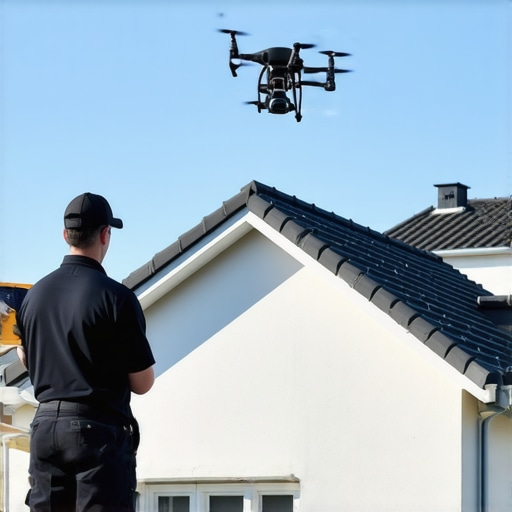
Walking on that roof felt like walking on a sponge. I knew exactly what I would find underneath—not just wet shingles, but a structural catastrophe that a drone from fifty feet up would have called ‘serviceable.’ It was a classic Northern winter aftermath. The homeowner had hired one of those big-box roofing companies that uses fancy drone tech to ‘inspect’ from the driveway. The AI report said the shingles were in great shape. But as my boots sank three inches into the soft plywood, I realized the drone had missed the slow-motion car crash happening beneath the granules. I have spent twenty-five years chasing leaks across R-value-depleted attics and sun-baked squares, and if there is one thing I have learned, it is that a camera on a gimbal cannot replace a human with a pry bar and a nose for rot.
The Forensic Autopsy: Why Your Ceiling Is Dripping While the Shingles Look New
Most roofing companies love drones because they are fast and keep guys off the pitch, which lowers their insurance. But as a forensic roofer, I see the result of these ‘drive-by’ inspections every week. Water is patient. It is the ultimate opportunist. It does not just fall from the sky and stop; it migrates. In cold climates like ours, we deal with the physics of ice dams and attic bypasses. When warm air leaks from your living room into the attic, it creates a microclimate that melts the bottom layer of snow on your roof. That water runs down to the cold eaves, freezes into a dam, and then backs up under the shingles. This is where capillary action takes over. Water moves sideways, defying gravity, seeking out the smallest gap in the starter strip or a poorly placed nail. A drone sees a flat surface of asphalt; it cannot see the hydrostatic pressure forcing moisture past the drip edge and into your fascia board.
“A roof is only as good as its flashing.” – Old Roofer’s Adage
1. The ‘Crunch’ Test: Decking Integrity and Plywood Decay
The first thing a drone misses is the structural ‘give’ of the roof deck. When plywood sits in a high-humidity environment—common in poorly vented attics—the glues that hold the wood veneers together begin to delaminate. The wood turns into something resembling wet cardboard. This is a primary indicator of hidden decking plywood decay. When I walk a roof, I am feeling for ‘soft spots’ near the valleys and chimneys. If the deck is soft, those new shingles you are about to pay for won’t have a solid bite for the nails. You will be nailing into oatmeal, and the first 50-mph wind gust will peel your new roof off like a banana skin.
2. The ‘Shiner’ and Fastener Back-outs
A ‘shiner’ is a nail that missed the rafter and is sticking out in the attic. In the winter, these nails become frost magnets. Warm air hits the cold metal, turns to frost, and when it melts, it looks like a leak. On the top side, local roofers often find nails that have ‘backed out’ due to the natural expansion and contraction of the wood deck. A drone photo from the air shows a shingle lying flat, but it cannot see the 1/8th-inch lift caused by a backing-out nail. That tiny lift is an invitation for wind-driven rain to swirl underneath. Once the water hits that nail shank, it follows the metal path straight through the deck and into your insulation. This is how you get a mystery leak in the middle of a room with no penetrations nearby.
3. Flashing Flex and Sealant Fatigue
Flashing is the most critical part of the roof, yet it is where ‘trunk slammers’ cut corners. A drone can see if there is flashing around a chimney, but it cannot see if the counter-flashing is actually seated in a reglet or just held on with a bead of cheap caulk. Over time, UV radiation and thermal shock—the constant cycling from 140°F attic temps to 30°F nights—cause sealants to bridge and crack. You need to get close enough to see the ‘spider-webbing’ in the sealant. If the flashing is not integrated into the masonry properly, water will find its way behind the lead or step-flashing. I often find loose roof valley seam flashing that looks fine from a distance but vibrates in the wind, eventually breaking the bond of the underlayment underneath.
“The roof shall be covered with approved roof coverings secured to the building or structure in accordance with the provisions of this code.” – International Residential Code (IRC) R903.1
4. The Hidden World of the ‘Cricket’
On any chimney wider than 30 inches, the code requires a ‘cricket’—a small peaked structure behind the chimney to divert water. Many older homes lack these, and many lazy roofers skip them during a re-roof. A drone might show a pile of leaves behind your chimney, but it won’t show you that the wood underneath has rotted out because the water is ‘pooling’ or ‘ponding’ in a dead-end valley. Without a cricket, that chimney is just a dam. Water sits there, saturates the shingles, and eventually works its way through the lap joints. Forensic inspection requires clearing that debris by hand and checking the ‘tuck’ of the ice and water shield against the masonry.
5. Attic Bypass and the ‘Sweating’ Roof
This is the big one for North/Cold climate zones. Sometimes the roof isn’t leaking at all—it’s ‘sweating.’ A drone cannot see into your attic to find ‘bypass’ points where bathroom vents are exhausting into the attic space instead of through the roof. When that moist air hits the underside of the cold roof deck, it flash-freezes into a layer of rime ice. When the sun hits the roof the next morning, that ice melts all at once, mimicking a massive leak. Local roofers who know their stuff will always check the attic for black mold or ‘rust rings’ around nails. If your roof isn’t breathing, it doesn’t matter what shingles you use. You have to ensure you seal attic gable ridge vents and baffles correctly to keep that air moving. If the ventilation is choked, the shingles will bake from the inside out, causing premature granule loss and ‘clawing’ where the edges of the shingles curl upward.
The Fix: Surgery vs. Band-Aids
When I find these issues, the ‘cheap’ fix is usually a tube of roofing cement. I call that the ‘liquid lie.’ Slathering goop over a flashing failure is just a way to delay the inevitable. The ‘surgery’ involves tearing back the shingles in the affected area, replacing the rotten decking, and installing a high-temp ice and water shield that is properly lapped. It is about understanding the ‘shingle effect’—everything must overlap in a way that sheds water downward. If you ignore these invisible signs because a drone report gave you a ‘green light,’ you are essentially waiting for your ceiling to collapse. A roof is a system, not a product. It’s a combination of ventilation, insulation, decking, and shedding layers. If any one of those fails, the whole thing is junk. Do not trust your biggest investment to a flying camera. Make sure your local roofers actually put a ladder up, get their boots on the granules, and feel for the truth.