
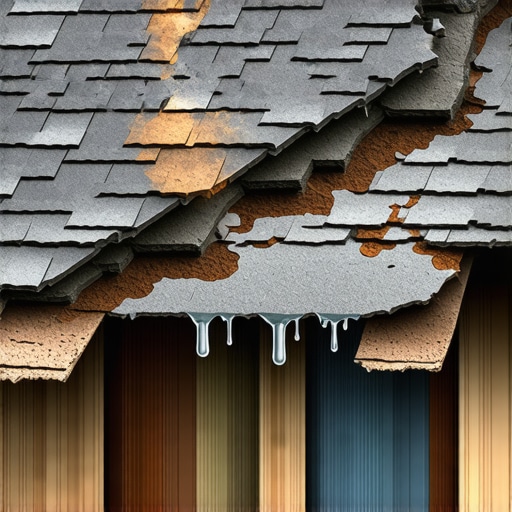
The Forensic Autopsy: When the ‘Secondary’ Barrier Becomes the Primary Problem
I’m standing in a master bedroom in a coastal subdivision where the humidity is thick enough to chew. The owner is pointing at a brown, concentric stain on a $4,000 tray ceiling. He’s confused because his shingles look ‘fine’ from the ground. But I’ve been on enough hot decks to know that shingles are just the aesthetics—the first line of defense that gets all the glory while the underlayment does the dirty work. When I tore back a square of material near the hip, the smell of fermenting OSB hit me like a physical punch. This wasn’t a shingle failure. This was a systematic collapse of the underlayment, the very component that local roofers often treat as an afterthought to save a few bucks on a bid.
My old foreman used to say, ‘Water is patient. It will wait for you to make a mistake.’ He was right. Water doesn’t just fall; it searches. It uses capillary action to pull itself upward against gravity, crawling into the tiniest shiner (a nail that missed the rafter and hangs exposed in the attic). In 2026, we’re seeing a specific type of failure where modern high-performance shingles are outlasting the cheap, low-grade synthetics or ‘organic’ felts hidden beneath them. If the underlayment fails, you don’t just have a leak; you have a slow-motion rot factory that consumes your home from the top down.
“Underlayment must be installed in a manner that ensures water-shedding integrity of the roof system, particularly in high-wind regions where wind-driven rain is a statistical certainty.” – International Residential Code (IRC)
Sign 1: Telegraphing and the ‘Potato Chip’ Deck
The first sign of underlayment failure isn’t always wet drywall. Often, it’s visual distortion on the roof surface. We call this ‘telegraphing.’ If you look at your roof during the ‘golden hour’—when the sun is low on the horizon—and you see rows of ripples or buckles that look like a Pringles can exploded under your shingles, your underlayment is likely failing its thermal expansion test. In our humid, tropical climate, cheap underlayments absorb ambient moisture during the install or through the soffit. When the sun hits the roof the next day, that moisture tries to escape, causing the material to swell and buckle. This movement stresses the shingle’s seal strip, eventually leading to underlayment tears that allow water to bypass the barrier entirely. Once that barrier is breached, you’re looking at eave rot that will cost three times the original repair estimate.
Sign 2: The ‘Bleeding’ Fastener and Hydrostatic Pressure
Most roofing companies use standard galvanized nails, but in a forensic teardown, I look for ‘bleeding.’ This is when water manages to sit on the underlayment long enough to find the fastener penetrations. Through a process called hydrostatic pressure, the weight of the water—even a thin film of it—forces its way down the shaft of the nail. If the underlayment isn’t self-healing or hasn’t been installed with the proper laps, that water enters the wood. You’ll start seeing nail pop leaks where the moisture has rusted the nail, expanded it, and pushed it upward, breaking the shingle’s surface. This is common when crews use staples instead of plastic cap nails. A staple is just two holes for the price of one, and in 2026, that’s a rookie mistake no professional should be making.
“A roof is only as good as its flashing and the integrity of its secondary water resistance layer.” – Modern Roofing Axiom
Sign 3: Surfactant Leaching and the Invisible Breach
This is the one that catches people off guard. Some 2026 shingles are treated with heavy algaecides and chemicals to stay pretty. When rain hits these, it can pick up surfactants—chemicals that lower the surface tension of water. If your local roofers used a low-quality ‘bio-felt’ or an unrated synthetic, these surfactants allow the water to soak through the material rather than bead off. It’s like a GORE-TEX jacket that has lost its waterproofing; it looks fine, but you’re getting soaked. This is why we are seeing more poly-mats being utilized, as they are chemically resistant to this type of degradation. If you ignore this, the water stays trapped against the deck, leading to a sponge-like consistency that requires a full deck replacement. When we handle high winds, any underlayment that has lost its structural integrity will simply peel away, leaving your rafters exposed to the elements. Don’t let a ‘trunk slammer’ convince you that the paper doesn’t matter. It’s the only thing standing between your family and the storm when the shingles start to fly.