
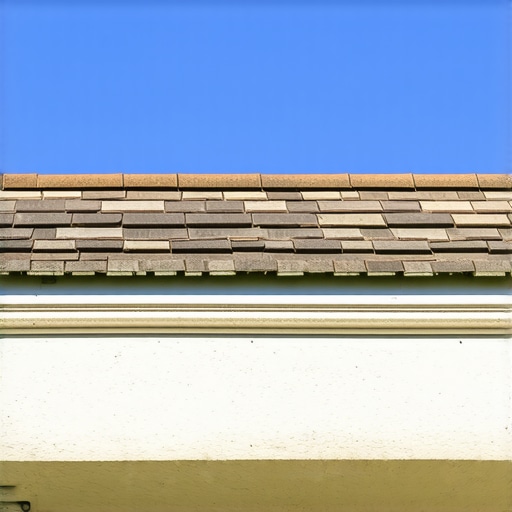
The Forensic Autopsy of a Dying Roof Edge
If you are standing in your driveway looking up at your roof and noticing that the paint on your fascia boards is bubbling like a cheap pizza, you have already lost the first round. I’ve spent over twenty-five years on a 12-pitch slope, peeling back shingles that were supposedly ‘guaranteed for life’ only to find the plywood underneath had the consistency of wet graham crackers. Most local roofers won’t tell you that the eave is the most vulnerable square foot of your entire house. It is where the battle between gravity and surface tension is fought every single time it rains, and if your contractor was a ‘trunk slammer’ looking to save ten bucks on a drip edge, your home is currently losing that fight.
My old foreman used to say, ‘Water is patient. It will wait for you to make a mistake, and then it will move in and start eating your house from the outside in.’ He wasn’t being poetic; he was being literal. In our cold Northeast climate, where ice dams are as common as potholes in April, the eave is the front line. When snow melts on your upper roof and runs down to the cold eave, it freezes, creating a dam that forces liquid water to go where it was never intended: backward, under your shingles, and directly into your structural timber.
“The roof system shall be designed and installed in accordance with this code and the manufacturer’s installation instructions.” – International Residential Code (IRC) R903.1
1. The ‘Shadow Line’ and Fascia Ghosting
The first sign of eave rot is rarely a hole you can stick your finger through. It starts as a subtle discoloration on the fascia board—the vertical board your gutters are nailed to. If you see dark streaks or ‘ghosting’ behind the gutter, it means water is bypassing the drip edge. This happens because of capillary action. Water has a natural tendency to ‘wick’ upward or crawl sideways along the underside of a shingle if there isn’t a proper metal break to stop it. If your drip edge wasn’t installed with a 1/2-inch kick-out, water follows the metal right back to the wood. You’ll eventually see local roofers identifying fascia wear as the primary indicator that your internal structural health is failing.
2. The ‘Crinkle’ and Drip Edge Failure
Take a look at the metal strip between your shingles and your gutter. If that metal looks wavy, crinkled, or is rusting, the seal is broken. In 2026, we are seeing more ‘value-engineered’ (that’s code for ‘cheap’) aluminum being used by low-bid roofing companies. This thin-gauge metal expands and contracts at a different rate than the wood sub-fascia, eventually backing out the fasteners. Once those nails—or ‘shiners’ as we call the ones that missed the rafter—start to pull, water finds a direct highway into the eave. If you ignore this, you’ll be looking at underlayment tears that allow moisture to rot the very first square of your roof deck.
3. The ‘Granule Avalanche’ and Gutter Backflow
When shingles age, they shed granules. These granules aren’t just decorative; they protect the asphalt from UV radiation. When they pile up in your gutters, they act like a dam. During a heavy downpour, the gutter fills up faster than it can drain. If the rear flange of the gutter is tucked under the drip edge (which is correct) but the water level rises above that flange, it flows directly onto the rafter tails. I have seen hundreds of ‘5-star’ installs where the gutter was pitched incorrectly, leading to gutter pitch failure that rotted the entire eave line in less than three seasons. The smell of rotting plywood in a 140°F attic is something you never forget; it’s the smell of money leaving your bank account.
“A roof is only as good as its flashing.” – Old Roofer’s Adage
4. The Sponge Effect: Soft Rafter Tails
This is the forensic part. Grab a ladder, put on some gloves, and go to the corner of your house where the eaves meet. Push on the underside of the wood. If it feels like a sponge, you are looking at structural failure. This is often caused by Thermal Bridging. In the winter, heat leaks out of your house due to attic heat loss, melting the snow above the living space. That water then hits the cold eave and turns to ice. This cycle repeats until the wood is saturated. Water is heavy—about 62 pounds per cubic foot—and once your rafter tails are soft, they can no longer support the weight of the roof and the snow. I’ve seen eaves literally snap off under the weight of a heavy February snow because the ‘local roofers’ who installed it forgot the ice and water shield.
5. Interior Soffit Staining
The fifth sign is usually the one that finally gets people to call a pro. Look at your soffits—the underside of the roof overhang. If you see brown rings or mold growth, the water has already traveled past the fascia and is now working its way into your attic. This is a physics problem: hydrostatic pressure. When water is trapped behind an ice dam, it exerts pressure in all directions. It will find a valley or a poorly flashed chimney and migrate toward the eave. Many 2026 roofing companies are now using PVC flashing to prevent this, but if your roof was a budget job from ten years ago, you likely have old-school galvanized steel that has long since rusted through.
The Surgery: How to Fix Eave Rot Properly
You cannot ‘caulk’ your way out of eave rot. That is a band-aid on a gunshot wound. The only real fix is surgery. We have to tear off the first two courses of shingles, remove the rotted fascia and rake boards, and replace the structural plywood. We then install a high-temp ice and water shield that laps over the edge and into the gutter. This ensures that even if an ice dam forms, the water has no path into the wood. We also check the cricket—the small diverter behind the chimney—and ensure the valley leaks are addressed before they drain toward the eaves. Don’t let a salesman tell you a ‘re-cover’ is fine. Putting new shingles over rotted eaves is like putting a clean shirt on a guy who hasn’t showered in a month. The rot is still there, and it’s still eating. If you suspect your eaves are failing, the bill only gets bigger the longer you wait. Get a forensic inspection, find the ‘shiners,’ and fix the physics of your roof before the next storm hits. [HowTo: {“@context”: “https://schema.org”, “@type”: “HowTo”, “name”: “How to Identify and Prevent Eave Rot”, “step”: [{“@type”: “HowToStep”, “text”: “Inspect fascia boards for paint bubbling or dark stains indicative of water bypass.”}, {“@type”: “HowToStep”, “text”: “Check gutters for granule buildup and proper pitch to ensure drainage.”}, {“@type”: “HowToStep”, “text”: “Examine drip edge for rust or gaps between the metal and the shingle.”}, {“@type”: “HowToStep”, “text”: “Perform a ‘push test’ on rafter tails to check for soft, spongy wood.”}, {“@type”: “HowToStep”, “text”: “Inspect attic soffits for interior staining or mold growth.”}], “totalTime”: “PT60M”}]