
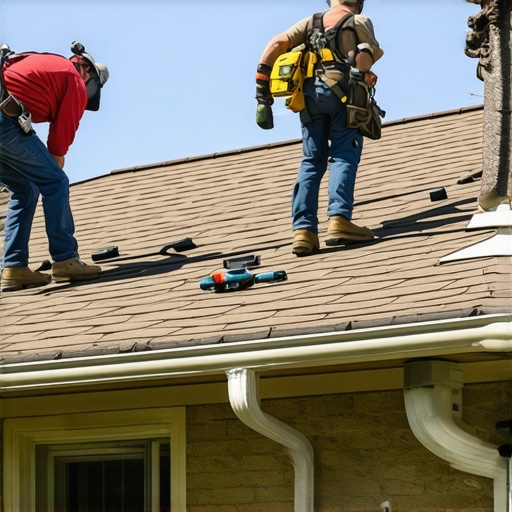
The Forensic Autopsy of a Failing Gutter System
You hear that? That rhythmic thwack-thwack-thwack of water hitting the landscaping instead of flowing down the spout. Or worse, the silence. Silence is dangerous in a North-Country rainstorm. It means the water isn’t moving. It’s sitting, stagnant, gaining weight, and searching for a way into your soffits. After 25 years in the roofing trade, I’ve climbed enough ladders to know that a gutter isn’t just a piece of aluminum; it’s a hydraulic management system that dictates the lifespan of your entire home. My old foreman used to say, ‘Water is patient. It will wait for you to make a mistake.’ And in 2026, with the erratic weather patterns we’re seeing, water is more patient—and more destructive—than ever.
The Physics of Failure: Why Your Gutters Are Actually Killing Your Roof
Most local roofers will tell you that gutters just need a quick scoop-out once a year. They’re wrong. From a forensic perspective, gutter failure starts with hydrostatic pressure and ends with structural rot. When your gutters clog, the water doesn’t just spill over the front. It uses capillary action to ‘wick’ backward, moving under your shingles and soaking the drip edge. This isn’t a theory; it’s physics. Once that moisture hits the wood, you’re looking at fascia board decay that can compromise the very foundation of your roof deck. If you ignore this, that water will find the ‘shiners’—those missed nails from a sloppy installation—and follow them straight into your attic insulation, destroying your R-value and inviting mold before you even see a spot on the ceiling.
“Gutters and downspouts shall be maintained such that they are free from obstructions and shall be capable of performing the function for which they were designed.” – International Property Maintenance Code (IPMC)
Tip 1: The Pitch and the ‘Dead Load’ Problem
The first thing I check on a forensic site visit is the pitch. Gravity is your only friend here. A gutter should drop about a half-inch for every ten feet of run toward the downspout. If it’s too flat, water pools. In our cold northern climate, that pooled water turns into a ‘dead load’ of ice. A single gallon of water weighs about 8.3 pounds. Fill a forty-foot run of gutter with water and slush, and you’re hanging hundreds of pounds of stress on your eaves. This leads directly to gutter hanger failure, where the fasteners literally pull out of the wood, leaving gaping holes for moisture to enter. You need to verify that your local roofing companies aren’t just ‘eyeballing’ the level. We use string lines or laser levels because even a quarter-inch mistake creates a reservoir for mosquitoes in the summer and ice dams in the winter.
Tip 2: Reinforcing the Hanger Integrity for 2026 Weather
In 2026, we’re seeing heavier, more concentrated bursts of rainfall. The old ‘spike and ferrule’ method of hanging gutters is a relic that belongs in a museum. Those spikes pull out the moment the wood swells. Modern roofing companies should be using heavy-duty hidden hangers with 3-inch screws that bite deep into the rafter tails, not just the fascia. If your roofer is just ‘pinning’ things to the board, they’re setting you up for a disaster. When I see gutters pulling away, I know the ‘trunk slammers’ were there. A real pro checks for ‘kick-out flashing’ at the wall-to-roof intersections. Without a cricket or proper kick-out, all that roof water bypasses the gutter and dumps directly into your wall cavity. That is how you end up with a five-figure repair bill for a three-figure maintenance oversight.
“A roof is only as good as its flashing.” – Old Roofer’s Adage
Tip 3: The Chemical Reality of Bio-Sludge and Debris
Let’s talk about the ‘gunk.’ It’s not just leaves. It’s a toxic soup of asphalt granules, pine needles, and bird droppings. This mixture creates a biological film that holds moisture against the metal. Even ‘rust-proof’ aluminum can suffer from pitting and corrosion when subjected to the humic acid produced by decaying organic matter. This is why gutter cleaning is more than just an aesthetic chore. It’s about preventing the chemical breakdown of the gutter’s factory finish. If you see ‘tiger striping’—those black streaks on the outside of your gutters—that’s a sign that the pollutants are overflowing and baking into the finish. It’s a forensic indicator that your system is failing to manage the volume of water it’s receiving.
Tip 4: Winterization and the Ice Dam Synergy
In the North, your gutters and your attic are part of the same ecosystem. If your attic is leaking heat, it melts the snow on the roof, which then refreezes in the cold gutter. This is the birth of an ice dam. You can have the cleanest gutters in the world, but if your ventilation is shot, you’ll still have issues. I always tell homeowners to look for ways to stop roof ice dams by addressing the attic bypasses first. However, the gutter is where the damage manifests. A properly maintained gutter in 2026 should be paired with a high-quality drip edge that extends deep into the trough. This prevents water from ‘wicking’ back into the eave. If your local roofers didn’t install a secondary water resistance layer, like an Ice & Water shield that laps over the eave and into the gutter, you’re essentially living in a house of cards.
The Band-Aid vs. The Surgery
When I walk a roof and see caulk smeared all over the gutter seams, I know I’m looking at a ‘Band-Aid’ fix. Caulk is not a long-term solution for a system that expands and contracts with the 140°F temperature swings we see between summer sun and winter nights. The ‘surgery’ involves replacing those leaking mitered corners with factory-stamped components or seamless runs that eliminate the failure points entirely. Don’t let a contractor sell you on a ‘sealant’ that will just crack in six months. Demand a forensic approach: identify why it’s leaking, check for eave rot, and fix the structural problem before you worry about the cosmetics. If you wait until the water is in the basement, you’ve already lost the battle. Water is patient, but your checkbook shouldn’t be. Address the pitch, the hangers, the debris, and the winterization now, or prepare to pay a forensic roofer like me to tell you why your house is rotting from the top down.