
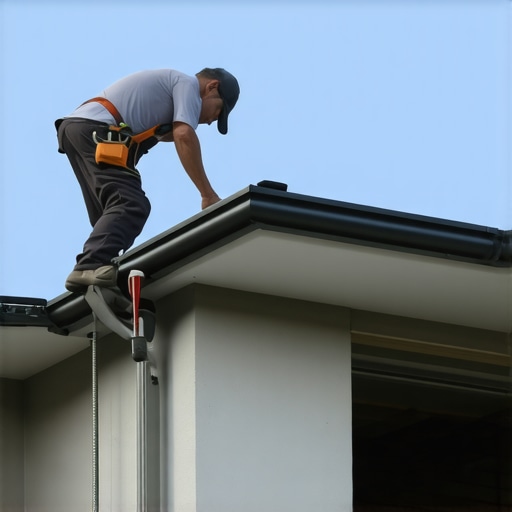
The Autopsy of a ‘Small’ Leak: Why Your Dining Room is Raining
The call came in at 2:00 AM on a Tuesday. The homeowner was hysterical because water was dripping from the crown molding directly onto an antique mahogany dining table. Most local roofers would have looked at the shingles and suggested a patch. I didn’t. I walked straight to the eaves. When gutters fail, they don’t just overflow like a fountain; they wage a slow, quiet war of attrition against your home’s skeletal structure. In the Northeast, where the freeze-thaw cycle turns a pint of water into a hydraulic jack, a clogged gutter is a ticking bomb. My old foreman used to say, ‘Water is patient. It will wait for you to make a mistake.’ This homeowner’s mistake was thinking gutter cleaning was about curb appeal. It isn’t. It is about managing the hydrostatic pressure and preventing capillary action from sucking moisture uphill, under your shingles, and into your attic insulation.
“A roof is only as good as its flashing, and flashing is only as good as the drainage system supporting it.” – Old Roofer’s Adage
The Physics of Failure: Beyond the Overflow
When debris—maple seeds, oak leaves, and asphalt granules—accumulates in a gutter, it creates a dam. But the damage doesn’t happen when the water spills over the front edge. It happens when the water level rises high enough to reach the top of the fascia board. Through capillary action, the water finds the tiny gap between the drip edge and the fascia. It begins to soak into the end-grain of your rafter tails. Within a few seasons, you aren’t just looking at a cleaning job; you are looking at local roofers fixing fascia board decay that has compromised the entire eave. This moisture creates a micro-climate of 100% humidity that rots plywood from the inside out, turning a ‘square’ of roofing into a sponge that can’t hold a nail.
Tip 1: The Integrity of the Drip Edge and Starter Course
Most roofing companies will tell you to just blow the leaves out and call it a day. That’s amateur hour. To truly protect the system, you must inspect the transition point. Your shingles should overhang the drip edge by about 3/4 of an inch. If the gutter is clogged, water backs up and sits against the ‘starter course’—the first layer of shingles. If that water stays there long enough, it bypasses the ice and water shield. In 2026, we are seeing more homeowners invest in 2026 roof gutter guards, but even these need a forensic check. You need to ensure that the guards haven’t been screwed through the drip edge in a way that creates a ‘shiner’—a missed nail that acts as a conduit for water to travel directly into the wood.
Tip 2: Identifying Gutter Pitch Failure
Gravity is the only thing keeping your basement dry. If your gutter has even a 1/2-inch sag over a ten-foot run, you have a problem. Standing water is heavy. A standard 12-foot gutter full of water can weigh over 100 pounds. That weight pulls on the spikes or brackets, slowly backing them out of the wood. Once those fasteners loosen, the pitch is destroyed. You can identify gutter pitch failure by looking for ‘tiger stripes’ on the front of the gutter or mold growing on the underside of the eave. If the water isn’t moving toward the downspout at a rate of 1/16 inch per foot, it’s just a long, elevated pond waiting to rot your house.
“Water is the primary agent in the deterioration of building materials.” – NRCA Roofing Manual
Tip 3: The Downspout-Foundation Nexus
Cleaning the gutters is useless if the downspouts are dumping water two feet from your foundation. In our climate, that water goes straight down, hits the frost line, and puts immense pressure on your foundation walls. I’ve seen countless ‘leaky roofs’ that were actually just clogged downspouts causing hydrostatic pressure to push water into a basement. Professional roofing companies fixing roof drains will often suggest extensions or underground bubblers. If you hear a ‘clinking’ sound during rain, your downspout is clear. If you hear a dull ‘thud,’ you have a vertical clog that is likely backing up into the elbow, where it will freeze and split the aluminum wide open come January.
Tip 4: The 2026 Inspection Method—Airflow and Thermal Scans
Modern forensic roofing isn’t just about a guy on a ladder with a bucket. To truly clean and inspect a system, we look for ‘cold spots’ using infrared. If your gutters are clogged, they often cause ice dams which prevent proper airflow through the soffit vents. When the soffit is blocked by wet debris or ice, your attic temperature spikes, which leads to condensation on the underside of the roof deck. That condensation looks like a roof leak, but it’s actually a ventilation failure triggered by poor gutter maintenance. If you see rusted nails in your attic, your gutters are likely the culprit, even if the shingles look brand new.
The Band-Aid vs. The Surgery
You can keep hiring the neighborhood kid to scoop out the ‘oatmeal’ of decayed leaves every November, but that’s a Band-Aid. If your gutters have been neglected for more than three seasons, you need ‘the surgery.’ This means pulling the gutters, inspecting the fascia for ‘soft spots’ where a screwdriver can sink in more than a quarter-inch, and potentially replacing the starter course of shingles. Waiting until the dining room ceiling falls in isn’t a strategy; it’s a financial catastrophe. Don’t listen to the sales guys in shiny trucks telling you that new shingles fix everything. A roof is a system. If the exit ramp (the gutters) is blocked, the highway (the roof) is useless.