
The Forensic Scene: When the Roof Deck Becomes a Sponge
Walking on that roof in Saint Paul felt like walking on a sponge. I didn’t need to pull a single shingle to know what was happening underneath. The homeowner was complaining about a mystery leak near the master bath, but there hadn’t been a drop of rain in three weeks. As I stepped near the ridge, the 7/16-inch OSB flexed like a diving board. It wasn’t rain; it was a slow-motion suicide from the inside out. When I finally cut a hole for a new vent, the smell of wet, fermented wood hit me—the unmistakable scent of a roof that has been suffocated by its own owner’s lack of airflow. Local roofers often focus on the shingles, the ‘jewelry’ of the house, but they ignore the lungs. If your attic can’t breathe, your shingles are just a lid on a slow cooker.
“Ventilation is often the most misunderstood and overlooked component of the building envelope, yet it is the most critical for long-term assembly durability.” – International Residential Code (IRC) Commentary
The Physics of Failure: Mechanism Zooming on Vapor Drive
To understand why your roofing is failing, you have to understand the microscopic war happening in your attic. In cold climates, we deal with a phenomenon called vapor drive. Every time you boil a pot of pasta or take a hot shower, you’re creating high-pressure moisture. That moisture is desperate to reach the low-pressure, dry air outside. It travels through the ‘attic bypasses’—those tiny gaps around your light fixtures, plumbing stacks, and top plates. Once that warm air hits the cold underside of your roof deck, it reaches its dew point. It turns back into liquid water, soaking into the plywood. This is how you get decking rot without a single hole in your shingles. If your local roofers didn’t check your intake vents, they’ve basically built you a beautiful coffin for your house.
1. The Thermal Signature: Tracking the Attic Bypass
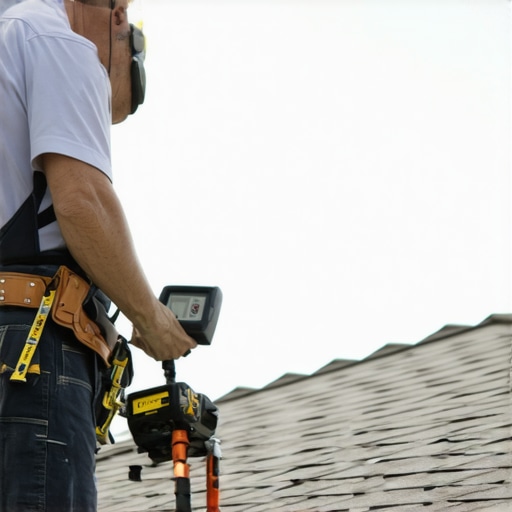
The first way we check airflow in 2026 isn’t by looking at the roof—it’s by looking through it. Modern roofing companies are increasingly using heat cameras to identify where the heat is escaping. On a 10-degree morning, a healthy roof should be cold. If I see hot spots along the ridge or near the eaves, I know we have an airflow imbalance. We’re looking for ‘thermal bridging.’ When air gets trapped because of poor ventilation, it builds up in ‘dead zones.’ These zones create attic heat spikes that bake the asphalt from the bottom up. If your roofer isn’t using thermography, they’re just guessing. They might see a few ‘shiners’—those missed nails that act as cold conductors—and think they found the problem, but the real issue is the stagnant air mass sitting behind the insulation.
2. The Soffit-to-Ridge Path: The Baffle Audit
You can have the most expensive ridge vent in the world, but if your intake is blocked, it’s useless. Think of your attic like a chimney. For air to go out the top, it has to come in the bottom. I frequently see ‘blow-in’ insulation crews who were too lazy to install baffles, or they shoved the fiberglass so deep into the eaves that they completely choked off the soffit vents. This creates a vacuum. Instead of pulling fresh air from the outside, the ridge vent starts pulling conditioned air from inside your house. Now you’re paying to heat the squirrels. When checking airflow, I physically crawl into the tightest, hottest corner of the eaves to ensure the baffles aren’t crushed. If I see eave rot, I know exactly where the ‘clog’ is. A real pro will ensure there is a clear 2-inch gap between the roof deck and the insulation for every single rafter bay.
“A roof is only as good as its flashing, and an attic is only as healthy as its intake.” – The NRCA Manual
3. The Static Pressure Balance: Calculating NFVA
Airflow isn’t a feeling; it’s math. We use Net Free Ventilating Area (NFVA) to determine if your roofing system is balanced. The 1/150 rule is the gold standard, though some codes allow 1/300 if you have a vapor retarder. Many roofing companies just slap on a few ‘pot vents’ or a power fan and call it a day. That’s a recipe for disaster. If you have more exhaust than intake, you create negative pressure. This is how you get attic air leaks that pull moisture-laden air through your ceiling. I’ve seen houses where the power vent was so strong it actually pulled rain in through the static vents during a storm. We look for a 50/50 balance. When I audit a roof, I count every square inch of intake and compare it to the exhaust. If the math doesn’t work, the roof won’t work. It’s that simple.
4. Visual Bio-Signals: The Forensic Autopsy of the Deck
Finally, we look for the physical evidence of poor airflow. Rust on the nail heads is a dead giveaway. If the nails are rusted but there’s no water staining on the wood, that’s condensation, not a leak. I also look for ‘delamination’ of the plywood. When the glue between the layers of wood gets cooked by heat spikes and softened by humidity, the wood starts to peel apart. This is why the roof felt like a sponge when I walked on it. Another sign is the growth of black mold on the north-facing slopes of the interior. If you don’t fix the airflow, cleaning the mold is a waste of money; it’ll be back in six months. In some cases, the lack of airflow causes such high temperatures that it leads to shingle granule loss as the asphalt oils literally boil out of the shingle mat.
The Surgery: Fixing the Breathing Problem
Repairing these issues isn’t about more caulk; it’s about surgery. Sometimes we have to cut in a new ‘cricket’ to divert water around a large chimney, but usually, the fix for airflow involves tearing off the bottom two courses of shingles to install ‘Smart Vents’ if the house has no soffit overhangs. It’s expensive, it’s messy, and it’s completely avoidable if the roof was done right the first time. If you ignore the warning signs—the ice dams, the peeling paint on your fascia, or the weird smell in the upstairs closet—you aren’t just looking at a new roof. You’re looking at a full structural remediation. Water is patient, but stagnant air is even more dangerous because it works in the dark where you can’t see it until your foot goes through the deck. Hire local roofers who understand the ‘Stack Effect’ and airflow physics, not just guys who are fast with a nail gun.