
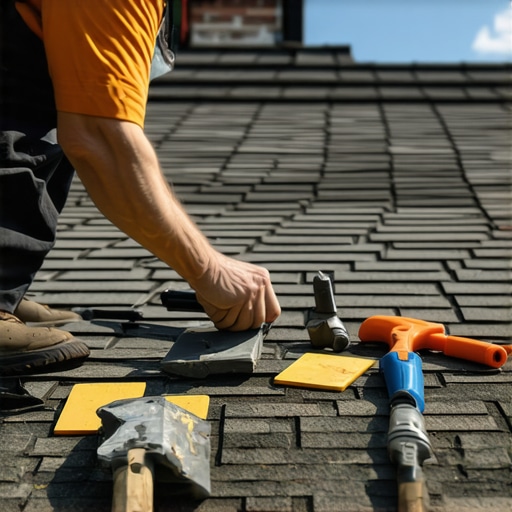
The Sand Trap in Your Gutters: A Forensic Look at 2026 Shingle Decay
Walking on that roof felt like walking on a beach. Every step I took resulted in a sickening crunch-slide that sent a river of grey sand cascading down into the gutters. I knew exactly what I’d find underneath: a shingle that had given up the ghost long before its time. To the homeowner in the scorching heat of the Southwest, those granules were just ‘dirt.’ To me, they were the lifeblood of the house, and they were currently clogging the downspouts. When the ceramic-coated granules detach from the asphalt mat, your roof isn’t just getting old; it’s losing its sunblock. Once that bitumen is exposed to 115°F desert afternoons, it cooks, cracks, and curls until it resembles a piece of burnt bacon.
Most local roofers will tell you that granule loss is just ‘wear and tear.’ That’s a half-truth designed to sell you a patch job. The reality is a failure of physics. In our climate, thermal shock is the primary assassin. We see a 50-degree temperature swing between 3:00 PM and midnight. The shingles expand and contract so violently that the bond between the granules and the asphalt substrate simply shears off. This isn’t just a cosmetic issue. Those granules are there to reflect UV radiation. Without them, the UV rays penetrate the asphalt, breaking down the oils that keep the shingle flexible. You’re left with a brittle, waterproof-in-name-only shell that will fail during the first monsoon of 2026.
“The roof shall be covered with materials that are compatible with each other and the environment in which they are installed.” – International Residential Code (IRC), Section R903.1
Fix 1: Combatting Thermal Shock with Attic Heat Management
If your roof is shedding granules like a dog in July, the problem often isn’t on top of the shingles—it’s underneath them. I’ve crawled into enough 140°F attics to know that most roofing companies ignore the ‘oven effect.’ When heat traps in the attic, the plywood deck stays hot, literally baking the shingles from the bottom up. This softens the asphalt, making it easier for granules to pop out during a wind event or even a heavy rain. We are seeing a massive increase in attic heat spikes this year, which directly correlates to premature shingle balding.
The fix isn’t just more ‘holes’ in the roof. You need balanced ventilation. I’ve seen too many ‘trunk slammers’ throw in a few extra box vents and call it a day, only to create a short circuit where air just moves between two vents and ignores the rest of the attic. The real solution involves high-efficiency intake at the eaves and often the installation of attic solar fans. These units pull a specific CFM (cubic feet per minute) to ensure the air is constantly turning over. By dropping that attic temp by even 20 degrees, you stabilize the asphalt mat and stop the ‘sweating’ that causes granule rejection.
Fix 2: Switching to SBS Polymer-Modified Materials
If you are looking at a full replacement because your ’30-year’ shingles died at age 12, don’t buy the same junk twice. Standard oxidized asphalt shingles are stiff. In 2026, the best roofing companies are moving toward SBS (Styrene-Butadiene-Styrene) modified shingles. Think of SBS as ‘rubberized’ asphalt. It has a memory. When the sun beats down, it stretches. When the night cools it, it shrinks back without the micro-fissures that cause granule loss. Many of these polymer tiles and shingles are designed specifically for high-UV zones.
The physics here is simple: a rubberized mat holds onto its granules with a death grip. I once saw a roof hit by golf-ball hail where the standard shingles looked like they’d been hit by a shotgun, losing 40% of their granules in one go. The SBS shingles next door? They barely had a scratch. The rubberized mat absorbed the impact instead of shattering the bond. If you’re tired of cleaning ‘sand’ out of your yard, ask your local roofers specifically for SBS-rated products. Don’t fall for the myths about roof longevity that sales reps push; look at the chemistry of the mat.
Fix 3: Post-Installation UV Shields and Reflective Coatings
For roofs that are still structurally sound but showing early signs of ‘balding,’ we’ve started employing forensic-grade solutions. If the shingle hasn’t started curling yet, we can arrest the decay. Many how-to guides for UV shields show that a clear, breathable polymer coating can act as a binder. It’s like a clear coat on a car. It seeps into the spaces between the remaining granules and re-glues them to the asphalt. This isn’t a DIY job with a bucket of paint from a big-box store. Those cheap coatings trap moisture in the shingle, leading to rot. You need a vapor-permeable shield that lets the shingle ‘breathe’ while blocking the rays that cause the oils to evaporate.
“Granule loss is the first sign of a roof’s structural surrender.” – NRCA Manual on Steep-Slope Roof Systems
The Forensic Verdict: Stop Chasing the Sand
I’ve walked thousands of squares in my career, and the story is always the same. Homeowners wait until they see a leak on the ceiling. By then, the forensic evidence—the granules in the gutters—has been screaming for help for five years. When you lose granules, you lose the ability to deflect fire, the ability to shed water efficiently, and the ability to keep your cooling bills under control. If you see a ‘shiner’—that’s a nail that wasn’t driven flush—it’s even worse. As the shingle thins out from granule loss, that nail head will eventually pop right through the surface, creating a direct conduit for water into your decking.
If you’re hiring local roofers, don’t ask them for a price per square. Ask them how they plan to stop the thermal expansion that’s shedding your roof’s skin. Ask them about the chemistry of the shingles they install. A real pro will talk to you about ‘albedo’ and ‘bitumen elasticity.’ A salesman will just show you a color chart. The roof is a system, and in 2026, that system is under more environmental stress than ever before. Don’t let your roof turn into a sand pile while you’re busy worrying about the color of the trim. Get a forensic inspection, check your ventilation, and upgrade to a material that can actually handle the heat.