
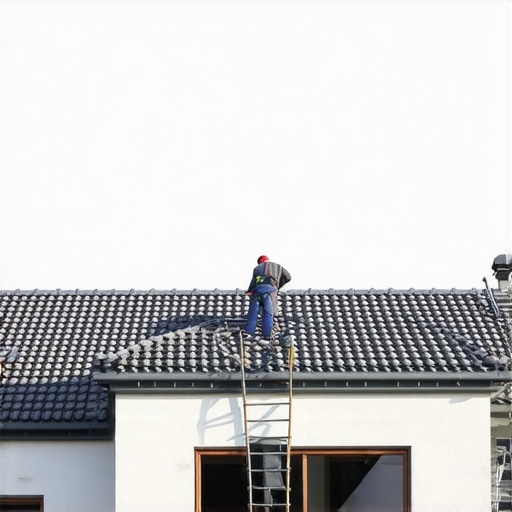
The 2026 Reality Check: Why Your Roof Doesn’t Care About Marketing
I’ve spent a quarter-century crawling through cramped, 140-degree attics and peeling back layers of failure. If there is one thing I’ve learned, it is that water has no ego. It doesn’t care about the shiny 2026 brochure your contractor handed you. It is patient, and it is looking for the one ‘shiner’—that nail missed by a fraction of an inch—to begin its slow, silent destruction of your home. As we look toward the next generation of building materials, the sales pitches are getting louder, but the physics of a dry home remain exactly the same. Water is patient. It will wait for you to make a mistake. My old foreman used to bark that at me every time I picked up a nail gun, and thirty years later, it remains the only absolute truth in this trade.
Myth 1: The ‘Lifetime’ Material Myth
By 2026, you are going to see more roofing companies pushing ‘smart shingles’ and ultra-high-density polymers. They’ll tell you these materials are invincible. That is the first lie. A roof is a system, not just a surface. I have seen thousand-dollar-a-square slate tiles fail in three years because the installer didn’t understand the [local-roofers-4-ways-to-increase-2026-roof-airflow] required to keep the decking from warping underneath. When a shingle is rated for 50 years, that rating is for the material in a laboratory, not for a roof subjected to the brutal freeze-thaw cycles of a northern winter. In the cold zones, the enemy isn’t the sun; it is the ice dam. When snow melts on your upper roof and refreezes at the unheated eaves, it creates a reservoir. Through capillary action, that water gets pulled upward under your shingles. If your roofer didn’t install a robust Ice & Water Shield at least two feet past the interior wall line, that ‘lifetime’ shingle is just a decorative lid on a leaking box.
“A roof is only as good as its flashing.” – Old Roofer’s Adage
Myth 2: ‘Ventilation is Only for Summer Comfort’
This is the most dangerous misunderstanding in modern construction. Many homeowners believe the vents on their roof are just to keep the AC bill down in July. Wrong. In 2026, as homes become more airtight, the attic becomes a pressure cooker for moisture. Every time you shower or boil pasta, warm, moist air migrates upward. If it hits a cold roof deck because of [local-roofers-3-signs-of-attic-air-leaks], it turns into liquid water. I’ve walked onto jobs where the plywood looked fine from the outside, but underneath, it was covered in black mold and felt like a wet sponge. You need a balanced system: intake at the soffits and exhaust at the ridge. Without it, you are literally rotting your house from the inside out. When you see [local-roofers-5-signs-of-decking-rot], it is rarely a shingle failure; it is a breathing failure. A roof that can’t breathe is a roof that will fail, regardless of how much you paid for the ‘high-tech’ underlayment.
Myth 3: The ‘No-Maintenance’ Promise
The third myth is that a new roof is a ‘set it and forget it’ investment. Every year, you need to be looking for the small tells. Are there [local-roofers-4-ways-to-spot-2026-nail-pop-leaks-2] appearing? A nail pop happens when the wooden deck expands and contracts, slowly pushing the fastener upward until it pierces the shingle above it. It’s a tiny hole, maybe the size of a matchstick, but it’s a direct highway for water into your insulation. If you ignore the small things, you end up needing a full tear-off. I’ve seen chimneys where the flashing looked solid from the ground, but up close, the sealant had pulled away, creating a ‘cricket’ that was actually trapping water instead of diverting it. If you have a valley where two roof planes meet, that is a high-volume water channel. If it’s not cleared of debris, or if the roofer didn’t know [how-2026-roofing-companies-fix-2026-valley-leaks], you are asking for trouble. Maintenance isn’t a scam; it’s the only way to actually reach that 2026 longevity promise.
“The primary purpose of a roof is to shed water, yet it is the most common point of building failure.” – National Roofing Contractors Association (NRCA)
The Physics of the ‘Shiner’ and the Failed Deck
Let’s talk about the ‘shiner.’ In trade talk, a shiner is a nail that missed the rafter and is just sticking through the plywood into the attic space. In the winter, that metal nail gets freezing cold. When the warm air from your house hits it, it acts like a cold soda can on a summer day—it sweats. That condensation drips, day after day, onto your insulation and ceiling. One shiner won’t collapse a house, but a hundred of them from a sloppy crew will ruin a home. This is why hiring local roofers who actually understand the local climate matters. A crew from a warm climate might not understand why we use specific fasteners or why we are so obsessed with [local-roofers-5-ways-to-stop-2026-roof-ice-dams-3]. You aren’t just paying for shingles; you are paying for the technical knowledge of how to manage the physics of heat and moisture. When you choose a contractor, don’t ask about the warranty; ask about their ventilation calculations. Ask how they handle the intake-to-exhaust ratio. If they look at you blankly, show them the door. Your home deserves better than a trunk-slammer with a ladder and a dream.