
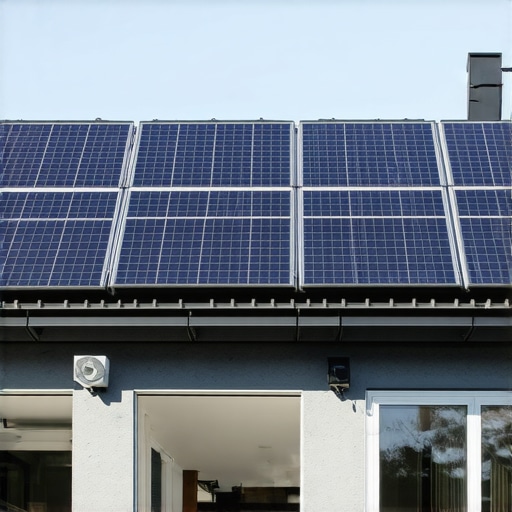
The Oven Over Your Head: Why 160 Degrees is Killing Your Investment
I’ve spent the last quarter-century crawling through crawlspaces and balancing on ridges, and if there is one thing I’ve learned, it’s that most local roofers don’t understand the physics of an attic. They see a roof as a lid; I see it as a lung. When that lung stops breathing, the whole structure starts to rot from the inside out. In the Southwest, we aren’t just dealing with a bit of sun; we are dealing with a relentless UV bombardment that turns your attic into a pressurized kiln. Walking on a roof in the middle of July in this climate felt like walking on a sponge. I knew exactly what I’d find underneath: decking that had the structural integrity of a wet cracker because the heat had literally baked the resins out of the plywood. That’s the reality of poor ventilation, and that’s why the shift toward 2026 attic solar fans isn’t just a trend—it’s survival for your shingles.
“Attic ventilation is required to minimize the effect of temperature and humidity within the attic space, which can lead to premature deterioration of the roof system.” – International Residential Code (IRC), Section R806
1. Active Extraction vs. Passive Hope
Traditional roofing companies love to slap on a few plastic box vents and call it a day. That’s passive ventilation, and it relies on the ‘stack effect’—the idea that hot air will naturally rise and exit. But when the mercury hits 110°F outside, there is no pressure differential. The air just sits there, heavy and stagnant, cooking your rafters. A 2026 solar fan is an active system. It doesn’t wait for the heat to leave; it pushes it out. We’re talking about moving 1,500 to 2,000 Cubic Feet per Minute (CFM) without drawing a single watt from your grid. By actively pulling that air, you prevent the ‘bake-off’ effect where the heat migrates through your ceiling joists and forces your AC to run until the compressor screams. If you aren’t sure if your current setup is moving enough air, you need to learn how to check 2026 airflow before your shingles start to curl.
2. Neutralizing the ‘Shiner’ Heat Bridge
In the trade, we talk about ‘shiners’—those nails that missed the rafter and are sticking through the decking into the attic space. In a hot attic, these nails act like tiny heating elements. They catch the radiant heat from the roof surface and conduct it directly into the attic air. This contributes to thermal bridging, where the heat bypasses your insulation entirely. Solar fans break this cycle. By keeping a constant stream of ambient air moving across the underside of the deck, you cool those fasteners and prevent them from becoming radiators. Without this, you’ll start seeing signs of 2026 attic heat loss that manifest as skyrocketing utility bills and brittle underlayment.
3. Extending the Life of the Asphalt ‘Goo’
Asphalt shingles are essentially a fiberglass mat soaked in oil-based bitumen and covered in rocks. When your attic stays at 160°F for six hours a day, that oil starts to volatilize. It evaporates. Once the oils are gone, the shingle becomes brittle, the granules fall off, and the next wind storm turns your ’30-year roof’ into a 12-year headache. Solar fans lower the peak temperature of the roof deck by up to 40 degrees. This preserves the ‘goo’ that keeps your shingles flexible. Local roofers who care about longevity will tell you that a cool roof is a flexible roof. If your shingles are already showing signs of distress, it might be due to decking rot caused by years of trapped heat and moisture cycles.
“Proper ventilation is the most cost-effective way to extend the service life of an asphalt shingle roof system.” – National Roofing Contractors Association (NRCA)
4. Eliminating the ‘Micro-Climate’ Condensation
Even in the desert, we deal with moisture. At night, when the temperature drops, the air in your attic reaches the dew point. If you have any bathroom vents leaking into the attic—a common ‘trunk slammer’ mistake—that moisture hits the cold underside of the roof deck and turns into liquid. This leads to mold and localized rot. A 2026 solar fan with an integrated humidistat senses when the moisture levels rise and kicks on, even if it’s not ‘hot.’ This prevents the mold spores from ever getting a foothold. Many roofing companies are now switching to modern PVC vents and solar fans to handle these micro-climates more effectively than old galvanized steel units that eventually rust out.
5. Reducing Thermal Shock and Expansion
Roofing materials expand and contract. In the Southwest, the temperature swing from 2:00 PM to 2:00 AM can be 50 degrees or more. This constant ‘growing and shrinking’ pulls at the fasteners and creates nail pops. When you use a solar fan to regulate the attic temperature, you flatten that curve. The transition from day to night is less violent for the materials. You aren’t just saving money on power; you are reducing the physical stress on every square of roofing material on your house. Most homeowners don’t realize that their roof is literally moving under their feet, and without thermal regulation, that movement eventually leads to leaks at the valleys and crickets.
The Verdict: Don’t Let a ‘Trunk Slammer’ Sell You More Holes
I’ve seen too many people pay for a new roof only to have it fail in a decade because the local roofers didn’t bother to calculate the intake-to-exhaust ratio. If you install a powerful solar fan without enough soffit intake, you’ll actually start pulling conditioned air out of your house through the recessed lights. It’s a delicate balance. You need a contractor who understands CFM ratings and net free ventilating area, not just someone who can swing a hammer. The 2026 solar fans are smarter, quieter, and more powerful than anything we had ten years ago. They are the first line of defense in a forensic approach to home maintenance. Don’t wait until you see the ‘oatmeal’ plywood during a teardown; get the air moving now.