
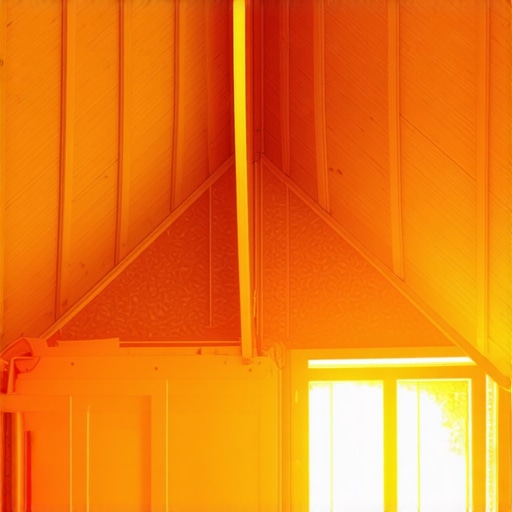
The Ghost in Your Rafters
My old foreman used to say, ‘Water is patient. It will wait for you to make a mistake, but heat is aggressive; it will tear the mistake right out of the material.’ I remember standing in a 150-degree attic in Mesa, the air so thick with the smell of scorched fiberglass and baking plywood it felt like breathing through a wool blanket. That house was barely five years old, yet the shingles were curling like sun-dried tomatoes. The owner thought he had a ‘bad batch’ of asphalt. He didn’t. He had a ventilation profile that turned his attic into a slow-motion kiln. This is why the industry is shifting. By 2026, a standard visual inspection isn’t enough. You need an attic heat map survey to see the thermal anomalies that are literally cooking your investment from the underside. Most roofing companies will walk the perimeter, kick a few granules, and give you a quote. A forensic roofer looks for the thermal ghosts.
“The roof shall be designed and constructed to provide ventilation of the space between the roof covering and the roof decking.” – International Residential Code (IRC) R806.1
The Physics of the Thermal Kiln
Let’s talk about the mechanism of failure. In the Southwest, we aren’t just fighting rain; we are fighting the sun’s bombardment. When UV radiation hits a dark asphalt shingle, the surface temperature can exceed 160°F. If your attic isn’t breathing, that heat has nowhere to go. It saturates the decking. Through a process called conductive transfer, the plywood becomes a heat sink, radiating energy back into the shingle matrix. This evaporates the volatile oils—the chemicals that keep the asphalt flexible. Once those oils are gone, the shingle becomes brittle. It loses its grip on the ceramic granules. This is where you see early shingle curling. A heat map identifies these ‘hot spots’ where airflow has stagnated, usually near dead-end valleys or improperly cut ridges. If you don’t address these, your new 50-year roof will be a 15-year liability.
Asphalt vs. Metal: The Southwest Reality
When local roofers pitch you on materials, they often ignore the thermal expansion coefficient. Asphalt is a mass-market solution, but in desert climates, it behaves like a sponge for heat. Metal, specifically standing seam with an integrated thermal break, reflects a massive percentage of that radiant energy. However, even metal fails if the ‘cricket’—that small peak behind a chimney designed to divert water—isn’t properly flashed. Heat maps show that areas around chimneys often harbor the highest thermal stress because the masonry acts as a thermal bridge. If you’re looking at lowering roof heat absorption, the material is only half the battle; the air gap behind the material is the other half. Thermal imaging can prove if your radiant barrier is actually doing its job or just trapping moisture against the rafters.
The Trap: Why Your Warranty is a Paper Shield
Contractors love to throw around the word ‘Lifetime Warranty.’ It’s a marketing sedative. If your attic lacks sufficient intake at the soffits, most manufacturers will void that warranty the moment they see ‘blistering’ on the shingles. They’ll call it ‘improper installation’ due to lack of deck ventilation. A heat map survey provides the documentation you need to prove your system is operating within the required thermal parameters. I’ve seen roofing jobs where ‘shiners’—those missed nails that stick out into the attic—act as tiny conductors, bringing frost in the winter and extreme heat in the summer directly into the wood. This constant expansion and contraction pulls the nail head through the shingle over time. It’s a slow-motion suicide for your roof deck.
“Ventilation is the most overlooked component of the roofing system, yet it is the primary driver of material longevity.” – National Roofing Contractors Association (NRCA)
Identifying the Invisible Killers
What does a heat map actually reveal? It shows the ‘dead zones’ where the ridge vent isn’t pulling air because the soffit vents are clogged with paint or insulation. It shows where the ‘valley’—the internal angle where two roof planes meet—is collecting heat and causing the plywood to delaminate. You might notice sun damage markers like localized granule loss, but the heat map tells you *why* it’s happening there. Is it a lack of baffling? Is it a structural obstruction? In 2026, data is your best defense against the ‘trunk slammer’ who wants to just ‘nail over’ your old problems. If a company doesn’t offer a thermal analysis of your attic before a full replacement, they aren’t solving your problem; they are just covering it up with a fresh ‘square’ of shingles.
Choosing a Contractor with a Diagnostic Mindset
When vetting roofing companies, ask about their diagnostic tools. Do they use infrared? Do they check the intake-to-exhaust ratio? Don’t get distracted by the shiny brochures. Look for the guy who crawls into the corners of your attic with a thermal camera. You want to know if there’s an attic bypass—a hole where conditioned air from your house is leaking into the attic, creating a localized hot spot. This is especially common around light fixtures and plumbing stacks. If you don’t fix the bypass, you’re just heating the sky and killing your shingles. Also, always inquire about who is actually doing the work; ask questions about subcontractors to ensure the crew understands that ventilation isn’t optional. A roof is a breathing skin, not a plastic lid. If it can’t exhale, it will eventually rot from the inside out, no matter how much you paid for the shingles.