
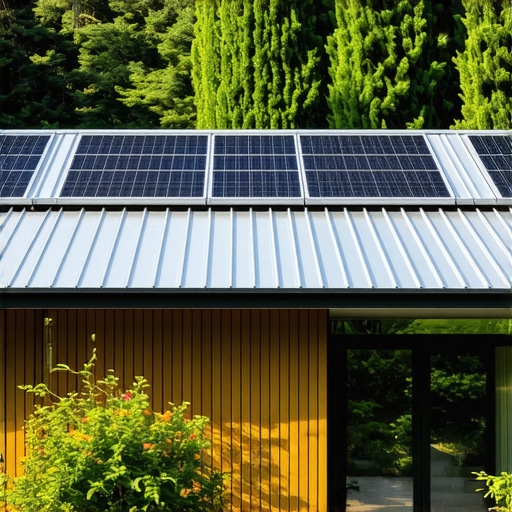
Walk onto a roof in the high desert of Nevada in mid-July, and you aren’t just looking at shelter; you’re looking at a thermal battery. After 25 years of forensic roofing, I’ve seen enough baked plywood and curled shingles to tell you that the sun is a slow-motion fire. Most homeowners look at their roofs and see a color or a texture. I see a battlefield of thermodynamics. My old foreman used to say, ‘Water is patient, but the sun is a predator. It doesn’t wait for a leak; it creates the failure from the inside out.’ In our climate zone, where UV radiation is the primary enemy, your roof isn’t just fighting rain—it’s fighting the molecular degradation of its own materials.
The Material Truth: Why Choice Matters More Than Warranties
When you talk to most roofing companies, they’ll pitch you on a ‘lifetime’ warranty. In the roofing trade, that’s usually a marketing gimmick designed to distract you from the fact that they’re installing a standard asphalt square in a 115-degree environment. In the desert, asphalt is basically a sponge for infrared radiation. The maltenes—the flexible oils in the asphalt—begin to volatilize the second the sun hits them. If you’ve ever smelled that ‘new roof’ scent on a hot day, you’re literally smelling your roof’s life expectancy evaporating into the atmosphere. This leads to early shingle curling, which exposes the underlayment and turns your attic into an oven.
“Roofing systems must be designed to withstand the maximum expected service temperature of the assembly, not just the ambient air temperature.” – National Roofing Contractors Association (NRCA) Manual
1. High-Albedo Surfaces and the Physics of Photon Bouncing
The first way to lower heat absorption is to stop the photon at the door. We’re talking about ‘Cool Roof’ technology, or high-albedo surfaces. This isn’t just about painting it white. It’s about the Solar Reflectance Index (SRI). A standard dark shingle has an SRI of maybe 2 or 3. It absorbs 90% of the sun’s energy. By switching to a highly reflective metal or a coated tile, you can bounce 65-80% of that energy back into the sky. This reduces the ‘Heat Island’ effect and prevents the roof deck from reaching that 160-degree mark where the adhesive on your ice and water shield starts to turn into a liquid mess.
2. The Convection Loop: Why Your Attic Lung Is Failing
Most local roofers focus on the shingles, but the real heat battle is won in the attic. If your ventilation isn’t balanced, you’re trapping a pocket of superheated air against the underside of your decking. This is basic thermodynamics: the stack effect. You need cool air entering the soffits and hot air exiting the ridge. When I do a forensic inspection, I often find ‘shiners’—missed nails that stayed in the attic space. In a poorly vented roof, these shiners act as thermal bridges, conducting heat directly into the rafters. Implementing advanced ventilation systems is essential to keep that air moving. If you don’t have a 1:150 vent-to-floor-area ratio, your roof is basically a pressure cooker.
3. Radiant Barriers and the Emissivity Trap
Don’t confuse insulation with a radiant barrier. Insulation slows conduction—heat moving through solids. A radiant barrier addresses radiation—heat moving through space. In the Southwest, we use foil-faced plywood or spray-applied barriers on the underside of the roof deck. The mechanism here is emissivity. A standard piece of wood has an emissivity of about 0.9, meaning it radiates almost all the heat it absorbs into the attic. A radiant barrier drops that to 0.05. It’s like putting a space blanket on your house. When combined with thermal energy loss reduction strategies, the savings on your A/C bill can be staggering.
4. Thermal Mass and the Concrete Tile Advantage
In high-heat zones, roofing materials with high thermal mass, like concrete or clay tiles, offer a ‘thermal lag.’ While an asphalt shingle heats up and cools down almost instantly, a heavy tile takes hours to absorb heat. In many cases, the sun goes down before the heat even reaches the underlayment. However, you have to watch the valleys. If your roofer didn’t install a proper cricket—a small peaked structure behind a chimney or in a wide valley—to divert water and debris, that organic matter will sit and bake, creating a rot-spot that heat will exploit. Tiles also allow for ‘above-sheathing ventilation,’ where air flows between the tile and the deck, creating a natural cooling buffer.
5. Synthetic Underlayment and Breathability
The old-school way was #30 felt paper. It’s basically paper soaked in oil. In the desert, that oil dries out in five years, leaving you with brittle gray dust. Modern eco-friendly roofing uses synthetic underlayments. These are polymer-based and far more reflective than black felt. More importantly, they are often breathable. Why does that matter for heat? Because moisture trapped in the attic deck will turn to steam when the sun hits the roof. That steam needs a way out, or it will delaminate your plywood. Using breathable felts and synthetic pads ensures that the ‘sweat’ of the house doesn’t bake the wood from the inside out.
“Form follows function—that has been misunderstood. Form and function should be one, joined in a spiritual union.” – Frank Lloyd Wright
When you’re vetting roofing companies, ask them about the ‘thermal expansion coefficient’ of their flashing materials. If they look at you like you’ve got two heads, keep looking. A roof is a machine. If the parts don’t move together as they heat up, the nails will back out, creating ‘shiners’ or causing shingle blow-offs. This isn’t just about being ‘green’; it’s about building a system that doesn’t eat itself alive every summer. If you ignore the physics of heat absorption today, you’ll be paying a specialist like me to perform an autopsy on your roof in ten years.