
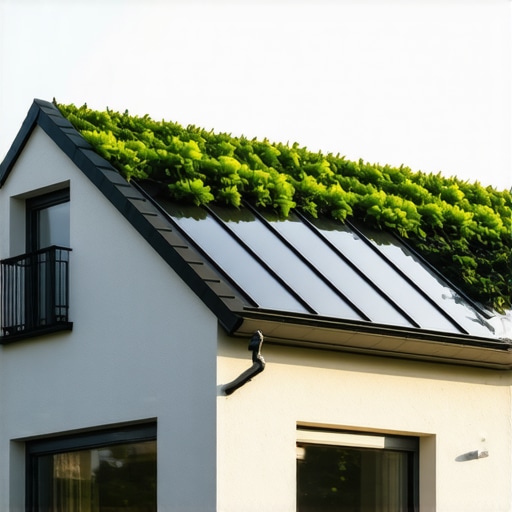
The Desert Furnace: A Forensic Look at Why Your Roof is Cooking You
Walking on that roof felt like walking on a sponge. I knew exactly what I’d find underneath. It was late July in the Southwest, where the thermometer hits 110°F before lunch, and the roof deck itself is a screaming 160°F. The asphalt shingles weren’t just hot; they were outgassing, that distinct chemical stench of petroleum-based granules literally baking into oblivion. When I pried up a corner, the plywood deck didn’t just creak; it sighed. The heat had baked the resins right out of the wood, leaving it brittle, charred-looking, and structurally compromised. This is the reality of thermal energy loss and gain that most roofing companies won’t tell you about while they’re busy trying to sell you a standard 30-year laminate square.
We talk about ‘eco-friendly’ roofing like it’s a luxury or a trend. It’s not. In high-heat environments, it’s forensic necessity. If your roof is absorbing thermal energy and dumping it into your attic, your AC unit is fighting a war it can’t win. Most homeowners think the solution is just more insulation. They’re wrong. You have to stop the energy transfer at the skin of the building. Let’s look at the physics of how heat actually moves through your assembly and the three ways to stop it before your shingles turn into expensive charcoal.
“The primary purpose of a ventilation system is to provide a flow of air to help control the temperature of the roof assembly and moisture levels in the attic.” — NRCA Roofing Manual
1. The Cool Roof Material Truth: Reflectance vs. Emissivity
The first way to hammer down thermal energy loss is to change the material’s interaction with the sun. Standard asphalt is a heat sponge. It has high solar absorption and low thermal emittance. This means it sucks in the UV radiation and holds onto it, slowly radiating that heat downward long after the sun sets. When you talk to local roofers, ask them about the Solar Reflectance Index (SRI). If they look at you like you’ve got three heads, find a new contractor.
You need materials that utilize ‘cool’ technology. This isn’t just white paint. Modern cool shingles use specialized granules that reflect infrared radiation. When you choose cool shingles, you are effectively reducing the temperature of the roof surface by up to 50°F. This reduces the conductive heat transfer through the valley and into the living space. If you’re dealing with a flat surface, don’t even think about black EPDM. You want a white TPO or a properly sealed white fluid-applied membrane. The physics are simple: the less heat the material absorbs, the less heat it can transfer through the deck. Watch out for the ‘Lifetime Warranty’ trap here. A warranty covers manufacturer defects, not the fact that the material was a poor choice for your climate zone. A material that cooks itself to death in ten years might still have a ‘lifetime’ label, but it won’t be helping your electric bill.
2. The Attic Airflow Gap: Beyond Passive Vents
Strategy number two is the most ignored part of the assembly: the air gap. Thermal energy loss isn’t just about what goes out in the winter; it’s about the energy state of the attic. In the Southwest, we deal with ‘thermal shock.’ The roof gets blasted all day, expands, and then rapidly cools at night, contracting. This movement causes shingle lifting and pulls at the fasteners, sometimes creating a shiner—a nail that missed the rafter and provides a direct path for heat or moisture to travel.
To lower roof heat fast, you must maximize convection. Most attics are stagnant ovens. If the air isn’t moving, the heat builds up until the ceiling drywall starts radiating like a space heater. You need a balanced system of soffit intake and ridge exhaust. If you see your local roofers installing a ridge vent without clearing the baffles at the eaves, they are wasting your money. You need to vent attic heat fast by ensuring that the ‘stack effect’ is functional. This natural physics principle relies on hot air rising. If your attic is sealed too tight, or if the vents are clogged with decades of dust, the heat becomes trapped, leading to hidden decking plywood decay. High heat breaks down the lignin in the wood. I’ve seen 10-year-old decks that look like they’ve been through a fire because the ventilation was non-existent.
3. High-Performance Underlayments and Radiant Barriers
The third pillar is the hidden layer. Traditional #15 felt is a joke in the desert. It’s paper soaked in oil. It dries out, gets brittle, and offers zero thermal resistance. To truly lower thermal energy transfer, you need to look at synthetic underlayment. These materials are engineered to be UV resistant and provide a secondary water barrier, but more importantly, they can be paired with radiant barriers.
A radiant barrier is often a foil-faced layer applied to the underside of the roof deck or integrated into the underlayment. While conduction is heat moving through solids, and convection is heat moving through air, radiation is the primary way an attic gets hot. The hot shingles radiate heat across the open attic space to the floor. A radiant barrier reflects that energy back toward the roof deck, where the ventilation system can carry it away. If you are doing a full tear-off, this is the time to act. Don’t let roofing companies talk you out of it just because it’s an extra step in their production line. They want to get in and out in a day. You want a house that doesn’t cost $600 a month to cool. Using specialized underlayments for extreme weather is the difference between a roof that lasts 25 years and one that fails in 12.
“A roof is only as good as its flashing.” — Old Roofer’s Adage
The Forensic Conclusion: Picking Your Defense
Don’t be fooled by the ‘Eco’ branding. Real eco-friendly roofing is just high-performance engineering that respects the laws of thermodynamics. If you ignore the physics, you’ll end up with a ‘green’ shingle on a rotting deck. You have to address the reflectance at the surface, the airflow in the cavity, and the radiant transfer at the deck level. When you are vetting local roofers, look for those who understand building science, not just those who have the lowest bid per square. You need to know how to find reliable roofing companies that actually perform a forensic analysis of your home’s needs rather than just quoting a shingle swap. If you see signs of shingle lifting or smell that ‘baking attic’ scent, the damage is already happening. Waiting doesn’t just cost you a new roof; it costs you every month on your utility bill and eventually, the structural integrity of your home’s skeleton.