
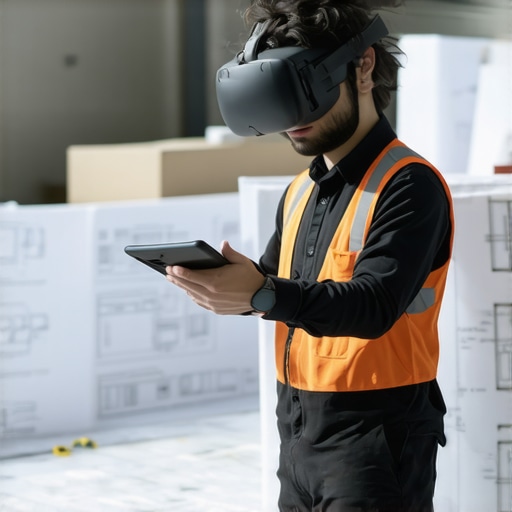
The Mirage of the Sample Board
I’ve spent a quarter-century hauling my carcass up 12-pitch slopes and peeling back layers of failure, and if there is one thing I’ve learned, it’s that homeowners are terrible at imagining what a roof looks like until it’s already nailed down. For decades, roofing companies would hand a client a three-tab shingle sample the size of a dinner plate and expect them to visualize 3,000 square feet of that material across five different gables. It never worked. By the time the last ridge cap was installed, the homeowner would stand in the driveway, look up, and realize the ‘Desert Tan’ they picked looks like a muddy mistake under the searing 110-degree sun. This is exactly why the industry is finally ditching the physical samples for 2026 VR previews. It’s not just about aesthetics; it’s about forensic accuracy before the first nail is even driven. In the Southwest, where the sun doesn’t just shine—it assaults—the way a material interacts with light determines its lifespan. My old foreman used to say, ‘Water is patient. It will wait for you to make a mistake.’ In the desert, heat is just as patient. It waits for you to pick the wrong color or the wrong material, and then it spends twenty years cooking the life out of your attic.
“A roof is only as good as its flashing.” – Old Roofer’s Adage
When we talk about VR in 2026, we aren’t talking about a cheap video game. We are talking about integrating LiDAR quotes and satellite data to create a digital twin of your actual home. This allows local roofers to simulate how a specific shingle or tile will respond to the specific solar orientation of your lot. It’s about Mechanism Zooming: we can now see how the thermal expansion of a dark asphalt shingle will stress the fasteners compared to a lighter, UV-reflective coating. In the desert, thermal shock—the rapid heating and cooling of materials—is the primary killer. If your VR preview shows that a certain material choice is going to lead to 170-degree surface temperatures, you’re looking at a roof that will brittle out and fail a decade early. VR allows us to catch that ‘shiner’—a misplaced nail—in the planning phase by calculating how much the decking will move under peak load. If you don’t account for that movement, you’ll eventually see nail pop disruption, which leads to leaks the first time a monsoon actually hits.
The Physics of Heat and Material Longevity
Why do 2026 roofing companies care so much about a digital headset? Because of molecular shearing. When UV radiation hits a standard asphalt shingle, it breaks down the long-chain hydrocarbons that keep the shingle flexible. Once those oils are gone, the shingle is just a piece of dry crackers. VR previews allow us to layer in thermal mapping, showing the homeowner exactly where the heat will accumulate on their specific roofline. This leads to better decisions regarding ventilation. For instance, after seeing a VR heat map, most people realize that a standard ridge vent isn’t enough and they might need to look into increasing roof airflow with powered attic fans or solar vents. It changes the conversation from ‘what looks pretty’ to ‘what survives the oven.’ We also see more people opting for clay tile coatings once they see the massive difference in radiant heat transfer compared to traditional materials. It’s about the surgery versus the band-aid. You can put a cheap roof on every ten years, or you can use technology to design a thirty-year system that actually works with the physics of your climate.
“The building envelope must be viewed as a total system to ensure performance and durability.” – NRCA Manual
The Warranty Trap and the VR Defense
Don’t let a salesman tell you a ‘Lifetime Warranty’ means the roof will actually last your lifetime. Most of those warranties are riddled with exclusions for ‘improper ventilation’ or ‘extreme weather events.’ When you use VR previews and smart audits, you are creating a digital record of the intended design. If the roof fails because the contractor ignored a cricket (that’s a small peaked structure behind a chimney to divert water) that was clearly visible in the VR model, you have a much stronger case. This technology also helps identify structural issues before the crew shows up. I’ve seen ‘trunk slammers’ throw a new roof over a sagging valley without fixing the underlying square of rotten plywood. VR allows us to peel back the virtual layers and show the homeowner exactly why we need to charge for a full tear-off. It stops the ‘surprises’ that usually happen on day two of a project when the roof is already off and a storm is rolling in. If your roofer isn’t using heat cameras and VR to justify their quote, they are still living in the dark ages of 1995.
Selecting Your 2026 Roofing Professional
Choosing a contractor shouldn’t be a game of chance. You need a veteran who understands that a roof is a managed ventilation system, not just a lid for your house. Look for companies that provide these immersive previews as part of their standard package. It shows they’ve invested in the accuracy of their work. Ask them about the capillary action of water under their proposed flashing—if they look at you like you have three heads, move on. A real pro will explain how the VR model accounts for the high-wind uplift ratings required for your specific zone. They will show you why they prefer certain PVC sealants over the cheap caulk the other guys are using. In 2026, there is no excuse for guesswork. The cost of a roof is too high to realize you made a mistake once the shingles are already baking in the sun. Use the tech, trust the forensic data, and for the love of your bank account, don’t hire the guy who gives you a quote on a cocktail napkin. Your roof is the only thing standing between you and the brutal reality of the environment—make sure it’s designed to win that fight.