
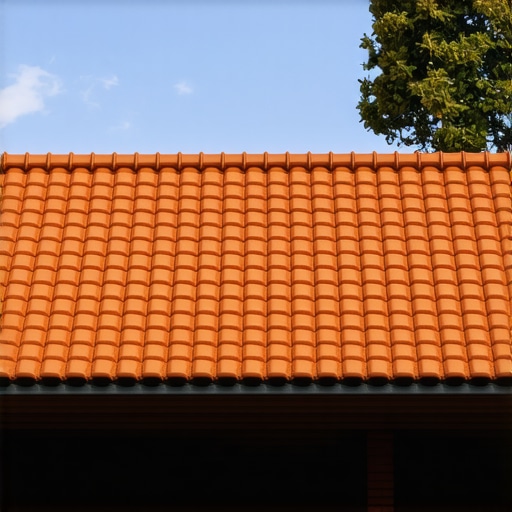
The Deception of the 50-Year Tile
Walking on that roof felt like walking on a cracked eggshell. I knew exactly what I’d find underneath before I even pulled my bar—the tiles were pristine on the surface, but the underlayment hadn’t just failed; it had evaporated into a fine black soot. This is the reality for most homeowners in the desert Southwest. You’re told clay tiles last a century, and while the clay itself might, the system protecting your home is usually dead within twenty years. Local roofers are tired of seeing homeowners get blindsided by a $30,000 replacement bill when the tiles themselves are still structurally sound. This is where the physics of 2026-grade coatings enters the conversation. We aren’t talking about house paint; we are talking about engineered thermal barriers designed to stop the slow-motion car crash that is UV-driven degradation.
“A roof is not a single product; it is a system of managed water shed.” – National Roofing Contractors Association (NRCA)
The problem starts with the sun. In climates where the ambient air hits 115°F, your roof surface is actually cooking at a brutal 160°F or higher. That heat doesn’t just sit there. It migrates. Clay is naturally porous. If you look at an uncoated tile under a microscope, it’s basically a hard sponge. When it rains, it sucks up moisture. When the sun hits, that moisture turns to steam, expanding inside the tile. Over a decade, this cycle creates micro-fractures in the vitreous layer. Eventually, the tile starts to ‘spall’ or flake. By the time you notice the red dust in your gutters, the damage has reached the head-lap, and the valley is likely already compromised. The new 2026 coating formulations solve three specific physics problems that traditional roofing companies have ignored for forty years.
1. Thermal Emissivity and the Mitigation of Thermal Shock
The first benefit is the reduction of thermal shock. Every morning in the desert, your roof expands as it heats up. Every night, it shrinks. This movement is what tears at the ‘shiners’—those missed nails that barely caught the rafter—and pulls the ‘muck’ or mortar away from the ridges. The 2026 coatings utilize high-emissivity pigments that don’t just reflect light; they actively shed heat. By keeping the tile surface temperature within 10 degrees of the ambient air, you significantly reduce the ‘delta’ or the range of expansion. When the tile doesn’t move as much, the ‘cricket’ and the flashings stay sealed. It stops the roof from literally tearing itself apart over a thousand days of heat cycles.
2. Pore-Clogging Hydrophobic Barriers
The second benefit is the elimination of water absorption. Modern coatings use aqueous-based fluoropolymers that bond at a molecular level to the clay. Instead of a thick, plasticky film that can peel, these coatings penetrate the surface. This creates a ‘beading’ effect where water cannot penetrate the tile’s body. Why does this matter for local roofers? Because when clay tiles stay dry, they stay light. A saturated clay tile roof can weigh thousands of pounds more than a dry one, putting immense stress on your trusses. Furthermore, by sealing the micro-pores, you prevent algae and lichen from taking root in the ‘valleys’ of your tiles, which is where most ‘trunk slammers’ fail to clean properly during a standard maintenance call.
3. Underlayment Preservation via UV Blocking
The third, and arguably most important benefit, is what happens beneath the tile. Most people don’t realize that clay tiles are a ‘water-shedding’ system, not a ‘water-tight’ system. A percentage of water and nearly all the heat gets through the gaps. The ‘felt’ or underlayment is the true roof. However, UV radiation and extreme heat ‘cook’ the oils out of that asphalt underlayment until it becomes brittle as a cracker. The 2026 coatings act as a literal sunblock for the entire system. By dropping the temperature in the space between the tile and the deck, you extend the chemical life of your underlayment by decades. You’re essentially putting your roof’s foundation in the shade. This is the difference between a ‘Square’ that lasts 20 years and one that lasts 50.
“The roof is the most important part of the building envelope, yet it is the most neglected.” – Old Roofer’s Adage
I’ve seen too many roofing companies come in and suggest a full tear-off when a professional restoration could have saved the homeowner twenty thousand dollars. But here is the trap: not all coatings are equal. If a contractor shows up with a bucket of elastomeric paint and a brush, kick them off the site. A real 2026-spec application requires a high-pressure wash to remove the oxidation, a primer that handles the high pH of old clay, and a topcoat applied at a specific ‘wet-film’ thickness. If they aren’t using a wet-film gauge to check their work, they’re just guessing. You want a pro who understands the ‘bird-stop’ at the eave and knows how to coat the ‘head-lap’ without gluing the tiles together, which would prevent the roof from breathing. In the end, a roof is a mechanical system. If you treat it like one, it will protect you. If you treat it like an afterthought, the desert will reclaim it piece by piece.