
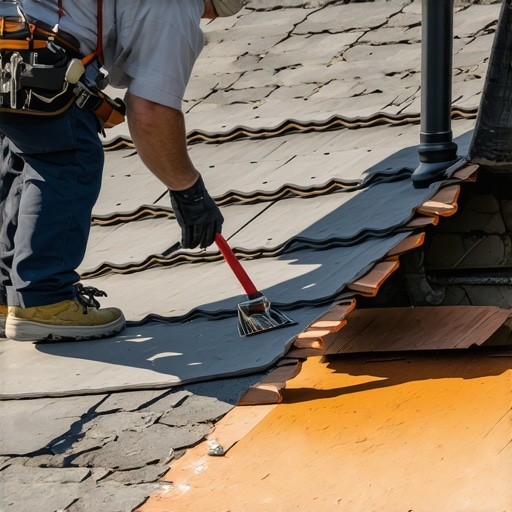
The Forensic Autopsy of a Failing Valley: Why Your Ceiling Is Crying
The first sign isn’t a drip; it’s a faint, brownish ring on the ceiling of your master bedroom, right where the two roof planes intersect. You call a few roofing companies, and they tell you that you need a whole new roof. But as a forensic roofer who’s spent three decades peeling back shingles like scabs, I can tell you the culprit is often much more specific and far more insidious: a loose roof valley seam flashing. In the humid, wind-beaten climate of the Southeast, a valley isn’t just a junction; it’s a high-velocity drainage canal. When that metal starts to lift, you aren’t just looking at a leak—you’re looking at a structural time bomb.
The Physics of Failure: Why Valleys Let Go
My old foreman used to say, ‘Water is patient. It will wait for you to make a mistake.’ In places like Houston or Miami, water isn’t just patient; it’s aggressive. When two roof slopes meet, they form a valley that handles ten times the water volume of a flat shingle run. This creates hydrostatic pressure. If your valley flashing is loose, wind-driven rain performs a trick called capillary action. The water hits the lifted edge of the metal, creates a vacuum-like pull, and migrates upward, defying gravity to find the raw plywood underneath. If you ignore this, you’ll eventually see signs of hidden decking plywood decay that can rot out your rafters in a single season.
“A roof is only as good as its flashing, and the valley is the most vulnerable point of any residential structure.” – Old Roofer’s Adage
The movement of the metal itself is the second enemy. Metal expands and contracts at a different rate than the wood deck. In the 100-degree heat of a tropical afternoon, that metal grows. If it wasn’t fastened with the right ‘play’ or if the local roofers simply nailed through the center—a classic rookie mistake—the fasteners will back out. We call these ‘shiners’ when they miss the mark, but even a well-placed nail can be worked loose by thermal expansion, leaving a hole for water to bypass the primary defense.
Fix 1: The Hidden Cleat Method
Most cheap roofing crews nail the edges of the valley metal directly to the deck. This is a death sentence for the flashing. The professional fix involves using metal cleats. Instead of piercing the flashing, we secure a small strip of metal to the deck and fold it over the edge of the valley flashing. This holds the seam down tight against wind uplift while allowing the metal to ‘breathe’—expanding and contracting without tearing the fastener holes wide. If your current valley is lifting, a pro can often retro-fit cleats to pull that metal back down without a full tear-off.
Fix 2: High-Modulus Polyether Sealant Injections
If the seam is loose but the metal is intact, we don’t use standard hardware store caulk. In the roofing trade, we use polyether sealants. These are ‘moisture-cure’ products, meaning they actually get stronger when they get wet—perfect for the Florida humidity. We inject the sealant deep under the lifted lap, then weight the metal down until it bonds. This creates a gasket-like seal that handles the vibration of high winds. You should always perform a check for valley leaks before applying any sealant to ensure you aren’t just trapping water inside.
Fix 3: The Surgical Underlayment Patch
Sometimes the metal is loose because the ‘meat’ it was nailed into has gone soft. If the plywood is mushy, no nail will hold. The fix is ‘The Surgery.’ We pull back the shingles three feet on either side, remove the loose metal, and install a wide strip of self-adhering Ice & Water Shield. This ‘secondary water resistance’ acts as a safety net. Even if the metal moves again, the deck is waterproofed. This is a standard requirement in many coastal building codes to prevent catastrophic failure during a tropical storm.
Fix 4: Mechanical Edge Pinning with Neoprene Washers
In high-wind zones, sometimes cleats aren’t enough. We use mechanical fasteners with EPDM or neoprene washers. These aren’t your standard nails; they are heavy-duty screws that bite deep into the trusses. The rubber washer creates a watertight seal at the penetration point. It’s vital to secure roof valley flashing using this method if you live in a hurricane-prone area where the ‘uplift’ forces can literally peel metal like a banana. If you’re looking at a quote, ensure the roofing companies specify the gauge of the metal and the type of fasteners they intend to use.
Fix 5: The Diverter (Cricket) Installation
If your valley is loose because it’s being hammered by a massive volume of water from an upper roof section, the best fix is to change the physics of the roof. We install a ‘cricket’—a small peaked structure that diverts water away from the seam before it can even reach the valley. This reduces the ‘load’ on the flashing. If you notice signs of poor valley drainage, like silt or leaves piling up in the seam, a diverter is often the only permanent solution to stop the metal from being pried loose by the weight of debris and water.
“Fasteners shall be compatible with the flashing metal and shall be spaced to prevent permanent distortion of the flashing.” – International Residential Code (IRC) R903.2
The Trap of the Cheap Repair
I’ve seen homeowners try to fix a loose valley with a bucket of tar and a putty knife. All that does is create a dam that holds water against the shingles, causing them to rot prematurely. When you hire local roofers, don’t just look at the price. Ask about their ‘flashing detail.’ If they say they’re just going to ‘goop it up,’ show them the door. A real roofer talks about head-laps, soldering (if it’s copper), and mechanical securement. Make sure to verify their license status before they touch your deck. A loose valley is more than a nuisance; it’s the gateway to a five-figure repair bill if handled by a ‘trunk slammer’ who doesn’t understand the physics of wind and water. You need to know how to read a detailed estimate to ensure they aren’t skipping the critical underlayment steps that keep a valley dry for twenty years instead of two.