
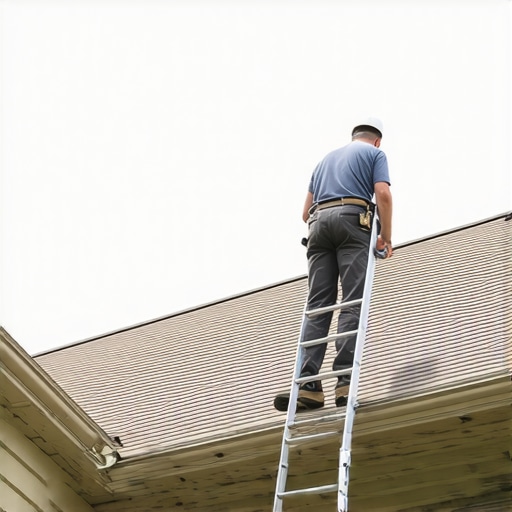
The Anatomy of a Failed Roof: A Forensic Autopsy
You’re sitting in your living room in the middle of a November Nor’easter, and there it is—the rhythmic plink, plink, plink against your hardwood floor. You look up, and your ceiling is beginning to sag like a wet paper bag. Most homeowners call local roofers and panic. I don’t. I grab a flashlight and a moisture meter. After 25 years of tearing off shingles, I can tell you that a leak in the valley isn’t just a nuisance; it’s a failure of physics at the most vulnerable point of your home. My old foreman used to say, ‘Water is patient. It will wait for you to make a mistake. It’s got all the time in the world to find that one nail you drove three inches too close to the center of the valley.’ He was right. Water doesn’t just fall; it migrates. It uses capillary action to climb sideways under your shingles, defying gravity until it finds a way to rot your plywood. When I walk onto a roof that’s been leaking for months, I can smell it—the earthy, cloying scent of damp wood and mold spores before I even peel back a single square.
Tip 1: The Geometry of Water Volume and Capillary Creep
Valleys are the literal rivers of your roofing system. They handle the concentrated runoff from two separate roof planes. If you live in a cold climate like Boston or Philadelphia, this is where the thermal bridging happens. As heat escapes your attic, it melts the base layer of snow, which then refreezes at the eaves, creating an ice dam that backs up directly into the valley. If your roofing companies didn’t install a heavyweight Ice & Water Shield at least 36 inches wide, you’re in trouble. Water will find its way under the edge of the shingle through capillary action—the same way a sponge sucks up water. You need to inspect the ‘lap’ where the shingles meet the valley flashing. If the shingles weren’t trimmed back properly, they trap pine needles and grit, creating a mini-dam that redirects water sideways into the roof deck. If you see signs of residential roofing 3 signs of poor valley drainage, the clock is already ticking on your structural integrity.
“A roof is only as good as its flashing.” – Old Roofer’s Adage
Tip 2: Hunting for the ‘Shiner’
One of the most common sins in the roofing trade is the ‘shiner.’ This is a nail driven too close to the center of the valley—the ‘splash zone.’ When water rushes down that valley, it hits that nail head. Over time, the thermal expansion and contraction of the metal flashing pull the nail slightly loose. Now you have a direct conduit. Water travels down the shank of the nail, through the underlayment, and directly into your rafters. I’ve seen rafters in Northern homes that look like they’ve been chewed by a beaver because of one single misplaced nail. During your inspection, look for rust streaks near the valley center or small bumps in the shingle surface. These are early warnings. Ignoring them leads to roof inspection 3 signs of hidden decking plywood decay which can turn a $500 repair into a $10,000 deck replacement.
Tip 3: The Flashing Fatigue and UV Degradation
Valleys are usually finished in one of two ways: ‘Open’ (with a visible metal valley) or ‘Closed’ (shingles woven or cut across). If you have an open valley, you’re looking at galvanized steel or aluminum. In cold climates, these metal channels undergo massive thermal shock. They get hit with 140°F sun in the summer and sub-zero wind chills in the winter. This causes the metal to buckle or the sealant at the top of the valley to crack. Once that seal breaks, hydrostatic pressure during a heavy downpour will force water uphill into the top seam. Check the very top where the valley meets the ridge vent; if the flashing doesn’t extend high enough, it’s a wide-open door for wind-driven rain. You might need roofing services 5 fixes for loose roof valley seam flashing to prevent a total failure.
“Valleys shall be lined with metal, or other approved materials… provided with a minimum thickness and width to ensure water shedding away from the roof deck.” – International Residential Code (IRC) R905.2.8.2
Tip 4: The ‘California Cut’ vs. The Woven Valley
Many ‘trunk slammer’ contractors use the ‘California Valley’ because it’s fast. They lay a vertical shingle down the valley and butt the courses up against it. It looks clean from the ground, but it’s a disaster in heavy snow. The edge of that shingle becomes a ledge that catches ice. A woven valley—where shingles overlap from both sides—is better for shedding water, but it’s bulky. If you see shingles in your valley that are curling or lifting, it’s a sign the installer didn’t use the right underlayment to compensate for the thickness. In extreme weather, you should have specified 5 best underlayments for extreme 2026 weather to ensure that even when the shingles lift, the house stays dry.
Tip 5: Diverters and the Hidden Cricket
Where a valley meets a vertical wall or a chimney, you need a ‘cricket’—a small peaked structure designed to divert water around an obstacle. Without it, the valley ends in a ‘dead wall’ where water just pools and sits. This is where I find the most ‘oatmeal plywood.’ The water sits, the tannins from the shingles leach into the wood, and the deck rots from the inside out. During your inspection, check the ‘kickout flashing’ at the bottom of the valley. If that piece of metal isn’t angled to throw water into the gutter, it’s dumping all that valley runoff directly into your siding. If you find your gutters are failing at this junction, you may need to roof repair stop leaks around vent pipes fast or check other nearby penetrations that share the same drainage path. Don’t let a simple drainage issue destroy your home’s envelope. Look for the dampness, follow the physics, and don’t take ‘it looks fine’ for an answer from a salesman who hasn’t spent a day on a harness.