
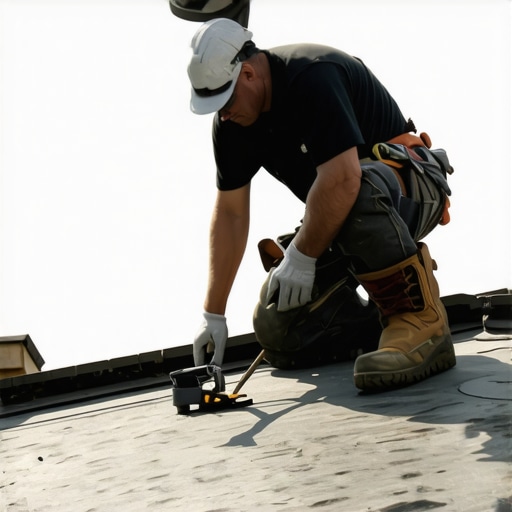
You see that brownish, circular stain on your ceiling, right where the kitchen island sits? Most roofing companies will tell you it is a shingle problem. They are wrong. As a veteran who has spent 25 years crawling across 12-pitch slopes in the sweltering 95% humidity of the Gulf Coast, I can tell you that is the calling card of a failed valley. In this climate, water does not just fall; it attacks. My old mentor, a man who could spot a shiner (a missed nail) from the ground, used to say, ‘Water is patient. It will wait years for you to make a 1/16th-inch mistake, and then it will rot your house from the inside out.’ When we are talking about loose roof valley seam flashing in a tropical or high-moisture zone, we are talking about a war of attrition against wind-driven rain and galvanic corrosion.
The Forensic Autopsy: Why Valleys Fail in the Heat
Before we talk about the fix, you have to understand the physics of the failure. In the Southeast, we deal with thermal shock. Your roof hits 160°F by noon and then gets hammered by a 70°F thunderstorm at 4:00 PM. That metal flashing expands and contracts like a living lung. If your local roofers used cheap 28-gauge steel or, heaven forbid, just overlapped shingles without metal, the valley is going to buckle. This ‘oil-canning’ effect pulls the metal away from the sealant, creating a gap that sucks in water via capillary action. Capillary action is the same way a paper towel drinks up a spill; the water is literally pulled uphill and sideways into your attic decking.
“A roof is only as good as its flashing.” – Old Roofer’s Adage
Once the water gets past the metal, it hits the underlayment. If that underlayment has degraded due to heat, you are one storm away from disaster. If you ignore these signs, you will eventually find yourself searching for hidden decking plywood decay, which turns your structural support into something resembling wet cardboard. Here is how we fix it right, using the ‘surgery’ approach rather than just slapping on more goop.
Fix 1: The ‘W-Diverter’ Retrofit
In high-wind zones, a flat ‘V’ valley is a liability. Wind-driven rain coming from the left plane of the roof can actually push water all the way across the metal and underneath the shingles on the right plane. The professional fix is a ‘W’ profile metal valley. The ‘W’ has a 1-inch ridge standing right in the center. This acts as a breakwater, preventing cross-wash. When we install this, we use 26-gauge pre-finished steel. If you are near the coast, we go to stainless or copper to avoid 2026 flashing rust issues that eat through galvanized metal in a decade.
Fix 2: Eliminating the Shiners
The most common cause of a loose valley is improper nailing. I’ve torn off hundreds of squares where the previous installers drove nails within two inches of the valley center. These are called shiners. When the metal expands, it puts leverage on those nails, eventually popping the heads or tearing the metal. The fix is to remove the surrounding shingles, pull the offending nails, and use a high-grade bio-based roof shingle sealant to patch the holes in the underlayment. New fasteners must be kept at least 6 to 8 inches away from the valley centerline, using specialized metal cleats that allow the metal to slide as it heats up.
Fix 3: The Hemmed-Edge Compression
If your valley flashing is ‘lifting’ at the edges, it is because it wasn’t hemmed. A ‘hem’ is a 180-degree fold on the edge of the metal that adds structural rigidity. Without it, the metal is flimsy and will curl. To fix this without a full tear-off, we ‘kick-out’ the edges and install a continuous bead of polyurethane sealant, then use a compression bar to reset the edge. This is the difference between a ‘trunk slammer’ fix and forensic roofing. We aren’t just stopping the leak; we are changing how the wind interacts with the edge of the metal.
Fix 4: Clearing the ‘Debris Dam’ and Recutting
In many ‘closed’ valleys (where shingles cover the metal), pine needles and oak leaves get trapped in the secret waterway. This debris holds moisture against the metal, leading to premature failure. The fix here is to convert the valley to an ‘Open’ style. We cut the shingles back 2-3 inches on each side of the center. This exposes the metal, allowing the sun to dry it out and the rain to wash away debris. When recutting, you must ‘dub’ the top corner of each shingle—cutting a 45-degree angle off the corner—to direct water back into the valley center. If you don’t, the water will ‘track’ along the top edge of the shingle and dump into your attic joints.
Fix 5: The Secondary Water Barrier (Surgery)
If the valley is loose and the wood underneath feels spongy, you have passed the point of ‘patching.’ You need a full extraction. We strip the valley back two feet on each side. We lay down a thick, self-adhering membrane (Ice and Water shield, though in the South we use it for high-temp waterproofing). This is your last line of defense. Even if the metal fails again in 30 years, this membrane won’t. Then, we install the metal flashing on top, securing it with clips rather than nails through the metal. If you are dealing with an active leak during a storm, you might need immediate sealing, but that is a temporary band-aid until the sun comes out and we can do the real work.
“Water is the most versatile tool of destruction in nature; a roofer’s job is to be more clever than a liquid.” – Architectural Axioms Vol. IV
The Reality of the ‘Quick Fix’
Many homeowners call roofing companies asking for a tube of caulk. Let me be blunt: caulk is not a roofing material; it is a maintenance item. If your valley is loose, it is because the mechanical fastening system has failed. Slathering 10 dollars of silicone over a 2,000-dollar problem is why I stay busy fixing ‘repaired’ roofs. In the Southeast, where hurricanes are a constant threat, you want a storm-proof valley. Check out our guide on best storm-proof roofs for high-wind zones to see how professional integration of flashing and shingles saves homes when the pressure drops and the wind starts howling. Don’t wait until the kitchen stain becomes a hole in the ceiling. Address the valley physics now, or the house will do it for you.