
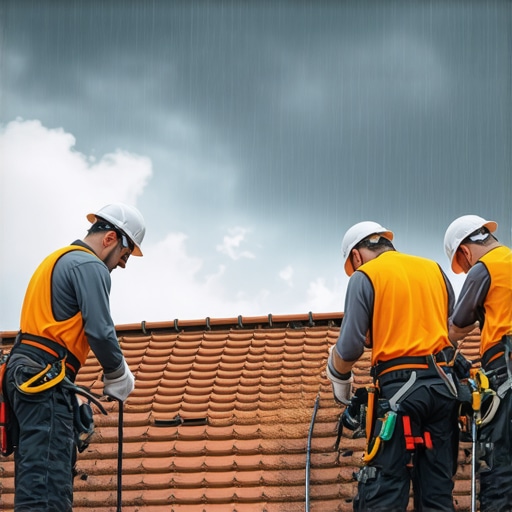
The Anatomy of a Midnight Leak: Why Your Ceiling Is Crying
There is a specific sound that haunts every homeowner in the humid corridor of the Southeast—the steady, rhythmic thwack-drip of water hitting a hardwood floor at 2 AM. You aren’t just hearing rain; you are hearing the sound of your investment rotting from the inside out. As a forensic roofer who has spent three decades crawling through 140-degree attics in the middle of August, I can tell you that the water you see on your ceiling is only 10% of the story. By the time it hits your dining table, it has already saturated your insulation, traveled horizontally across a rafter, and likely bypassed several layers of what you thought was a ‘leak-proof’ system. My old foreman used to say, ‘Water is patient. It will wait for you to make a mistake, and then it will invite all its friends in for a party.’ He was right. Water doesn’t just fall; it hunts for weaknesses.
In high-wind zones, we don’t just deal with gravity; we deal with hydrostatic pressure and capillary action. When a storm rolls in off the coast, the wind forces rain vertically up under your shingles. If your local roofers skipped the starter strip or used cheap, non-polymer-modified underlayment, that water is going straight to the deck. Once the plywood gets wet, it begins to delaminate, turning into something resembling soggy cardboard rather than a structural component. This is why immediate sealing isn’t just about stopping the drip; it’s about stopping the structural decay that leads to hidden decking plywood decay. If you ignore the initial signs, you are looking at a full-scale forensic tear-off rather than a simple repair.
“A roof is only as good as its flashing.” – Old Roofer’s Adage
Step 1: The Forensic Assessment (Finding the Ghost)
The first mistake people make during a roofing emergency is assuming the hole is directly above the leak. It almost never is. Water is a master of the ‘sideways crawl.’ It might enter at a rusted chimney flashing or a compromised valley thirty feet away, travel down the top of the underlayment, find a shiner—that’s a nail that missed the rafter and left a clear path for moisture—and then drip onto your drywall. To seal a roof immediately, you have to think like a detective. You need to look for shingle lifting, which often happens in ‘unsealed’ corners during high-velocity wind events. Look for ‘chatter’ marks on the shingles, which indicate they’ve been flapping and breaking their thermal seal.
Step 2: Temporary Membrane Deployment
Once you’ve identified the likely entry point, you need a temporary barrier. In the trade, we call this the ‘Stop-Gap.’ While most homeowners reach for a blue tarp and some bricks, a professional knows that a poorly secured tarp is a sail that will eventually rip your fascia boards off. You must follow strict emergency tarping rules to ensure the wind doesn’t get under the plastic. This involves ‘furring strips’—thin pieces of wood nailed over the tarp edges to create a continuous seal against the shingles. If you don’t seal the top edge over the ridge, the water will simply run under the tarp, making your ‘fix’ completely useless. We see this all the time with roofing companies that prioritize speed over physics.
Step 3: The Physics of the Secondary Seal
If the weather allows, the next step is applying a sacrificial sealant or a ‘peel-and-stick’ flashing membrane. In our climate, standard asphalt-based caulk is garbage; it dries out and cracks under the intense UV radiation within months. You need a high-solids tripolymer sealant that can handle thermal expansion. When the sun hits your roof, it can reach 160 degrees, and then drop to 70 degrees when a thunderstorm hits. That ‘thermal shock’ causes materials to move at different rates. If your sealant isn’t flexible, it will snap. This is often where we find signs of poor underlayment—the material becomes brittle and fails to self-seal around the nail shafts, leading to a slow-motion disaster inside your walls.
“The building envelope must be designed to shed water at every transition, or the transition will eventually become an intake.” – International Residential Code (IRC) Commentary
Step 4: Professional Verification and Insurance Guarding
The final step of immediate sealing is documenting the failure for the inevitable insurance claim. You need to take photos of the ‘mechanism of failure.’ Was it a cricket that was improperly flashed? Was it a square of shingles that delaminated because of a manufacturing defect? Most local roofers will just patch it and leave, but you need to know *why* it failed so you don’t end up in the same spot next season. Watch out for ‘storm chasers’ who promise a free roof without looking in your attic. You should always avoid these roofing scams that are currently trending. A real forensic roofer will check your soffit vents and ridge gaps to ensure that moisture isn’t being trapped inside, which is just as dangerous as a hole in the roof.
The High Cost of the ‘Trunk Slammer’ Fix
I’ve spent half my career fixing ‘repairs’ made by guys who operate out of the back of a beat-up pickup truck. They use a bucket of ‘bull’ (asphalt cement) to cover a leak and call it a day. That asphalt cement eventually dries, shrinks, and creates a bowl that actually holds water against your wood, accelerating rot. If you want to protect your home, you have to demand better. You need to understand the ‘physics of the dry.’ A roof isn’t a solid lid; it’s a series of overlapping sheds. If any one of those overlaps is compromised, the system fails. Don’t let a minor emergency turn into a $30,000 replacement because you waited too long to call a professional who understands more than just how to swing a hammer. Emergency sealing is about buying time, but it’s the quality of that seal that determines if you’re buying a month or a decade. Stay off the ladder if the wind is blowing, keep your gutters clear to avoid valley backup, and always demand a forensic inspection before signing a contract.