
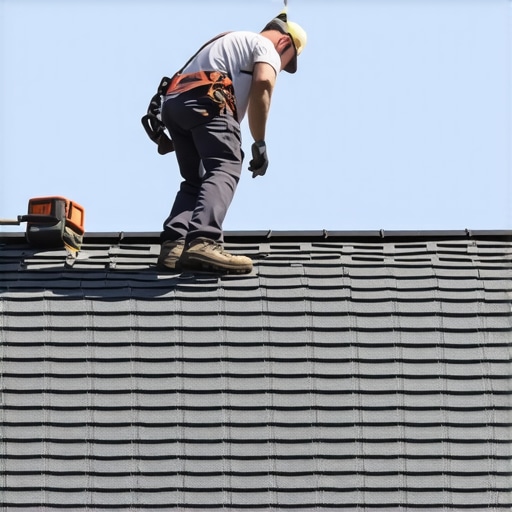
The Black Streak Epidemic: Why Your Roof Looks Like a Crime Scene
Walk down any suburban street in the humid corridors of the Southeast—from the sweltering coast of Georgia to the heavy air of Houston—and you will see them: those ugly, vertical black streaks bleeding down otherwise decent-looking shingles. Most homeowners think it is soot or dirt. They are wrong. It is a biological invasion. Specifically, it is Gloeocapsa magma, a hardy cyanobacteria that has decided your roofing is a five-star buffet. This stuff does not just sit there; it eats. It feeds on the calcium carbonate used as filler in modern asphalt shingles, slowly hollowing out the structural integrity of your roof deck defense. As a forensic roofing veteran, I have seen ‘local roofers’ try to wash this away with a pressure washer, only to blast the granules right off the mat, shortening the roof’s life by five years in twenty minutes.
My old foreman used to say, ‘Water is patient. It will wait for you to make a mistake.’ In our climate, it is not just the water—it is the humidity that carries the spores. If you do not stop the algae early, you are not just looking at a cosmetic issue; you are looking at a thermal nightmare. Those dark stains create a localized heat sink, absorbing UV radiation and spiking your attic temperature. This causes the plywood to bake from both sides, leading to the smell of toasted adhesives and, eventually, a structural failure that no roofing companies can fix with a simple patch.
Mechanism Zooming: The Biology of the Bleed
To understand how to stop it, you have to understand the physics of the stain. Algae spores are airborne. They land on your north-facing slopes—the ones that stay damp the longest after a morning dew—and begin to colonize. They produce a dark, pigment-rich outer coating to protect themselves from the sun. This is the ‘streak’ you see. As they grow, they trap more moisture, creating a micro-environment that invites moss and lichen. This cycle is a death sentence for your shingles because it holds water against the granules, causing them to loosen. When those granules go, the asphalt is exposed to direct UV, which triggers thermal shock and cracking.
“Asphalt shingles shall be installed in accordance with the manufacturer’s printed instructions and the requirements of this section.” – International Residential Code (IRC) R905.2.1
1. The Metallic Shield: Zinc and Copper Ionization
The most effective way to prevent Gloeocapsa magma from taking hold is to use the chemistry of heavy metals. When rain hits a strip of zinc or copper installed near the ridge, it creates a metallic solution that washes down the roof. These ions are toxic to algae. If you look at an old roof with a chimney, you will often see a clean white patch of shingles directly below the lead or copper flashing. That is not a coincidence; it is science. We call this ‘galvanic prevention.’ For homeowners in the Southeast, installing a 6-inch zinc strip tucked under the ridge cap is the most cost-effective long-term play. It’s better than any chemical wash because it works 24/7, every time it rains.
2. Copper-Infused Granule Selection
If you are in the market for a full replacement, do not let local roofers sell you on the cheapest ‘three-tab’ shingle they have in the truck. You need to demand algae-resistant (AR) shingles. These are not just standard shingles with a coating; they have copper-containing granules embedded directly into the mix. However, there is a catch the salesman won’t tell you: these shingles have a ‘limited’ warranty for a reason. The copper eventually leaches out. To get the most out of them, you need to verify the percentage of copper granules. If you ignore the material quality, you’ll eventually deal with early shingle curling, which is the first sign the mat is failing.
3. The ‘Air-Gap’ Defense: Ventilation and Surface Temperature
Algae loves a warm, damp surface. If your attic is not breathing, your roof surface stays warmer and wetter for longer. This is where roofing companies often fail—they overlook the intake. If your soffit vents are clogged with insulation, your ridge vent is useless. Proper ventilation lowers the surface temperature of the shingles, causing dew to evaporate faster. This disrupts the algae’s life cycle. I’ve seen squares of roofing that were completely black on one side of a house and clean on the other, simply because one side had a cricket diverting water and better airflow. Check your attic; if it feels like a sauna, you are growing a garden on your shingles.
4. Chemical Mitigation Without the Destruction
If you already have stains, you need a ‘soft wash.’ This is a low-pressure application of a specific sodium hypochlorite solution mixed with a surfactant. You do not want a ‘trunk slammer’ with a 3000-PSI power washer on your roof. That is how you get shiners (nails pushed up by pressure) and destroyed granules. A proper professional wash kills the root system of the algae. For those looking for a less aggressive approach, there are diy roof cleaning hacks that involve oxygen-based bleaches, but these require patience. Remember, if you don’t follow up a wash with a preventative metal strip, the stains will be back in eighteen months.
5. The Perimeter Lockdown: Tree Trimming and Sunlight
Sunlight is the best disinfectant, but in the humid Southeast, we love our shade trees. If you have an oak limb hanging over your valley, you are creating a petri dish. The shade keeps the shingles cool and damp, while the falling organic debris provides extra nutrients for the algae. Trimming back limbs at least 10 feet from the roof line is non-negotiable. This also prevents wind-driven rain from trapping leaves in the gutter, which leads to fascia rot. I have torn off roofs where the plywood had turned to mush because a layer of wet leaves held moisture against the shingles for three straight years.
The ‘Material Truth’: Why Warranties are Often Smoke
Let’s talk about the ‘Lifetime Warranty’ trap. Most roofing manufacturers offer a warranty against algae, but if you read the fine print, it is usually pro-rated and only covers the first 10 to 15 years. More importantly, it often only covers the cost of the ‘cleaning,’ not the replacement of the shingles. By the time the algae is visible, the damage to the asphalt mat has already begun. When choosing between materials, remember that metal roofing or slate are virtually immune to these biological issues, but for asphalt, the installation is the only real protection. If you are comparing quotes from local roofers, ask specifically about their secondary water resistance protocols and how they handle uplift ratings in high-wind zones. A roof that isn’t nailed down correctly will fail long before the algae gets to it.
“A roof is only as good as its flashing.” – Old Roofer’s Adage
In conclusion, don’t wait for the black streaks to cover your home. Start with the zinc strips, fix your attic airflow, and keep the trees at bay. If you are hiring a crew, make sure you are asking the right questions about subcontractors to ensure you aren’t getting a ‘day-labor’ special. Your roof is the only thing standing between your family and a very expensive sky—treat it with a bit of forensic respect. [HowTo Schema Placeholder]
{“@context”: “https://schema.org”, “@type”: “HowTo”, “name”: “How to Prevent and Remove Roof Algae Stains”, “description”: “A guide for homeowners to stop Gloeocapsa magma from ruining asphalt shingles using trade-proven methods.”, “step”: [{“@type”: “HowToStep”, “text”: “Install zinc or copper strips along the roof ridge to provide ongoing metallic protection.”}, {“@type”: “HowToStep”, “text”: “Ensure attic ventilation is clear of obstructions to reduce roof surface moisture.”}, {“@type”: “HowToStep”, “text”: “Trim overhanging tree branches to increase sunlight exposure and reduce organic debris.”}, {“@type”: “HowToStep”, “text”: “Apply a low-pressure soft wash solution to kill existing algae spores without damaging granules.”}, {“@type”: “HowToStep”, “text”: “Select algae-resistant (AR) shingles for any future roof replacement projects.”}]}