
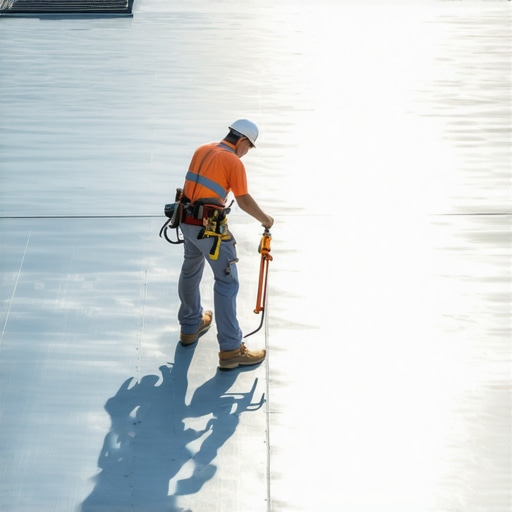
My old foreman, a guy who smoked filterless Luckies and could smell a leak from the curb, used to say, ‘Water is patient. It will wait for you to make a mistake, and then it will wait ten more years to rot your house from the inside out.’ He wasn’t talking about shingles; he was talking about the arrogance of thinking we can beat physics. By 2026, the market for metal roofing has exploded, but the number of local roofers who actually understand how a metal panel breathes in a freeze-thaw cycle is still dangerously low. I’ve spent twenty-five years crawling through damp attics and peeling back failed valleys, and if there is one thing I know, it is that a metal roof is either a fifty-year shield or a five-year disaster waiting to happen. In the cold, unforgiving climates of the North, where ice dams are the primary predator, metal is marketed as the ultimate solution. But if your contractor doesn’t understand thermal bridging or capillary action, that expensive steel lid is just a giant heat sink that will turn your attic into a swamp.
‘A roof is only as good as its flashing.’ – Old Roofer’s Adage
Before you sign a contract for a new metal system, you need to understand the ‘Material Truth.’ Most roofing companies will sell you on the ‘Lifetime Warranty’ of the paint finish. They aren’t lying—the paint will look great while your decking turns into mush. The real failure points in 2026 aren’t the panels themselves; they are the fasteners, the underlayment, and the lack of a thermal break. When a metal roof heats up under the afternoon sun, it expands. When the temperature drops at night, it shrinks. This constant movement creates a ‘sawing’ effect on the screws. If the installer didn’t use the right EPDM washers or over-torqued them, you’ll end up with a ‘shiner’—a missed nail or a misaligned screw—that lets a teaspoon of water in every time it rains. Over a decade, that teaspoon turns into a structural nightmare.
1. How Do You Manage Thermal Expansion and ‘Oil Canning’?
Most homeowners think a roof is a static object. It isn’t. It’s a living, breathing skin. In regions where we see 40-degree temperature swings in twelve hours, metal panels move significantly. If a roofer pins the panels too tightly, you get ‘oil canning’—that wavy, distorted look that makes your expensive investment look like a cheap barn. But more importantly, restricted movement leads to fastener fatigue. You need to ask your local roofers if they are using floating clips or if they are direct-fastening. For a residential structure, why 2026 roofing companies prefer standing seam 2.0 is often down to how the system handles this mechanical stress without snapping screw heads. If they can’t explain the physics of panel movement, they shouldn’t be on your house.
2. What Is the Strategy for Condensation and Airflow?
Here is the forensic reality: Metal is cold. Your attic is warm. When that warm, moist air hits the underside of a cold metal panel, it turns into liquid water. I have walked into jobs where the homeowner thought they had a leak, but it was actually ‘attic rain’ caused by poor ventilation. The metal was doing its job, but the roofer failed to provide a thermal break. You need to verify that they are using a high-quality synthetic underlayment or, even better, a textured spacer that allows a small gap for air to move behind the metal. Many pros are now looking at 7 reasons 2026 roofing companies use 2026 poly-mats to create this essential separation. Without it, you are trapping moisture against your plywood. If you ignore the airflow, you will eventually see local roofers 5 signs of 2026 decking rot, and by then, the bill will be double.
‘The building envelope must be considered as a whole system, not a collection of parts.’ – NRCA Manual
3. How Are the Valleys and Crickets Detailed?
The valley is where most roofs go to die. It is the intersection where all the water, debris, and snow accumulate. On a metal roof, you cannot just slap some caulk in a corner and call it a day. I’ve seen ‘trunk slammers’ try to seal valleys with nothing but a bead of silicone. Give it two years of UV exposure and that silicone will peel off like a sunburned layer of skin. A real pro will use a W-style valley with ‘hemming’—a technique where the metal is folded back over itself to lock into the flashing. This prevents capillary action, where water literally climbs uphill under the shingle or panel due to surface tension. If your roof has a chimney, they must install a ‘cricket’—a small peaked structure behind the chimney to divert water. Without it, the chimney becomes a dam. Ask them to see their flashing details. If they talk about ‘caulk’ more than they talk about ‘metal-to-metal locks,’ run.
The Myth of the Maintenance-Free Roof
Roofing companies love the word ‘maintenance-free.’ It’s a marketing lie. While metal is tougher than asphalt, it still requires an eye. You need to check for local roofers 5 signs of 2026 drip edge corrosion, especially if you live near any salt or heavy industrial runoff. Furthermore, the 2026 trend of integrated tech means you should be asking local roofers 3 questions for 2026 solar brackets if you plan on going green. You don’t want someone drilling holes in your new 50-year roof to install solar panels. You want S-5! clips that grip the seams without penetration. Picking the right contractor is about finding the person who is more worried about what happens under the roof than how it looks from the sidewalk. A ‘square’ (100 square feet) of metal is expensive. Don’t waste that money by hiring someone who doesn’t understand that water is always looking for a way in. If you suspect your current setup is failing, check for local roofers 3 signs of 2026 attic condensation before the mold takes hold. In the end, a roof isn’t just a covering; it’s a hydraulic system. If your roofer isn’t a part-time physicist, you’re just buying a very expensive leak.