
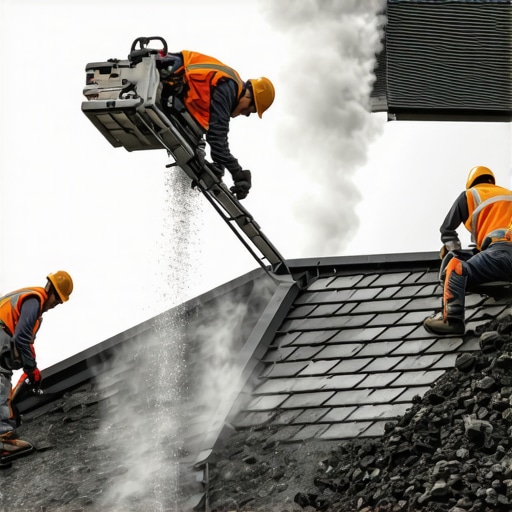
The first sign isn’t a drip; it is a smell. That damp, earthy scent of moldering organic matter trapped under two inches of industrial aggregate. I was standing on a flat roof in Jersey City last November, and the surface felt like walking on a sponge. I knew exactly what I’d find underneath. Every step produced a wet, squelching sound, a clear indicator that the slag—that heavy, jagged byproduct of the steel industry once used to shield tar from the sun—had transitioned from a protective layer into a water-logged reservoir. For local roofers, this is the ultimate forensic challenge. Slag roofs, or built-up roofs (BUR) with aggregate, were designed for a different era. In the cold, damp climate of the Northeast, these systems are failing at an alarming rate in 2026 because of the sheer physics of moisture retention and thermal bridging.
The Physics of Failure: Why Slag Kills Decks
When we talk about slag removal, we aren’t just talking about cleaning a roof; we are talking about a surgical extraction of a failed ecosystem. Slag is heavy. A single square (that’s 100 square feet for the uninitiated) of a standard aggregate roof can weigh between 400 and 600 pounds. When that aggregate becomes saturated, you are looking at thousands of pounds of static load your joists were never designed to handle. This leads to structural shifting that manifests as cracks in your interior drywall. But the real enemy is capillary action. Water doesn’t just sit on top of the slag; it gets pulled into the microscopic gaps between the stones. Once there, it stays cool, prevents evaporation, and slowly works its way through the bitumen layers through hydrostatic pressure.
“A roof system’s primary function is to provide a barrier to the passage of water into the interior of a building, but its secondary function is the management of thermal energy.” – NRCA Manual
This thermal energy management fails completely when the slag is wet. In the winter, that moisture freezes, expands, and physically tears the underlying felt. This creates a shiner—a missed nail or fastener that becomes a direct conduit for frost to travel into your attic space, causing underlayment rot that turns your plywood into something resembling wet oatmeal.
The 2026 Removal Standard: The Vacuum vs. The Shovel
In the old days, roofing companies would send a crew of six guys with shovels and wheelbarrows. It was back-breaking, dusty, and dangerous work that often damaged the very deck we were trying to save. In 2026, professional roofing companies have moved toward high-powered extraction. This is why 2026 roofing companies now use 2026 vacuum trucks. These units utilize a massive industrial suction hose that pulls the slag directly from the roof into a sealed hopper. This isn’t just about speed; it’s about forensic cleanliness. You cannot see the true state of a roof deck until every single pebble of slag is removed. Shoveling leaves behind ‘fines’—tiny particles of dust and rock that hide micro-fractures in the substrate. The vacuum leaves the surface bone-dry and visible, allowing us to spot decking rot before it becomes a catastrophic collapse. If your contractor shows up without a vacuum plan for a slag roof, they are living in 1985, and your house is going to pay the price in labor hours and collateral damage.
The Hidden Danger: Thermal Bridging and Ice Dams
In Northern climates, slag roofs are notorious for contributing to ice dams. Because the slag acts as a heat sink, it holds the warmth escaping from your poorly insulated attic. This melts the bottom layer of snow, which then runs down to the cold valley or eave and refreezes. By removing the slag and replacing it with a modern, reflective membrane like TPO or PVC, we break that thermal bridge. We also look for the cricket—that small peaked structure behind chimneys or high-wall intersections. On old slag roofs, these crickets are often buried or improperly pitched, leading to stagnant pools of water that eventually find a way inside.
“The most expensive roof is the one you have to pay for twice.” – Old Roofer’s Adage
This is why the ‘Band-Aid’ approach—smearing more tar over the slag—is a fool’s errand. You are just trapping more moisture in the sponge.
The Forensic Autopsy: What We Find Under the Stones
Once the vacuum truck has done its work, the real investigation begins. We often find that the original installers used galvanized nails that have since succumbed to the acidic runoff from decades of industrial slag. This corrosion causes the fasteners to ‘pop,’ creating a hole that water can easily bypass. We use lidar gear to map the slope of the now-exposed deck. Often, the weight of the slag has caused the roof to bow in the middle, creating ‘ponds’ that never drain. Without the slag, we can finally see these low spots and build them back up with tapered insulation before the new roof goes on. This is the difference between a ‘roof job’ and a forensic restoration. You are fixing the underlying physics, not just the shingles.