
The Sound of the Sky Ripping: Why Your Soffits Failed
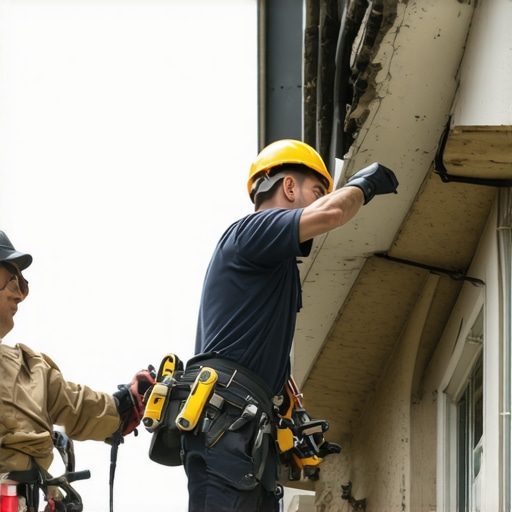
You’re sitting in your living room when the wind picks up. It’s not just a breeze; it’s that low, gutteral roar that tells you the atmosphere is angry. Then you hear it—a rhythmic thwack-slap-thwack. It sounds like someone is taking a hammer to the underside of your eaves. By the time the rain starts, you see a piece of perforated vinyl or aluminum dancing across your lawn. Your soffit has just checked out of the job, and now your roof’s internal organs are exposed to the elements. Most homeowners think of soffits as a cosmetic trim, something to hide the ugly rafter tails. As a forensic roofer, I see them differently: they are the intake valves of your home’s respiratory system. When a storm rips them out, it’s like a chest wound. If you don’t call for emergency roof services immediately, the secondary damage will dwarf the cost of a few panels of vinyl.
“Water is patient. It will wait for you to make a mistake. It will wait years for a single nail to rust or a single joint to open up, and then it will destroy your home from the inside out.” – My Old Foreman’s Adage
My old mentor used to say that every time we saw a ‘quick fix’ that ignored the physics of water. He was right. When we talk about storm-damaged soffits, we aren’t just talking about missing plastic. We are talking about the integrity of your attic’s micro-climate. In regions like the Gulf Coast or the humid Southeast, the wind doesn’t just blow sideways; it creates massive pressure differentials. During a high-wind event, air is forced over the peak of your roof, creating a vacuum on the leeward side. This negative pressure can actually suck the soffit panels right out of their F-channel if they weren’t fastened with enough ‘bite.’ Once that panel is gone, wind-driven rain has a direct highway into your attic, saturating your insulation and rotting your sub-fascia from the back side where you can’t see it.
The Forensic Autopsy: How the Failure Happens
Let’s look at the physics of a blowout. Most signs of a failing soffit start long before the storm hits. It usually begins with ‘shiners’—nails that missed the wood and are just hanging out in the air, or worse, staples that have corroded into nothing but rust-dust. When the wind hits 60+ MPH, the soffit panel begins to vibrate. This is the flutter. As it flutters, it enlarges the holes around the fasteners. Eventually, the pressure becomes too much, and the panel collapses or flies out. If you’re lucky, it just lands in the bushes. If you’re unlucky, the wind continues to funnel up into the rafter bays, creating an uplift force that can actually help peel the shingles off the edge of your roof.
Once the soffit is gone, we see the ‘capillary creep.’ Water hits the fascia board and, instead of dropping into the gutter, it follows the curve of the wood through surface tension. It moves upward and inward, soaking into the rafter tails. This is where the real nightmare begins. If you’ve ever smelled that damp, earthy scent in your attic after a storm, you’re smelling the early stages of wood-decaying fungi. I’ve seen rotten rafter tails that were so soft I could push a screwdriver through them like they were warm butter. This isn’t just a ‘roofing’ issue; it’s a structural failure that compromises the very skeleton of your home.
The Anatomy of a Proper Repair
When you call local roofers for an emergency repair, don’t let them just slide a new panel in and call it a day. That’s a band-aid on a gunshot wound. A forensic repair requires checking the ‘lookouts’—the small horizontal wood members that provide the nailing surface for the soffit. If those lookouts are wet or soft, any new fastener is just going to pull right back out in the next storm. We also have to look at the F-channel and J-channel. These are the tracks that hold the soffit in place. In many ‘trunk slammer’ jobs, these tracks are barely tacked on. A professional roofing company will ensure these are secured with stainless steel or hot-dipped galvanized fasteners that won’t vanish after five years of salt air exposure.
Furthermore, you need to verify the intake capacity. If your soffit was damaged because the attic was poorly ventilated to begin with, the pressure build-up inside the attic might have contributed to the failure. This is why immediate leak sealing must also include a quick audit of your attic’s airflow. If the wind can’t get out through the ridge vent, it’s going to find a way out through the weakest point—and that’s often your soffit or gable vents.
The Trap of the “Quick Fix” Contractor
After a major storm, the ‘storm chasers’ descend. They’ll offer you a cheap price to ‘snap some new soffit in.’ Be careful. These guys often ignore the wet insulation that is now trapped behind your new, pretty trim. If that wet fiberglass or cellulose stays there, it will wick moisture into your ceiling drywall. By the time you notice the brown rings on your ceiling, the ‘roofer’ is three states away. This is why you need to insist on a roofing company that performs a full forensic check. They should be looking for hidden decking plywood decay near the eaves. If the plywood at the edge is delaminating, it means water has been getting in for a long time, and the storm was just the final blow.
“A roof is only as good as its flashing and its ventilation; everything else is just shingles and hope.” – Standard Roofing Axiom
Before you sign anything, ensure you have an ironclad 2026 contract that specifies exactly how they will handle rotten wood discovered during the repair. A ‘square’ of roofing (100 square feet) might be easy to estimate, but soffit and fascia work is surgical. It requires a craftsman who understands how to miter corners so they don’t leak and how to install a ‘cricket’ if there’s a chimney or wall nearby that’s dumping water onto the eave. If your contractor doesn’t know what a ‘drip edge’ is or why it’s vital for protecting your soffits, show them the door.
Preventing the Next Blowout
Once the emergency is over and the local roofers have secured your home, you need to think about ‘Hardening’ your roof. In high-wind zones, we recommend hidden-vent soffits made of heavy-gauge aluminum or cellular PVC. Unlike cheap vinyl, these materials have the rigidity to withstand ‘oil-canning’ (the warping and popping sound) and are much harder for the wind to grab. Make sure they are fastened every 12 inches into solid wood. If your home has a large overhang, the wind leverage is even greater, requiring even more robust anchoring. Don’t let a small storm turn into a $20,000 mold remediation project. Fix the soffits, fix them right, and keep the weather where it belongs—outside.