
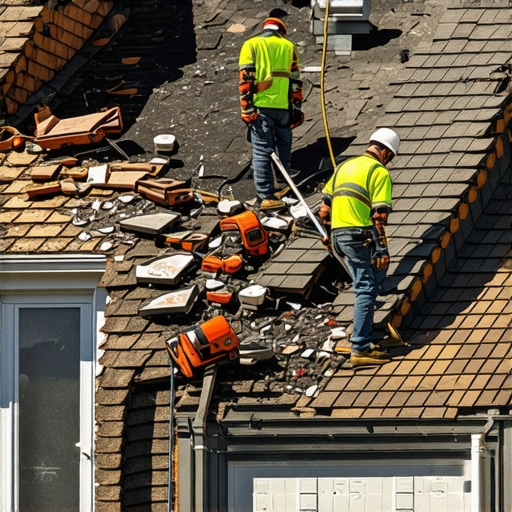
The wind isn’t just a noise in the Southeast; it’s a physical predator. Last year, I was called to a job in a coastal neighborhood where the homeowner thought they’d just lost ‘a few pieces of gravel.’ Walking on that roof felt like walking on a wet sponge. I knew exactly what I’d find underneath. It wasn’t just a missing tab; it was a total failure of the secondary water resistance because the previous crew had high-nailed every single course, leaving the shingles to flap like loose playing cards in the breeze. That ‘sponge’ was three-quarters of an inch of OSB that had been drinking wind-driven rain for 48 hours. By the time I arrived, the dining room ceiling was already a soggy memory.
The Forensic Autopsy of a Blow-Off
When you see a shingle lying in your flowerbed, you aren’t just looking at debris; you’re looking at a forensic failure of the building envelope. In high-humidity, high-wind zones like the Gulf Coast or the Florida Panhandle, shingles don’t just ‘fall off.’ They are ripped away by pressure differentials. As wind hits the windward slope, it creates a high-pressure zone that forces air under the butt-edge of the shingles. Simultaneously, the leeward side experiences a low-pressure lift—the same physics that allows a 747 to take flight. If your roofing companies didn’t ensure a perfect bond of the thermoplastic sealant strip, or if they missed the ‘common bond’ area with their fasteners, you’ve got a structural liability, not a roof.
“A roof is only as good as its flashing.” – Old Roofer’s Adage
The physics of the failure zoom in on the ‘shiner’—a nail that missed the rafter or was driven at an angle. These shiners act as thermal bridges and, more importantly, as tiny conduits for capillary action. Once a shingle lifts, water doesn’t just fall; it travels sideways. It creeps under the adjacent tabs through surface tension, seeking out those shiners to rot the deck from the inside out. This is why spotting shingle lifting early is the difference between a minor repair and a 30-square tear-off.
1. Kill the Power and Triage the Interior
Before you even think about looking for local roofers, you need to handle the physics of the water already inside. Gravity is a relentless master. If you see a bulge in the drywall, that is an accumulation of hydrostatic pressure. Take a screwdriver and poke a hole in the center of that bulge. It sounds counterintuitive, but you want to control the exit point of the water. If you don’t, the water will travel horizontally across the ceiling joists, finding electrical fixtures and creating a fire hazard. In the Southeast, where salt air corrodes wiring faster than you can blink, mixing water and electricity is a recipe for a total loss. [IMAGE_PLACEHOLDER] Once the water is draining into a bucket, move your valuables. Don’t assume a small leak will stay small; once the shingle is gone, the felt underlayment (if it’s not synthetic) will saturate and fail within hours.
2. Execute a Temporary Structural Patch
If the storm has passed but the forecast looks grim, you need a temporary defense. This isn’t about making it pretty; it’s about stopping the moisture drive. Using a high-quality roofing cement to tack down loose edges can help, but if the shingles are gone, you’re looking at an immediate leak storm patch using reinforced plastic or a heavy-duty tarp. The key is the ‘wrap.’ Never just nail a tarp to the flat of the roof; that creates more holes (shiners) for water to enter. You must wrap the tarp over the ridge and secure it with 1×4 furring strips. This uses the natural slope of the roof to shed water over the patch rather than under it. I’ve seen homeowners try to ‘caulk’ their way out of a missing shingle—that’s like trying to stop a flood with a toothpick. You need to redirect the water path entirely.
3. Forensic Documentation for the Adjuster
Before any roofing companies start tearing off material, you need a paper trail. Insurance adjusters are paid to be skeptical. They want to see ‘functional damage,’ not just ‘cosmetic’ issues. Take high-resolution photos of the missing squares, the surrounding lifted tabs, and the grit accumulation in the gutters. If you see ‘bruising’ on the shingles, it’s a sign of hail impact that often accompanies high winds. This documentation is your leverage. Many ‘trunk slammers’ will offer to ‘waive your deductible’—this is a massive red flag. It’s often insurance fraud, and it usually means they are cutting corners on the materials, like using cheap 15-pound felt instead of a proper synthetic shingle felt pad that provides secondary water resistance.
“Fasteners shall be driven straight and flat… and shall not be over-driven or under-driven into the shingles.” – International Residential Code (IRC) R905.2.5
4. Screen for ‘The Surgery’ vs. ‘The Band-Aid’
When you call in local roofers, listen to their terminology. If they suggest just ‘gluing down’ the surrounding shingles, they are selling you a Band-Aid. In a high-wind climate, once the factory sealant strip is contaminated with dust and debris from a blow-off, it will never truly re-seal. The ‘surgery’ involves removing the damaged shingles back to the nearest clean lap and installing new shingles with a six-nail pattern (standard for high-wind zones). This is also the time to check for unforeseen wood rot. If the roofer finds that the plywood is delaminating, it must be replaced. Nailing a new shingle into rotten wood is like trying to nail a piece of bread to a wall—it won’t hold the next time the wind kicks up to 50 mph. Ensure they check the ‘cricket’ behind the chimney and the valley flashing; these are the two most common areas where water entry is misdiagnosed during a blow-off event.
The Long-Term Cost of Hesitation
Water is patient. It will sit in your insulation, slowly feeding mold spores that love the humid Southeast air, until your attic is a biological hazard. A few missing shingles might seem like a minor nuisance, but the ‘physics of failure’ means the integrity of the entire slope is now compromised. If you wait, you aren’t just paying for shingles; you’re paying for new rafters, new drywall, and mold remediation. Get a professional who understands uplift ratings and fastener schedules. Don’t let a ‘trunk slammer’ turn a simple repair into a total structural failure.