
The Day the Roof Sank: A Forensic Look at Hidden Decay
The call usually starts the same way: a homeowner noticed a small tea-colored stain on the guest room ceiling after a typical Florida afternoon cloudburst. They call a few local roofers, get a few quotes for a simple shingle replacement, and pick the middle-of-the-road guy. Everything is fine until the crew starts ripping. Then comes the knock on the door—the one that sounds like a bill getting larger. ‘Hey, we’ve got a problem,’ the foreman says, pointing to a section of the roof that looks more like a wet graham cracker than structural decking.
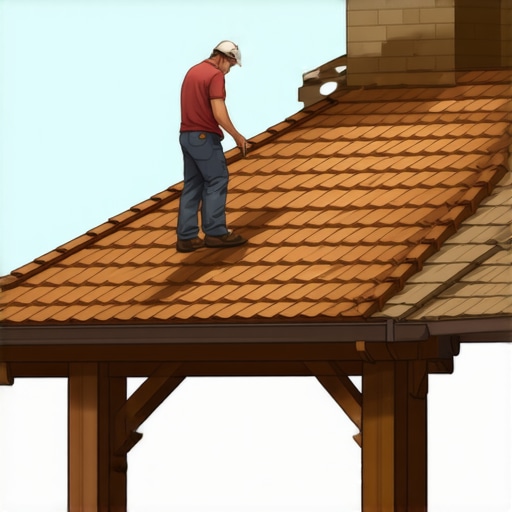
Walking on that roof felt like walking on a sponge. I knew exactly what I’d find underneath. In my 25 years of forensics, I’ve learned that wood rot is the ultimate opportunist. It doesn’t just happen; it’s a biological slow-burn. When I stepped onto that valley in Mobile, the 5/8-inch CDX plywood didn’t just creak—it gave way. The only thing holding me up was the tension of the roofing underlayment and a prayer. This is the reality of unforeseen wood rot, and if your roofing companies aren’t prepared to explain the ‘why’ behind the rot, you’re just paying for a temporary lid on a permanent problem.
The Biology of Failure: Mechanism Zooming on Wood Rot
To understand why your roof is failing, you have to look at the chemistry. Wood rot is caused by fungi that eat the very soul of the lumber: the cellulose and lignin. But these fungi are picky; they need oxygen, a temperature between 40°F and 100°F, and, most importantly, a moisture content above 20%. In the Southeast, the humidity alone gets us halfway there. The real killer is the capillary action. Water doesn’t just fall; it climbs. It wicks up under shingles that lack proper starter strips, and it gets sucked into the end-grain of the plywood at the eaves.
Once the moisture is trapped by poor residential roofing 5-tips for roof-deck ventilation, the fungi set up shop. They secrete enzymes that break down the wood fibers, turning structural sheets into a pulp that has the integrity of wet cardboard. This is often exacerbated by a shiner—a nail that missed the rafter and stays cold. When warm, humid attic air hits that cold nail, it condenses into a steady drip, right onto the deck. Over five years, that one missed nail can rot out a three-foot radius of decking.
“A roof is only as good as its flashing, and the wood beneath it is only as strong as its ability to stay dry.” – Old Roofer’s Adage
The Change Order Trap: What Roofing Companies Often Miss
Why is wood rot often ‘unforeseen’? Because many roofing companies do ‘ladder-only’ estimates. They walk the perimeter, count the squares, and look for obvious shingle damage. But they don’t perform a ‘deflection test’—the act of putting weight on suspicious areas to feel for soft spots. When the tear-off begins, they find that the previous contractor skipped the ice and water shield or used cheap organic felt that held moisture against the deck for a decade.
When this happens, the price goes up. A standard sheet of 4×8 plywood might cost the contractor $25, but by the time you add the labor to cut out the rot, the nails, the disposal, and the profit margin, you’re looking at $85 to $120 per sheet. If your contractor didn’t warn you about this in the roofing companies how to read a detailed estimate phase, you’re going to feel like you’re being held hostage. A forensic roofer will always include a ‘decking contingency’—a set price for the first five sheets so there are no surprises when the ‘sponge’ is revealed.
The Forensic Anatomy of a Leaky Valley
Valleys are the interstate highways of your roof. They carry the most water and, consequently, see the most rot. In the Southwest or Southeast, wind-driven rain forces water under the shingles. If the valley flashing isn’t installed with a proper cricket or if the shingles aren’t cut back far enough, water sits in the ‘trough’ and migrates sideways. This is where signs of hidden decking plywood decay first appear.
I’ve seen ‘trunk slammers’ try to fix this by slathering a gallon of tar over the area. It looks like a repair, but all it does is create a dam. Water gets trapped behind the tar, cannot evaporate, and the rot accelerates. The only real ‘surgery’ is a full tear-off of the area, replacing the rotted wood, and installing a heavy-duty synthetic underlayment or a secondary water resistance barrier. This is non-negotiable in hurricane zones where the uplift ratings are strictly enforced by the IRC Building Codes.
“All roofs shall be covered with approved roof coverings in accordance with the provisions of this chapter.” – International Residential Code (IRC) R905.1
Prevention: The Role of Ventilation and Material Choice
You can’t always stop wood from getting wet, but you can ensure it dries out. This is where roof-deck ventilation comes in. In a 140°F attic, if the air isn’t moving, the moisture has nowhere to go but into the wood. We look for a balance of intake at the soffits and exhaust at the ridge. If your local roofers don’t check your attic for blocked soffit vents, they are essentially building you a new roof that is destined to rot from the inside out within ten years.
For those in coastal areas, the salt air acts as a catalyst for corrosion on standard galvanized nails. When the nail corrodes, it expands, creating a larger hole in the wood and the shingle. This allows more water in, which leads to more rot. We insist on stainless nails for anything within five miles of the coast. It’s a small detail that ‘cheap’ companies skip to save $20 a square, but it’s the difference between a 30-year roof and a 12-year catastrophe.
How to Pick a Contractor Who Won’t Disappear
When the rot is found, you need a contractor who understands structural integrity, not just shingle slapping. If they find rot in a rafter, do they know how to sister a new beam to it, or will they just nail a piece of plywood over the gap and hope for the best? This is why we tell people to look past the sales pitch. Look for the forensic evidence of their previous work. Ask for photos of their ‘decking repairs.’ If they look like a jigsaw puzzle made of scrap wood, run. You want clean cuts, proper support on the rafters, and the use of H-clips to allow for thermal expansion between sheets. Anything less is just a band-aid on a gunshot wound.
Ultimately, handling unforeseen wood rot is about transparency. It’s about a contractor who says, ‘I can’t see the wood yet, but based on the age of the home and the slope of this valley, we should budget for ten sheets of decking.’ That’s not a salesman trying to up-charge you; that’s a veteran who has smelled enough rotting plywood to know what’s coming. Don’t settle for a contractor who hides the rot. You deserve a roof that is as solid as the day it was framed.