
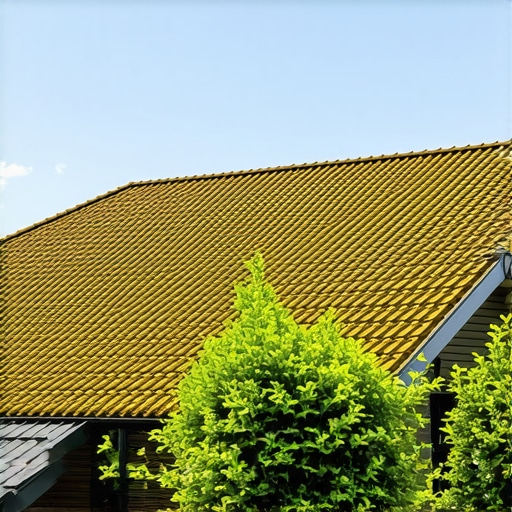
The Forensic Scene: When the Roof Deck Turns to Mush
Walking on that roof felt like walking on a sponge. I knew exactly what I’d find underneath. It wasn’t just that the shingles were old; it was the fact that they had been baked into a state of total structural surrender by the relentless sun in this desert climate. When you step on a roof and it lacks that firm, crisp ‘bite’ of a solid deck, you aren’t just looking at a shingle problem—you’re looking at a systemic failure of the home’s thermal envelope. In this case, the asphalt had become so brittle and porous that it allowed micro-moisture to seep through, eventually rotting the plywood from the outside in. This is the reality most roofing companies won’t tell you: by the time you see the leak, the forensic evidence of failure has been building for a decade. Most local roofers just want to sell you a full replacement, often for $20,000 or more, but there is a middle ground emerging in the physics of roofing that involves chemical restoration rather than just brute-force labor.
“A roof is only as good as its flashing, but its longevity is dictated by its ability to remain flexible under thermal shock.” – Old Roofer’s Adage
The Physics of Asphalt Death: Mechanism Zooming on Oxidation
To understand why bio-based sealants are becoming a staple for savvy local roofers, you have to understand why your shingles are dying right now. Asphalt shingles are a composite material: a fiberglass mat coated in bitumen (asphalt) and topped with ceramic granules. The bitumen is the soul of the shingle. It contains complex oils called maltenes that keep the shingle flexible, allowing it to expand and contract as the attic hits 140°F during the day and drops to 60°F at night. This is ‘thermal shock.’ Over time, UV radiation from the sun acts as a catalyst for oxidation. The oxygen molecules break the long-chain hydrocarbons in the asphalt, turning those essential oils into hard, brittle resins. Once the maltenes are gone, the shingle can no longer flex. It cracks. It curls. It loses its grip on the granules. You’ll start identifying shingle curling long before you see water in the kitchen, and that is where the chemistry of bio-based sealants enters the forensic field. These sealants aren’t just ‘paint’; they are re-saturants designed to penetrate the asphalt matrix and replace the lost oils.
Benefit 1: Restoration of the Maltene Fraction and Flexibility
The first major benefit of bio-based sealants, often derived from soybean oil or other high-grade plant lipids, is the molecular restoration of the shingle’s flexibility. When a technician from one of the specialized roofing companies sprays these sealants, the oil doesn’t just sit on top. Through capillary action, the bio-oil migrates into the desiccated asphalt. It softens the hardened resins and restores the ‘creep’ and ‘recovery’ properties of the bitumen. This is vital because a brittle shingle is a dead shingle. If you have ever seen a ‘shiner’—a nail that was driven in crooked and eventually worked its way out—it’s often because the shingle around it became so hard it could no longer hold the fastener during wind gusts. By restoring flexibility, you are essentially resetting the clock on the shingle’s physical properties. It allows the roof to survive another five to ten years of thermal expansion without cracking at the joints or along the ridge cap, which is a common area for weakened roof spines.
“Proper ventilation and material stability are the two pillars of a roof’s design life.” – NRCA Technical Manual
Benefit 2: Granule Locking and UV Shielding
If you look in your gutters and see what looks like coffee grounds, that’s your roof’s protective layer washing away. Those granules aren’t there for aesthetics; they are the UV armor for the asphalt. When shingles dry out, the bond between the granule and the bitumen fails. This leads to ‘balding.’ Once a shingle is bald, the sun eats the exposed asphalt in a matter of months. Bio-based sealants act as a high-tech adhesive, effectively ‘gluing’ the remaining granules back into the matrix. This mechanism zooming shows us that the sealant creates a hydrophobic barrier that prevents wind-driven rain from getting under the edges of the granules and prying them loose. For local roofers, this is the most visible sign of success. A roof that was shedding five pounds of granules per square (100 square feet) every storm suddenly stops. This also helps in lowering roof heat absorption, as the granules continue to reflect solar radiation rather than the dark asphalt absorbing it and cooking your attic.
Benefit 3: Environmental Stewardship and Landfill Diversion
Every year, over 11 million tons of asphalt shingles end up in landfills. They take upwards of 300 years to decompose. The third benefit of using bio-based sealants is purely ecological. By extending the life of a single square of roofing by just five years, we significantly reduce the carbon footprint associated with the manufacturing and transport of new petroleum-based shingles. Furthermore, bio-based sealants are typically low-VOC (Volatile Organic Compounds), meaning they don’t off-gas toxic fumes into the neighborhood during application—a common complaint with older petroleum-based roof coatings. When roofing companies offer this as an alternative to a ‘tear-off,’ they are providing a sustainable path that avoids the massive energy expenditure of a full replacement. You aren’t just saving money; you are preventing the ‘oatmeal plywood’ scenario I described earlier by maintaining the integrity of the water-shedding surface before the deck becomes compromised. If you’ve been identifying sun damage on your home, acting with a sealant now is the difference between a minor maintenance cost and a forensic nightmare.
The Material Truth: It’s Not a Miracle Cure for a Dead Roof
I have to be cynical here because I’ve seen too many ‘trunk slammers’ sell these sealants as a miracle cure for a roof that is already 30 years old and falling apart. Let’s get one thing straight: if your shingles are already cracking through the fiberglass mat, or if you have significant hidden decking plywood decay, a spray-on sealant is like putting a band-aid on a broken leg. You cannot ‘re-saturate’ a roof that has already lost its structural base. Forensic roofing is about timing. You apply these bio-based sealants when the roof is at the 70% mark of its lifespan—around year 12 to 15 for a standard 3-tab shingle. This is when the oils are starting to migrate out but before the physical structure of the shingle is destroyed. If you wait until you see water dripping in the attic, you’re past the point of chemical help and into the realm of ‘the surgery’—a full tear-off and replacement. Always ensure your local roofers perform a moisture probe test on the deck before recommending a sealant, because sealing moisture into the wood is a recipe for a mold colony that will eat your rafters from the inside out.