
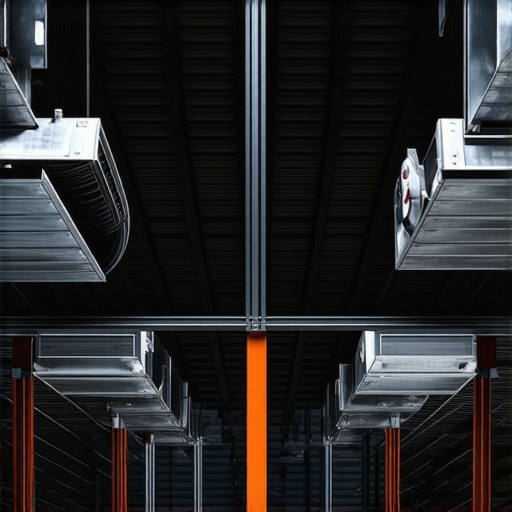
The Forensic Autopsy of a Saturated Warehouse Deck
Walking across a sixty-thousand-square-foot industrial roof shouldn’t feel like navigating a marsh. But there I was, in the middle of a gray November morning in the Rust Belt, feeling the EPDM membrane give way under my boots like wet sponge cake. The building owner thought he had a leak at the seams. He didn’t. He had a physics problem. My old foreman used to say, ‘Water is patient. It will wait for you to make a mistake, then it will rot your house from the inside out while you’re looking for a hole in the shingles.’ What we found underneath that membrane wasn’t rain; it was a self-inflicted swamp. The insulation was so heavy with trapped moisture that the fasteners were literally popping out of the steel deck—we call those ‘shiners’ when they miss the mark, but here they were just rusted-out spikes in a failed system.
When you deal with large warehouse flat seams, the sheer scale of the roof creates a micro-climate. Most local roofers think about keeping water out, but they forget about letting the building breathe. On a massive flat deck, moisture doesn’t just fall from the sky; it rises from the floor. In a warehouse setting, where forklifts are running and temperature gradients are extreme, that warm, moist air is under constant pressure to move upward. When it hits the cold underside of a non-vented membrane, it condenses into liquid water. This is the silent killer of commercial portfolios.
“A roof is only as good as its flashing and its ability to manage vapor pressure.” – Modern Roofing Axiom
1. One-Way Pressure Relief Vents: The Check-Valve Strategy
The first way to save those flat seams is through the installation of one-way breather vents. Think of these as the exhaust valves on a pressure cooker. On a large warehouse roof, the air trapped between the deck and the membrane expands as the sun hits it. This ‘thermal pumping’ puts immense stress on the lap seams. If that air has nowhere to go, it forces its way through the weakest point—usually the T-joints or the field-fabricated corners. By installing a breather vent every 1,000 to 2,000 square feet, you allow the positive pressure to escape without letting external moisture back in. This prevents the ‘billowing’ effect that stretches and eventually tears the seam adhesive. If you’ve noticed ‘balloons’ forming under your membrane, you are already seeing commercial roofing myths in action where owners assume it’s a wind uplift issue rather than a venting failure.
2. Solar-Powered Mechanical Exhaust for High-Humidity Zones
In warehouses that store perishables or involve manufacturing processes, passive venting isn’t enough. You need to move air. Mechanical exhaust vents—specifically solar-powered units that don’t require complex wiring across a massive deck—can pull hundreds of cubic feet of air per minute from the plenum space. This actively lowers the vapor pressure. When you reduce the humidity levels under the ISO board, you stop the condensation cycle that leads to moisture trapped in insulation. Without this active movement, the water sits on the deck, leading to the dreaded ‘oatmeal’ effect where the insulation loses its R-value and becomes a heavy, sodden mess that stresses the structural steel. Roofing companies that specialize in ‘fast and cheap’ will skip these because they require cutting more holes in the deck, but skipping them is a death sentence for the roof’s lifespan.
3. Parapet Wall Scupper Venting and Air Cavity Integration
Many warehouses use high parapet walls for aesthetics or fire codes. These walls often trap a ‘dead zone’ of air at the perimeter. By integrating specialized venting at the parapet base and using scuppers that allow for both water drainage and air circulation, you create a cross-ventilation effect. This is particularly vital for systems using EPDM or TPO where the seams at the wall transitions are under the highest mechanical tension. When air is allowed to move from the center of the roof toward the perimeter vents, it carries away the moisture that would otherwise collect in the ‘cricket’—the small slope built to divert water to the drains. If the cricket is wet from below, the adhesive fails, and the valley seam flashing will peel back like a banana skin.
“The primary purpose of a roof is to protect the building from the elements, but its secondary purpose is to protect the building from itself.” – NRCA Technical Manual Snippet
4. Expansion Joint Venting: Managing the Structural Breath
Large warehouses are not static; they are living, breathing machines that expand and contract. This is why you see expansion joints every couple of hundred feet. Instead of just capping these joints with a flat piece of rubber, the ‘forensic’ approach is to use a raised, vented expansion joint cover. This allows the structural gap to act as a giant chimney for rising heat and moisture. By venting at the structural breaks, you relieve the stress on the thousands of linear feet of field seams across the rest of the deck. When you ignore this, the expansion joint becomes a reservoir for condensation, which eventually rots the rafter tails and structural supports. I have seen local roofers simply patch these with caulk, which is a ‘Band-Aid’ solution that ignores the hydrostatic pressure building up underneath. Real ‘surgery’ involves installing a proper vented curb that allows the building to move without tearing the waterproofing layer.
The Cost of Silence: Why Waiting is a Financial Disaster
If you ignore the venting on a large flat roof, you aren’t just looking at a few drips in the warehouse aisle. You are looking at a total system failure. Once that insulation is saturated, it cannot be ‘dried out.’ It must be torn off. A full tear-off on a warehouse can cost three to four times more than a proactive venting retrofit. You need to look for the signs: rusted fasteners, discolored ceiling tiles, or a persistent ‘musty’ smell in the office sections of the warehouse. These are the indicators that your roof is drowning from the inside. Don’t let a ‘trunk slammer’ tell you a bucket of tar will fix a venting issue. Demand a forensic look at the vapor drive and the air exchange rates. That is the only way to make a warehouse roof last its full thirty-year potential.