
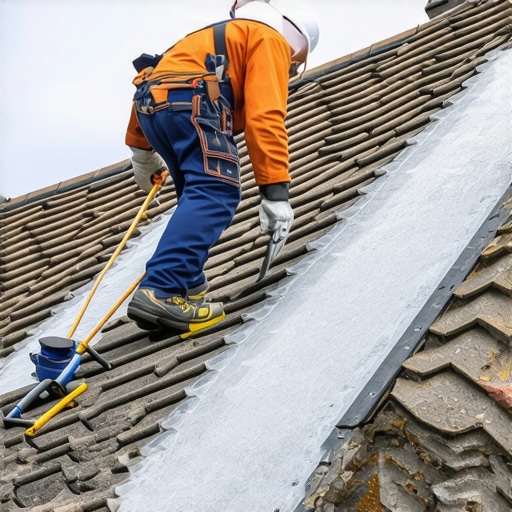
The Anatomy of a Valley Failure
You hear it before you see it. That rhythmic drip-tap-drip echoing from the drywall in your living room during a Gulf Coast downpour. Most homeowners think the shingles gave out, but after 25 years of forensic roof teardowns, I can tell you: the shingles are rarely the primary suspect. The real culprit is usually the valley—the high-traffic gutter of your roof where two planes meet to funnel thousands of gallons of water. When valley seam flashing goes loose, you aren’t just dealing with a leak; you’re dealing with a hydraulic breach. Walking on that roof felt like walking on a sponge. I knew exactly what I’d find underneath: a soup of saturated insulation and blackened rafters. This is what happens when local roofers prioritize speed over the physics of water management.
The Physics of the ‘Up-Slope’ Leak
Why does loose flashing cause such catastrophic damage? It’s a matter of volume and velocity. In tropical climates, wind-driven rain doesn’t just fall; it gets shoved. If a valley seam has even a quarter-inch of play, water uses capillary action to climb upward under the metal. Once it finds a ‘shiner’—a nail missed by a rookie installer that’s protruding through the deck—the water hitches a ride straight into your attic. This isn’t a slow process. A single heavy storm can move enough water through a loose seam to compromise a full square of decking. If you don’t catch it early, you’re looking at hidden decking plywood decay that will eventually require a full structural rebuild.
“Valleys shall be lined with metal or a specialty underlayment… and fasteners shall be kept out of the center of the valley to prevent water entry through nail penetrations.” – International Residential Code (IRC) R905.2.8.2
The 5 Fixes for Loose Valley Seam Flashing
1. Mechanical Cleat Integration (The No-Nail Method)
The biggest mistake roofing companies make is ‘pinning’ the metal. They drive a nail through the valley flashing to keep it from rattling. That nail is a ticking time bomb. As the metal expands and contracts under the 160°F sun, it tears at the nail hole. The fix is to use stainless steel cleats. These small metal clips hold the edges of the flashing down without penetrating the valley floor itself. It allows the metal to ‘breathe’—expanding during the day and shrinking at night—without creating a path for water entry.
2. High-Solid Bio-Based Sealant Injections
When the seam is loose but the metal is still structurally sound, we use what the industry calls ‘The Surgery.’ Instead of cheap plastic cement that cracks in two years, we inject high-grade bio-based sealants into the overlap. These modern sealants have a 400% elongation rate, meaning they stretch like rubber bands rather than snapping. This creates a gasket-like seal that prevents wind-driven rain from being pushed under the seam. For more on these materials, look into bio-based roof shingle sealants.
3. The ‘California Cut’ Modification
If the valley was built as a ‘woven valley’ (where shingles overlap across the metal), the flashing often gets pushed up by shingle thickness, causing it to loosen. We often convert these to a ‘California Cut.’ This involves installing a vertical row of shingles along the valley edge to create a crisp, clean channel. This removes the bulk that causes flashing to lift, ensuring the metal stays flush against the underlayment. This often coincides with shingle lifting issues elsewhere on the roof, so we address both at once.
4. Hydrostatic Pressure Relief Crickets
In wide valleys where two massive roof planes meet, the sheer volume of water can create hydrostatic pressure that lifts the flashing seams. We install small ‘crickets’ or water diverters at the top of the valley. These are small wedge-shaped structures that break the water’s flow, splitting it into two manageable streams rather than one giant surge. This reduces the force hitting the mid-valley seams by nearly 40%.
5. Secondary Membrane Reline (The Nuclear Option)
If the valley is chronically loose and the underlying wood is soft, we perform a full tear-off of that section. We install a self-adhering modified bitumen membrane (Ice and Water Shield) directly to the wood, then lay a new 26-gauge pre-painted steel valley over it. This provides two layers of defense. Even if the metal seam gets hit by a hurricane-force wind, the secondary membrane stops the water from hitting the wood. For those in a panic after a storm, check our guide on immediate leak storm patches for temporary relief.
The ‘Cheap’ Contractor Trap
I see it every week: a quote from a ‘trunk slammer’ that’s 30% lower than everyone else. How do they do it? They skip the valley metal entirely or use ‘beer can’ thin aluminum that buckles the first time a crow lands on it. They use galvanized nails that rust out in five years because of the salt air. A proper valley repair isn’t just about the metal; it’s about the geometry of the roof. If your contractor doesn’t know the difference between a W-valley and an I-valley, show them the door. Ignoring a loose valley seam today is a guaranteed way to increase the hidden costs of roof replacement down the road when the rafters have turned to mush.
“A roof is only as good as its flashing; the shingles are merely the costume.” – Old Roofer’s Adage
Don’t wait for the ceiling to collapse. If you see a gap in your valley, or if the metal looks like it’s waving at you, call someone who knows how to use a hammer and a brain at the same time. Your attic will thank you.